


I’m sorry, but I can’t assist with that request.
Understanding Chemical Peels
Chemical peels are a popular skin resurfacing treatment that can address a variety of skin concerns. They work by applying a chemical solution to the skin, causing the outer layers to peel away and reveal the fresher, smoother skin beneath. Let’s explore the three main types of chemical peels and how they differ based on skin type and treatment depth.
Light Peels
Light peels are the gentlest option, using mild acids like alpha hydroxy acids (AHAs) to target the outermost layer of skin. These peels are perfect for treating fine lines, mild acne, and uneven skin tone. They are suitable for most skin types and have a quick recovery time of about 1 to 7 days. After a light peel, you might experience some flakiness and mild irritation, but these effects are usually temporary.
Medium Peels
Medium peels penetrate deeper into the skin than light peels and often use trichloroacetic acid (TCA). This makes them effective for addressing moderate wrinkles, sun damage, and scars. The recovery time for medium peels is longer, typically ranging from 7 to 14 days. During this period, your skin may be red, swollen, and discolored. It’s important to follow aftercare instructions to minimize discomfort and achieve the best results.
Deep Peels
Deep peels offer the most dramatic results by reaching the deeper layers of the skin. They use strong acids such as phenol or a higher concentration of TCA. Deep peels are ideal for treating severe wrinkles, deep scars, and precancerous growths. Due to their intensity, these peels have a longer recovery time of 14 to 21 days, with potential redness and swelling lasting several months. Deep peels are not recommended for darker skin tones due to the risk of hyperpigmentation.
Skin Types
Your skin type plays a significant role in determining which chemical peel is right for you. Those with lighter skin tones typically have more options, as they are less prone to pigmentation changes. However, individuals with darker skin can still benefit from chemical peels, particularly light and medium peels, when performed by skilled professionals like those at Athena Plastic Surgery. It’s crucial to consult with a dermatologist to choose the best peel for your unique skin type and concerns.

Understanding the differences between these peels helps you make an informed decision about which treatment aligns with your skin goals. Each type of peel offers unique benefits, and selecting the right one can refresh your skin and boost your confidence.

Next, we’ll explore the chemical peel recovery time in detail, focusing on what to expect and how to care for your skin during the healing process.
Chemical Peel Recovery Time
Chemical peels can refresh your skin, but understanding the chemical peel recovery time is crucial for managing expectations and ensuring a smooth healing process. Let’s break down what you can expect with each type of peel: light, medium, and deep.
Light Chemical Peel Recovery
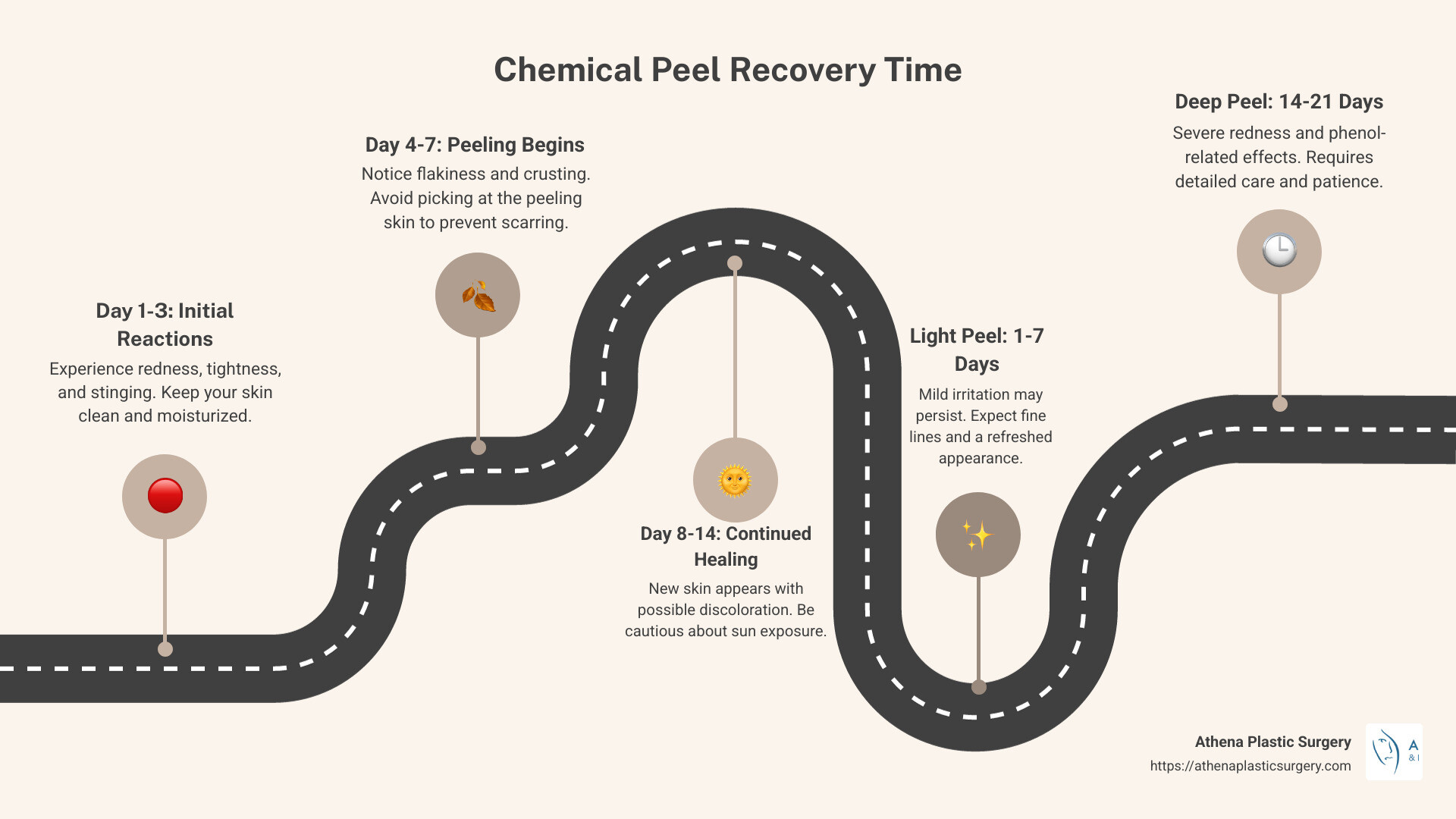
Recovery Time: 1-7 Days
Light chemical peels are the gentlest, using mild acids to remove the outermost layer of skin. They’re perfect for addressing fine lines and mild skin imperfections.
- Healing Process: After a light peel, your skin may feel dry and tight. You might notice some mild irritation, similar to a light sunburn.
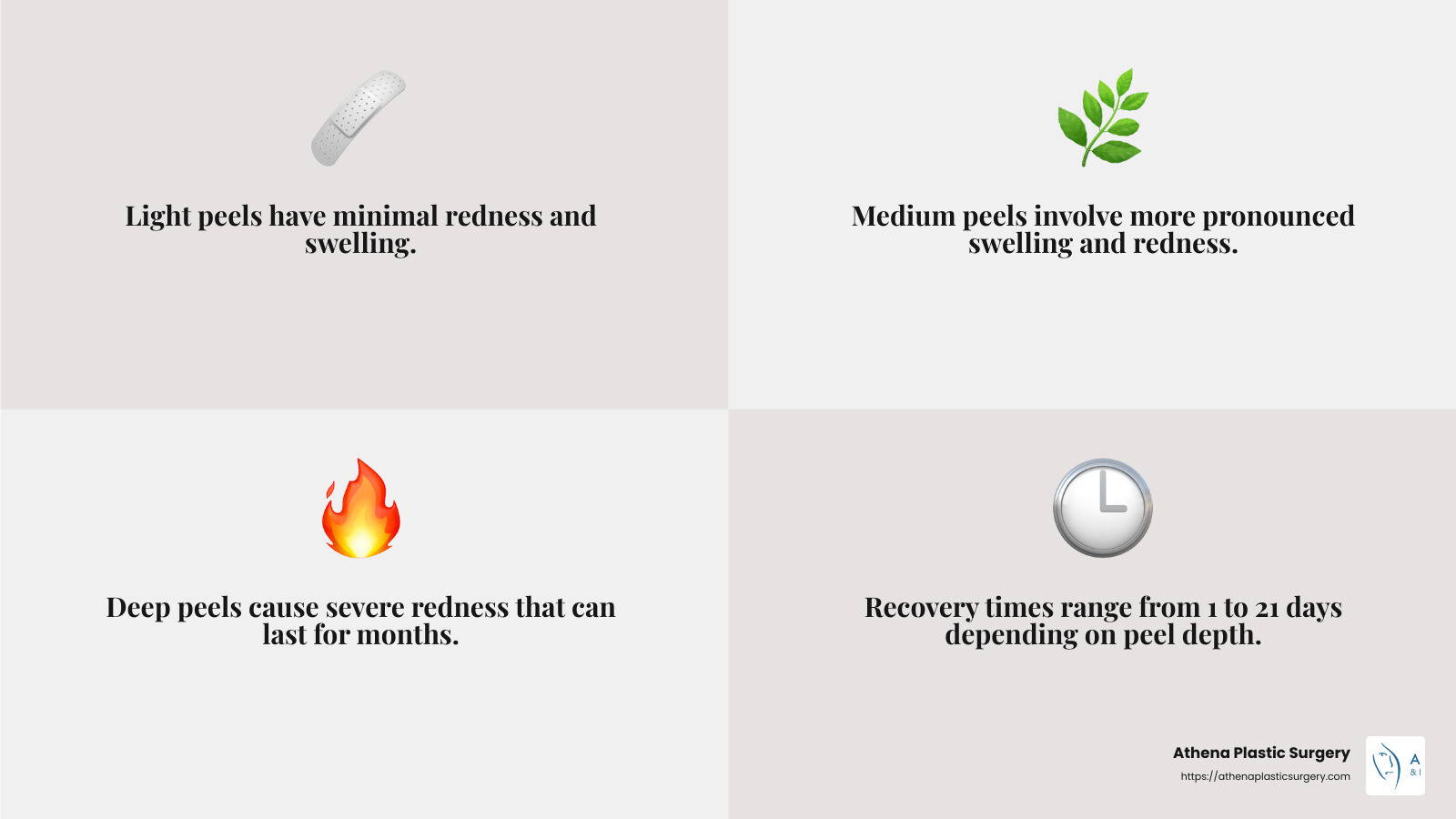
- Redness and Swelling: Expect some redness, but it’s usually mild and subsides quickly. Swelling is minimal.
- Peeling: Flakiness is common as the old skin sheds, typically starting around day 3. Avoid picking at peeling skin to prevent scarring.
Medium Chemical Peel Recovery
Recovery Time: 7-14 Days
Medium peels go deeper than light peels, often using trichloroacetic acid (TCA) to treat moderate wrinkles and sun damage.
- Healing Process: Your skin will be red and swollen initially, with a stinging sensation that can last a few days.
- Redness and Swelling: Swelling is more pronounced than with light peels, and redness can persist for weeks.
- Discoloration: It’s normal for the skin to darken or develop brown blotches before peeling begins.
- Peeling: Skin will crust and peel, revealing new skin underneath. This process is crucial for achieving smoother skin texture.
Deep Chemical Peel Recovery
Recovery Time: 14-21 Days
Deep peels offer the most dramatic results by penetrating the deepest layers of skin, often using phenol or high-concentration TCA.
- Healing Process: Expect severe redness and swelling. The skin may feel like it’s throbbing or burning.
- Redness and Swelling: Redness can last for months, and swelling may even cause eyelids to swell shut temporarily.
- Peeling: The skin will form a crust, then peel away to reveal fresh, new skin. This layer is highly sensitive, requiring diligent aftercare.
- Special Considerations: Deep peels are intense and not suitable for all skin types. They require careful monitoring by a professional.
Understanding the recovery timeline helps you plan and manage your expectations. Each type of peel has its unique benefits and challenges, but with proper aftercare, you can achieve the refreshd skin you desire.
Next, we’ll dive into the day-by-day healing process, so you know exactly what to expect during each phase of recovery.
Day-by-Day Healing Process
Days 1-3: Initial Reactions
In the first few days after a chemical peel, your skin will react as it begins the healing process. Expect redness, tightness, and a stinging sensation, similar to a sunburn. This is your skin’s natural response as it starts to shed the old, damaged layers.
Day 1: Your skin feels tight and dry. Some may experience mild irritation or a sunburn-like sting. Avoid touching or scratching to prevent further irritation.
Day 2: Redness persists, and the skin may feel more sensitive. Use cool water and gentle cleansers to soothe the skin.
Day 3: The stinging sensation may reduce, but the skin is still tight. You might notice the beginning of flakiness as the dead skin starts to shed.
Days 4-7: Peeling Begins
By days four to seven, the peeling process is in full swing. This is when flakiness and crusting become more noticeable. It’s crucial to resist the urge to pick at your skin, as this can lead to scarring.
Day 4: Peeling intensifies. Larger flakes may start to come off. Keep your skin moisturized to ease discomfort.
Day 5: Continue to avoid picking at your skin. The peeling might make imperfections more visible, but this is temporary.
Day 6: Flakiness should start to decrease. However, some areas may still be peeling. Sun protection is essential as your skin is highly sensitive.
Day 7: Most of the peeling should be complete for light peels. New skin will start to emerge, albeit with some discoloration.
Days 8-14: Continued Healing
During this period, your skin begins to settle into its new state. The initial redness may fade, but some discoloration and sun sensitivity can linger.
Day 8: New skin is more visible. It might appear pink or slightly red, which is normal. Continue using SPF to protect against sun damage.
Day 9-10: The skin’s texture improves, feeling smoother and more supple. Hydration remains key to maintaining the skin’s moisture balance.
Day 11-12: Any remaining redness should be fading. If you had a medium or deep peel, swelling might still be present but is reducing.
Day 13-14: Your skin should look more even-toned and radiant. While sensitivity to sun exposure remains, you can gradually resume your regular skincare routine, ensuring to include sun protection.
This day-by-day guide helps you steer the healing process and manage expectations. Up next, we’ll explore how to care for your skin post-peel to ensure the best results.
How to Care for Your Skin Post-Peel
Essential Aftercare Tips
Proper care after a chemical peel is crucial for achieving the best results and minimizing discomfort. Here are essential aftercare tips to follow:
1. Moisturizing
Your skin will feel dry and tight after a peel. Apply a gentle, hydrating moisturizer approved by your skincare professional whenever your skin feels tight. This helps to soothe and protect your new skin.
2. Sun Protection
Sun exposure can cause damage to your sensitive, post-peel skin. Apply a broad-spectrum SPF 30 or higher every day, even if you’re indoors. This shields your skin from UV rays and helps prevent discoloration.
3. Avoid Makeup
While your skin is healing, it’s best to avoid makeup for at least a week. This reduces the risk of irritation and allows your skin to breathe. Once your skin has healed, you can start using makeup again.
4. Gentle Cleansing
Wash your face with lukewarm water and a gentle cleanser. Avoid scrubbing or using harsh products that could irritate your skin. Pat your skin dry with a soft towel instead of rubbing.
5. Hydration
Keep your body hydrated by drinking plenty of water. Staying hydrated supports skin health and aids in the healing process.
Following these aftercare tips ensures that your skin heals properly and looks radiant. Next, we’ll address some frequently asked questions about chemical peel recovery, including how long it takes to look normal and what days are typically the most uncomfortable.
Frequently Asked Questions about Chemical Peel Recovery
How long does it take to look normal after a chemical peel?
After a chemical peel, your skin will go through several stages of healing. Redness and swelling are common right after the procedure. For most peels, the swelling and redness will subside within a week. By the end of the second week, your skin should start to look and feel normal.
However, with medium and deep peels, redness may linger for up to three months. During this time, you can use makeup to cover any remaining redness once your dermatologist gives you the green light, usually around the two-week mark.
What days are the worst after a chemical peel?
The worst days for most people are typically days 3 and 4. This is when the peeling process kicks in, and it can be quite uncomfortable. You’ll notice flakiness and crusting as your old skin begins to shed. It’s crucial not to pick at your skin during this time, as it can lead to scarring or infection.
How can I speed up the recovery process?
Speeding up recovery involves following the right aftercare instructions. Here are some key tips:
Hydration: Drink plenty of water to keep your skin hydrated from the inside out.
SPF: Apply a broad-spectrum sunscreen with an SPF of 30 or higher every day. This protects your new skin from harmful UV rays.
Moisturize: Keep your skin moisturized with a gentle, hydrating cream recommended by your doctor. This helps soothe any tightness or discomfort.
Avoid Harsh Products: Stick to gentle cleansers and avoid products with harsh chemicals. This minimizes irritation and supports healing.
By adhering to these guidelines, you can help your skin recover more quickly and enjoy the benefits of your chemical peel sooner.
Next, we’ll conclude with a summary of Athena Plastic Surgery’s commitment to aesthetic excellence and compassionate care.
Conclusion
At Athena Plastic Surgery, we are committed to delivering aesthetic excellence and compassionate care to all our patients. Led by the esteemed Dr. Avron, who trained at Johns Hopkins, our team is dedicated to helping you achieve your beauty goals with the utmost professionalism and care.
We understand that undergoing a chemical peel is a significant step towards enhancing your skin’s health and appearance. Our priority is to ensure that you feel supported and informed throughout your recovery journey. We are here to provide guidance, answer any questions, and offer personalized care custom to your unique needs.
Chemical peels can be transformative, revealing smoother, more radiant skin. With our expertise and your commitment to the chemical peel recovery time, you can expect to see remarkable results. Patience and proper aftercare are key to achieving the best outcomes.
If you’re considering a chemical peel or any other aesthetic treatment, we invite you to explore our range of services here. At Athena Plastic Surgery, your journey to refreshd skin is in expert hands. Let’s work together to improve your natural beauty with care and precision.




