


Does insurance cover tummy tuck? In most cases, it’s considered a cosmetic procedure and not covered by insurance. However, if your tummy tuck surgery can be deemed medically necessary, there might be some potential for coverage under specific circumstances. Here’s a quick breakdown:
- Cosmetic Purpose: Generally not covered.
- Medical Necessity: Possible coverage if associated with health issues like hernias or chronic pain.
- Documentation: Strong medical records are crucial for coverage consideration.
A tummy tuck, or abdominoplasty, is a popular cosmetic procedure aimed at tightening abdominal muscles and removing excess skin. While it improves physical appearance, understand the nuances of potential insurance coverage. Evaluating whether your tummy tuck can be classified as medically necessary is a significant step in navigating insurance possibilities.
As Dr. Avron Lipschitz, a board-certified plastic surgeon with over 15 years of experience in cosmetic and reconstructive procedures, I specialize in both the aesthetic and medical aspects of tummy tucks. Understanding whether insurance covers tummy tuck procedures is critical, and it’s something I’ve helped many patients steer. Let’s dive deeper into how we can explore the potential for insurance support for your desired procedure.
Does insurance cover tummy tuck vocab to learn:
– mini tummy tuck cost
– male tummy tuck
– extra firm tummy tucker for lower belly
What is a Tummy Tuck?
A tummy tuck, also known as an abdominoplasty, is a surgical procedure designed to improve the appearance of the abdomen. It involves removing excess skin and fat, alongside tightening the abdominal muscles. This operation can be particularly beneficial for individuals who have experienced significant weight loss or women post-pregnancy.

Types of Tummy Tucks
There are several variations of the tummy tuck procedure, each custom to meet different needs and aesthetic goals.
Traditional Tummy Tuck: This is the most common type and involves a hip-to-hip incision above the pubic area. It’s ideal for those who need extensive correction both above and below the navel. During this procedure, excess skin and fat are removed, and the abdominal muscles are tightened to create a firmer, flatter stomach.
Mini Abdominoplasty: Also known as a mini tummy tuck, this procedure is less invasive than the traditional approach. It focuses on the area below the navel, using a smaller incision. It’s suitable for individuals with a small amount of excess skin or fat and minimal muscle laxity. This option results in a smaller scar and a shorter recovery time.
Extended Abdominoplasty: This procedure is more comprehensive, addressing the abdomen as well as the flanks or “love handles.” It’s ideal for those who have lost a significant amount of weight and need additional correction beyond the traditional tummy tuck area. The incision extends beyond the hips, allowing for excess skin removal from the back and sides.
Each type of tummy tuck is custom to the individual’s body and goals. The choice of procedure depends on factors like the amount of excess skin, muscle laxity, and personal preferences.

Understanding the different types of tummy tucks can help you and your surgeon plan the best approach for achieving your desired results. Whether you’re considering a traditional tummy tuck, a mini abdominoplasty, or an extended abdominoplasty, it’s crucial to consult with a qualified surgeon to determine the most suitable option for your needs.
In the next section, we’ll explore how insurance coverage works for tummy tucks and what criteria might make this procedure eligible for coverage.
Does Insurance Cover Tummy Tuck?
When it comes to tummy tucks, insurance coverage can be tricky. Generally, insurance companies consider tummy tucks as cosmetic procedures, which means they aren’t usually covered. However, there are situations where a tummy tuck might be deemed medically necessary, and in these cases, insurance might help cover the costs.
Medical Reasons for Coverage
For a tummy tuck to be covered by insurance, it must be classified as medically necessary. This means the procedure should address specific health issues rather than just improve appearance. Some medical reasons that might justify coverage include:
Muscle Weakness or Hernias: If the abdominal muscles are significantly weakened or there’s a hernia, a tummy tuck can help repair these issues. This is particularly common after pregnancy or significant weight loss.
Chronic Pain or Skin Infections: Excess skin can lead to persistent pain or skin infections due to constant chafing and moisture trapping. In such cases, removing the excess skin can improve a patient’s quality of life.
Diastasis Recti: This condition involves the separation of the abdominal muscles and is often experienced by women post-pregnancy. A tummy tuck can help bring the muscles back together, alleviating related symptoms.
Documentation Required
To convince an insurance company that a tummy tuck is medically necessary, thorough documentation is crucial. Here’s what you typically need:
Medical Records: Detailed records showing past treatments and their outcomes can support your case. This includes any non-surgical methods you’ve tried and their ineffectiveness.
Physician Notes: A letter from your doctor explaining why the tummy tuck is necessary can make a big difference. It should outline how the procedure will address your specific health issues.
Photos: Visual evidence of the condition, such as excess skin causing rashes or infections, can help demonstrate the need for surgery.
Insurance Pre-Approval: Before scheduling surgery, submit all documentation to your insurance company for pre-approval. This step is crucial to ensure that you understand what will and won’t be covered.
Navigating the insurance process for a tummy tuck can be challenging, but knowing the right steps and having the necessary documentation can improve your chances of getting coverage. In the next section, we’ll dive into how to get your tummy tuck covered by insurance, including the steps to take and common challenges you might face.
How to Get Your Tummy Tuck Covered by Insurance
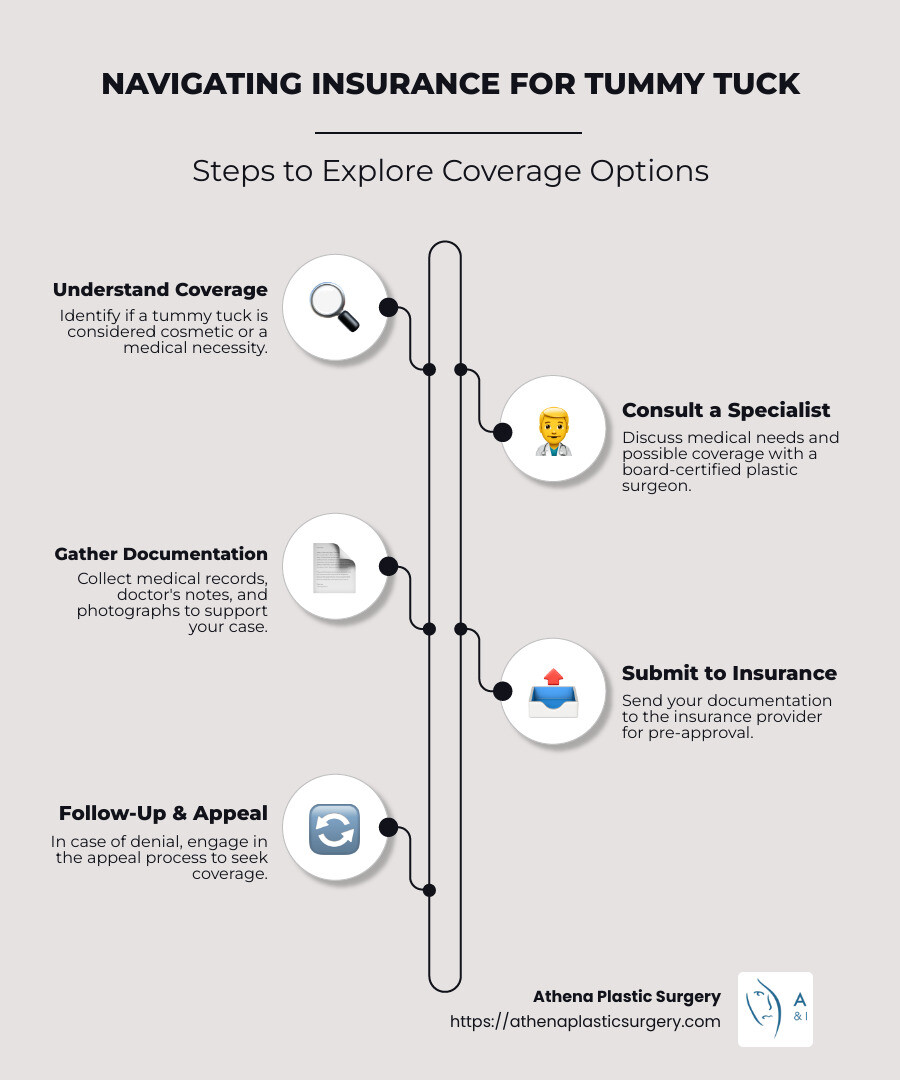
Navigating the insurance process for a tummy tuck requires careful planning and thorough documentation. Here’s a step-by-step guide to help you through the process:
Steps to Take
Consultation with Your Doctor
Start by discussing your health concerns with your doctor. They can help determine if a tummy tuck is medically necessary for you. Ensure they understand your symptoms and the impact on your daily life.Gather Medical Documentation
Collect all relevant medical records, including previous treatments and their outcomes. This documentation should clearly show any health issues related to excess skin or abdominal muscle weakness.Prepare a Strong Case for Medical Necessity
Work with your doctor to create a compelling case that highlights the medical necessity of your tummy tuck. This should include detailed physician notes and photographs that illustrate your condition.Submit Documentation to Insurance
Once your documentation is ready, submit it to your insurance company for pre-approval. Include a letter from your doctor explaining the medical necessity of the procedure.Follow Up with Insurance
After submission, regularly follow up with your insurance provider. This ensures your case is being reviewed and keeps you informed of any additional information they might need.
Common Challenges
Insurance Denial
One of the most common challenges is receiving a denial from the insurance company. This can happen if they believe the procedure is cosmetic rather than medically necessary.Appeal Process
If your claim is denied, you have the right to appeal. This involves submitting additional evidence or clarification to support your case. Work closely with your doctor during this process.Out-of-Pocket Costs
Even with insurance, some costs might not be covered. Be prepared to pay for certain expenses out-of-pocket. Explore financing options or payment plans to manage these costs effectively.
By understanding the insurance process and preparing the necessary documentation, you can increase your chances of getting your tummy tuck covered. In the next section, we’ll explore alternatives to tummy tucks, including other procedures and lifestyle changes that might be more suitable for your needs.
Alternatives to Tummy Tuck
While a tummy tuck is a popular choice for those looking to improve their abdominal area, it’s not the only option available. Let’s explore alternatives like panniculectomy, non-surgical options, and lifestyle changes that might better suit your needs.
Panniculectomy vs. Tummy Tuck
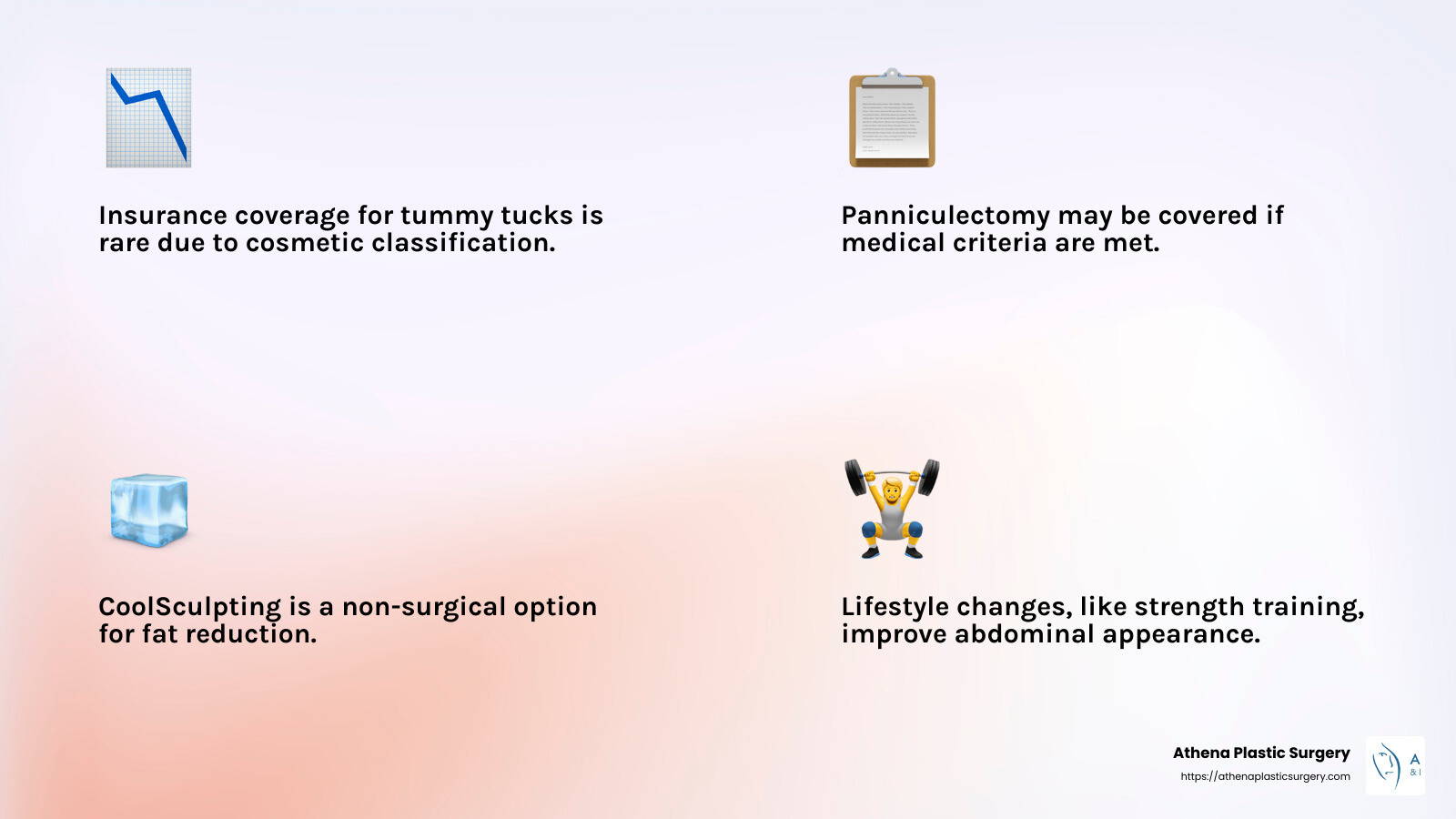
Panniculectomy is a surgical procedure specifically aimed at removing excess skin and fat from the lower abdomen. Unlike a tummy tuck, it does not involve tightening the abdominal muscles. This distinction is crucial because panniculectomy can sometimes be covered by insurance if deemed medically necessary.
Insurance Coverage and Medical Necessity
For a panniculectomy to be covered by insurance, certain medical criteria must be met:
- The excess skin must hang below the pubic area.
- There should be evidence of chronic skin infections or rashes that have not responded to treatment.
- A stable weight for a specific period, usually 6 to 24 months, is often required.
In contrast, a tummy tuck is generally considered cosmetic and is rarely covered by insurance unless combined with procedures like hernia repair, which might establish medical necessity.
Non-Surgical Options
If surgery isn’t ideal for you, there are non-surgical methods to consider:
- CoolSculpting: A non-invasive procedure that freezes and eliminates fat cells. It’s best for small areas of stubborn fat.
- Ultrasound Therapy: Uses sound waves to break down fat cells, promoting a more toned appearance.
- Laser Treatments: These can help tighten the skin and reduce fat in targeted areas.
While these options can be effective, they typically offer less dramatic results compared to surgical procedures.
Lifestyle Changes
Sometimes, adopting certain lifestyle changes can significantly improve the appearance of your abdomen:
- Diet and Exercise: Maintaining a balanced diet and regular exercise routine can help reduce excess fat and improve muscle tone.
- Strength Training: Focus on exercises that target the core muscles, which can improve abdominal firmness and appearance.
These changes not only aid in improving the abdomen but also contribute to overall health and well-being.
In summary, while a tummy tuck is a well-known option for abdominal improvement, alternatives like panniculectomy, non-surgical treatments, and lifestyle modifications can also provide effective results. Understanding these options can help you make an informed decision about the best path for your needs.
Frequently Asked Questions about Tummy Tuck Insurance
What reasons will insurance cover a tummy tuck?
Insurance companies typically consider a tummy tuck, or abdominoplasty, a cosmetic procedure. This means they usually don’t cover it. However, there are exceptions when the surgery is deemed medically necessary. Here are some reasons your insurance might cover it:
Muscle Weakness or Hernias: If the abdominal muscles are severely weakened or if there’s a hernia, a tummy tuck might be necessary to repair these issues. Insurance might cover the procedure if it’s combined with hernia repair.
Chronic Pain: Persistent pain due to excess skin or muscle issues can sometimes make a tummy tuck medically necessary. Documented evidence of how this pain affects daily life is crucial.
Skin Infections: Recurrent skin infections or rashes due to overhanging skin can also meet the criteria for medical necessity. Insurance companies require proof that non-surgical treatments have been tried and failed.
Can a tummy tuck be medically necessary?
Yes, a tummy tuck can be considered medically necessary under certain conditions. Insurance criteria for medical necessity usually include:
Functional Impairment: The excess skin or weakened muscles must cause significant functional impairment.
Failed Non-Surgical Treatments: Other treatments must have been attempted without success.
Chronic Conditions: The presence of chronic conditions like pain, infections, or hernias that affect daily life.
Each insurance provider has its own criteria, so consult with your healthcare provider and gather the necessary documentation.
How do most people pay for a tummy tuck?
Since most insurance plans do not cover a tummy tuck, many people need to explore other payment options:
Out-of-Pocket: Some choose to pay the full cost themselves, which can be quite expensive.
Financing Options: Many clinics offer financing plans to make the procedure more affordable. These might include monthly payment plans or loans through healthcare lenders.
Health Savings Accounts (HSAs): If you have an HSA, you might be able to use these funds to cover part of the cost.
Understanding your options and planning ahead can help manage the financial aspect of getting a tummy tuck. Always consult with your healthcare provider to explore all potential avenues for coverage and payment.
Conclusion
Navigating insurance for a tummy tuck can be challenging, but understanding your options and gaining clarity on does insurance cover tummy tuck can make a significant difference. While tummy tucks are often seen as cosmetic, certain medical conditions can make them necessary, potentially opening the door to insurance coverage.
At Athena Plastic Surgery, we are committed to guiding you through this process with compassion and expertise. Led by our Johns Hopkins-trained Dr. Avron, our team prioritizes both your aesthetic goals and overall well-being. If you’re considering a tummy tuck, we invite you to schedule a consultation to discuss your unique needs and explore possible coverage options.
Next Steps:
Contact Us: Reach out to Athena Plastic Surgery to schedule your consultation. You can learn more about our tummy tuck services and how we can help you achieve your desired results.
Consultation: During your consultation, we’ll review your medical history and discuss the procedure in detail, ensuring you’re fully informed and comfortable.
Documentation: Gather any necessary medical records, physician notes, and photos that might support your case for insurance coverage.
Insurance Submission: We’ll assist you in submitting the required documentation to your insurance company and help you steer any challenges that may arise.
Explore Payment Options: If insurance coverage isn’t possible, we’ll discuss financing options to make the procedure more affordable.
Your journey to a more confident you starts with understanding your options and taking informed steps. We’re here to support you every step of the way. Contact us today to begin your journey toward achieving the flat, toned stomach you’ve always dreamed of.




