


Why Vaginal Tightness Treatment Matters More Than You Think
Vaginal tightness treatment is a broad term covering several approaches — from simple exercises to energy-based procedures and surgery — that help women regain comfort, confidence, and sexual wellness. Here is a quick overview of the main options:
| Treatment Type | Examples | Best For |
|---|---|---|
| Pelvic floor exercises | Kegel exercises, EMS devices | Mild laxity, muscle weakness |
| Energy-based (non-surgical) | CO2 laser, radiofrequency | Mild to moderate laxity, dryness |
| Hormonal therapies | Estrogen cream, vaginal moisturizers | Menopause-related changes |
| Surgical | Vaginoplasty, perineoplasty | Severe structural laxity |
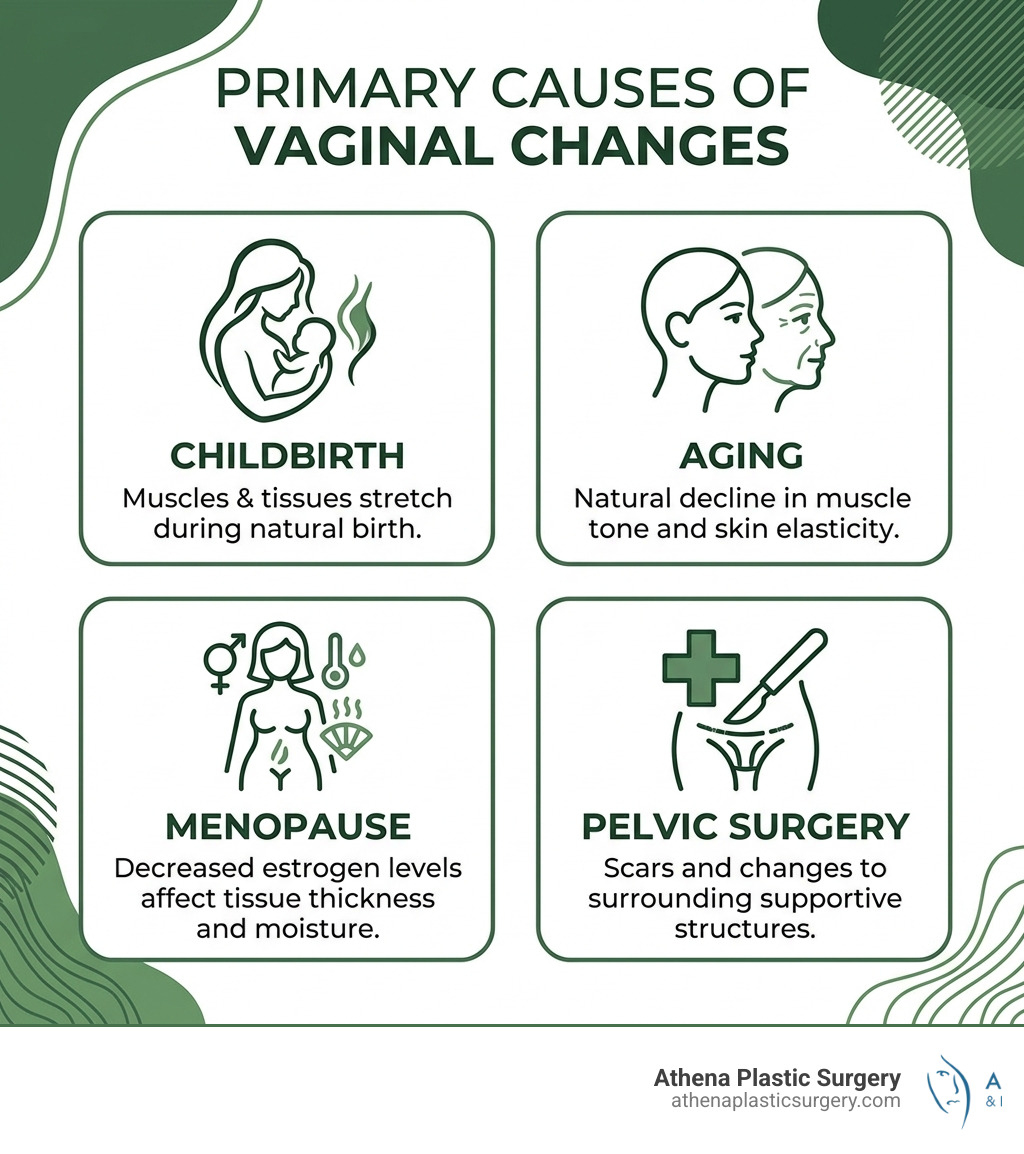
Vaginal changes are incredibly common. Childbirth, aging, and menopause can all cause the vaginal tissues and surrounding muscles to weaken or lose elasticity. Yet many women stay silent about it — often assuming nothing can be done, or feeling embarrassed to bring it up with a doctor.
The reality? These changes are normal, and effective treatments exist.
Some women notice reduced sensation during sex. Others experience a feeling of looseness, decreased self-esteem, or mild urinary leakage. These are real, measurable impacts on quality of life — and they deserve real, evidence-based answers.
What makes this topic tricky is that the term “vaginal tightening” covers very different conditions and very different solutions. A woman dealing with involuntary muscle spasms (vaginismus) needs a completely different approach than someone experiencing looseness after childbirth (vaginal laxity). Getting the right diagnosis first is everything.
I’m Dr. Avron Lipschitz MD, a Board-Certified Plastic Surgeon with over 15 years of experience performing advanced aesthetic procedures, including vaginal tightness treatment options for women at every stage of life. In this guide, I’ll walk you through everything you need to know — from understanding what’s actually happening in your body to choosing the treatment that fits your goals.

Defining Vaginal Laxity and Related Conditions
When we talk about vaginal tightness treatment, we first have to clarify what we are trying to treat. In our Stuart and West Palm Beach offices, we often see women who use the word “loose” or “tight,” but those words can describe several very different medical realities.
Vaginal Laxity
Vaginal laxity is the medical term for a feeling of looseness in the vaginal canal. It is most commonly caused by the stretching of tissues during pregnancy and vaginal childbirth, or the natural loss of collagen that comes with aging and menopause. It isn’t just about “feeling loose”—it often leads to a decrease in physical sensation during intimacy, which can impact sexual satisfaction and self-esteem.
Vaginismus vs. Stenosis
On the opposite end of the spectrum are conditions where the vagina feels “too tight.”
- Vaginismus: This is an involuntary tightening or spasming of the pelvic floor muscles when penetration is attempted. It’s often a “fear-pain” cycle where the body reacts automatically to protect itself.
- Vaginal Stenosis: This occurs when the vaginal canal becomes narrower and shorter, often due to scar tissue from surgery, radiation therapy, or severe menopause-related atrophy.
Pelvic Organ Prolapse (POP)
It is vital to distinguish laxity from prolapse. While laxity is a sensation of looseness, Vaginal Laxity: Causes, Symptoms, Diagnosis & Treatment notes that prolapse involves a pelvic organ (like the bladder or uterus) actually dropping or sagging into the vaginal space. If you feel a physical bulge, you may be dealing with prolapse rather than simple laxity.

Comparison of Common Vaginal Concerns
| Condition | Primary Sensation | Common Cause |
|---|---|---|
| Vaginal Laxity | Looseness, decreased friction | Childbirth, aging, menopause |
| Vaginismus | Spasms, inability to penetrate | Anxiety, past trauma, Vaginismus: Causes, Symptoms, Diagnosis & Treatment |
| Vaginal Stenosis | Narrowing, loss of flexibility | Radiation, surgery, scar tissue |
| Prolapse | Physical bulge or “heaviness” | Weakened support tissues |
Effective Non-Surgical Vaginal Tightness Treatment Options
For many women in Florida, surgery isn’t the first choice. Fortunately, modern technology has given us several non-invasive ways to address laxity and dryness. These treatments generally focus on “collagen remodeling”—using energy to trick the body into producing new, firmer tissue.
Pelvic Floor Strengthening and Muscle Stimulation
The “foundation” of vaginal tightness is actually the pelvic floor muscles. If these muscles are weak, the vaginal canal lacks support.
- Kegel Exercises: These are the gold standard for natural strengthening. However, research shows that over 50% of women do not understand how to perform an effective pelvic floor muscle contraction on their own. Many accidentally push down instead of squeezing up, which can actually worsen the problem.
- EMS and Neuromuscular Re-education: For those who struggle with manual Kegels, we use devices that provide electrical muscle stimulation (EMS). These “pelvic floor trainers” trigger thousands of involuntary contractions in a single session, effectively “working out” the muscles for you to restore tone and support. You can learn more about these natural approaches in this guide on How to Tighten Your Vagina Naturally.
Energy-Based Vaginal Tightness Treatment
If the issue is more about the vaginal lining (mucosa) and tissue elasticity rather than just muscle, energy-based treatments are highly effective.
- Radiofrequency (RF): RF devices deliver controlled heat deep into the vaginal tissues. This heat stimulates the production of collagen and elastin. Clinical data shows a significant improvement in the Female Sexual Function Index (FSFI) scores—often a mean difference of 6.51 points—after RF intervention.
- CO2 Laser: Similar to RF, lasers create “micro-channels” of heat. This triggers a healing response that thickens the vaginal walls and improves lubrication. This is particularly helpful for women dealing with Vaginal atrophy – Diagnosis & treatment – Mayo Clinic, as it can restore moisture and reduce pain during sex.
Surgical Solutions for Structural Repair
While non-surgical options are fantastic for mild to moderate cases, they have limits. They cannot close a physical gap where muscles have been torn or severely separated during childbirth. In these instances, a surgical vaginal tightness treatment is the most effective path.
Vaginoplasty and Perineoplasty
- Vaginoplasty: This procedure involves removing excess vaginal lining and tightening the underlying muscles and soft tissues. It physically narrows the canal to restore the “grip” and sensation that may have been lost.
- Perineoplasty: Often performed alongside a vaginoplasty, this repairs the perineum (the area between the vaginal opening and the anus). If you had a poorly healed episiotomy or tear during birth, this surgery restores the structural integrity of the vaginal opening.
At Athena Plastic Surgery, we often combine these functional repairs with aesthetic ones. For example, many women choose to address labial concerns at the same time. You can view the results of these combined approaches in our Labiaplasty Before After gallery.
When to Consider a Surgical Vaginal Tightness Treatment
Surgery is usually recommended for women who:
- Have completed childbearing (as future births can undo the repair).
- Experience severe laxity that has not responded to Kegels or energy treatments.
- Have significant structural trauma from a difficult delivery or forceps use.
If you are considering surgery, it is important to prepare for the recovery period. We provide detailed Labiaplasty Recovery Tips that apply to many of our rejuvenation procedures to ensure you heal comfortably and safely.
Regarding the cost, we understand that financial planning is important. You might be wondering, How Much Is Labiaplasty? At Athena Plastic Surgery, pricing varies depending on the doctor, the specific practice location (Stuart or West Palm Beach), and the unique details of your procedure. Because every body is different, we encourage you to visit our website or schedule a consultation for accurate, personalized pricing information.
Recovery, Risks, and Candidate Selection
Choosing the right vaginal tightness treatment depends heavily on your lifestyle and health history.
Who is a Good Candidate?
Most women experiencing laxity, dryness, or mild urinary incontinence are candidates for some form of rejuvenation. However, it is important to rule out other issues first. For example, nearly 10% of women experience dyspareunia (painful intercourse). If your pain is caused by an infection or a condition like endometriosis, “tightening” the area won’t help—and could make it worse.
Recovery and Maintenance
- Non-Surgical: These usually have “zero downtime.” You can return to work immediately, though we typically recommend abstaining from intercourse for 2 to 3 days to allow the tissue to settle.
- Surgical: Vaginoplasty requires more patience. You will likely need a week off work and must avoid heavy lifting and sexual activity for about 6 weeks.
- Maintenance: Non-surgical results are not permanent. Because your body continues to age, most women find they need a “touch-up” session every 6 to 12 months to maintain their results.
Major medical organizations like ACOG emphasize the importance of consulting a board-certified professional. We take this seriously at Athena Plastic Surgery, ensuring that every patient receives a thorough evaluation to determine if their concerns are muscle-based, tissue-based, or structural.
Conclusion and Frequently Asked Questions
At Athena Plastic Surgery, we believe that your intimate health is just as important as any other aspect of your well-being. Led by the Johns Hopkins-trained Dr. Avron Lipschitz, our team provides advanced, compassionate care to women in Stuart, West Palm Beach, and the surrounding Florida communities. Whether you are looking for a non-invasive boost or a permanent surgical repair, we are here to help you feel like yourself again.
If you are ready to take the next step, you can find more info about plastic surgery in West Palm Beach and our other Florida locations on our website.
How long do the results of non-surgical treatments last?
The “tightening” effect from laser or RF treatments comes from new collagen. While that collagen is yours to keep, your body naturally continues to age. Most of our patients enjoy their results for 12 to 18 months before scheduling a maintenance session.
Are vaginal tightening procedures painful?
For non-surgical treatments, we use topical numbing creams to ensure you are comfortable. Most patients describe the sensation as a mild warming or tingling. For surgical procedures, we use anesthesia so you won’t feel a thing during the repair, and we provide a comprehensive pain management plan for your recovery.
Can Kegel exercises fix severe vaginal laxity?
Kegels are excellent for improving muscle tone and can help with mild cases or urinary leakage. However, if your vaginal tissues have been physically overstretched or torn, “natural” methods have their limits. Think of it like the gym: you can tone your muscles with exercise, but exercise won’t remove excess skin or repair a torn ligament. That is where our medical and surgical treatments come in.
Ready to reclaim your confidence? Contact Athena Plastic Surgery today to schedule your private consultation.




