


Understanding Facelifts Without General Anesthesia
Facelifts without general anesthesia are a game-changer for those seeking a youthful look without the risks associated with being fully asleep. Let’s break down how this works.
Local Anesthesia
Local anesthesia is similar to what you might experience at the dentist. It involves injections that numb specific areas of the face. This ensures you don’t feel pain during the procedure, while still being awake and aware. This approach is ideal for those who want to avoid the potential complications of general anesthesia.
IV Sedation
To make the experience even more comfortable, many patients opt for IV sedation, also known as “twilight anesthesia.” This involves administering sedatives through an IV, which keeps you in a relaxed, drowsy state. You’re technically awake, but you won’t remember much of the procedure. This type of sedation doesn’t require a ventilator, making it a safer choice for many.
Twilight Anesthesia
Twilight anesthesia combines local anesthesia with IV sedation. It offers the best of both worlds: numbing the face to prevent pain and using sedation to ensure relaxation. This method allows for a quicker recovery and fewer side effects compared to general anesthesia. Patients often report feeling more like themselves sooner, without the grogginess that can linger after traditional anesthesia.
In summary, choosing a facelift without general anesthesia means embracing a safer, more comfortable, and cost-effective way to refresh your appearance. With local anesthesia, IV sedation, and twilight anesthesia, you can achieve natural-looking results without the usual worries.

Benefits of Facelift Without General Anesthesia
Opting for a facelift without general anesthesia brings a host of advantages that make the procedure more appealing to many individuals.
Reduced Complications
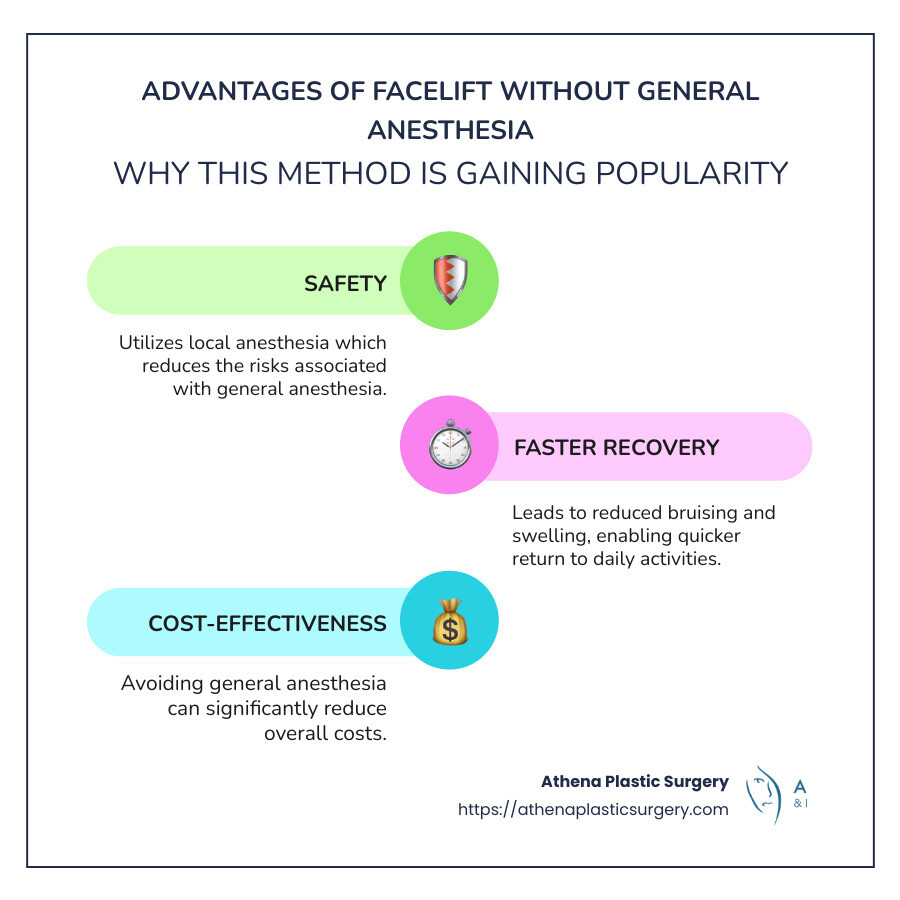
One of the most significant benefits is the reduced risk of complications. General anesthesia can lead to adverse reactions and complications, including nausea and post-operative hematomas. Facelifts performed under local anesthesia, however, eliminate these risks. According to a study published in the Aesthetic Surgery Journal, using local anesthesia for facelifts effectively removes the risks associated with general anesthesia without increasing surgical complications.
Faster Recovery
Recovery time is notably quicker when general anesthesia is not used. Patients often experience less post-operative fatigue and can resume their normal activities sooner. Without the grogginess that follows general anesthesia, patients can enjoy a more immediate return to their usual routine.
Cost Savings
Another advantage is the potential for cost savings. General anesthesia often requires the presence of an anesthesiologist, which can increase the overall cost of the procedure. By avoiding this, patients may find the procedure more affordable. While there might be some extra time needed to administer local anesthesia properly, the savings from not having an anesthesiologist can offset these costs.
Natural Results
Facelifts without general anesthesia can also yield natural-looking results. Techniques such as the Reflection Lift and awake facelift are designed to improve your natural features rather than dramatically alter them. Patients often report looking like a refreshed version of themselves, with family and friends noticing only subtle changes.
In summary, choosing a facelift without general anesthesia can lead to fewer complications, a faster recovery, cost savings, and natural results. These benefits make it a compelling option for those seeking facial rejuvenation.
Next, we’ll dig into the types of facelifts performed without general anesthesia.
Types of Facelifts Performed Without General Anesthesia
When considering a facelift without general anesthesia, there are several types to choose from, each with its unique approach and benefits. Here are some of the most popular options:
Reflection Lift
The Reflection Lift is a unique facelift technique developed by Dr. Boggess, a renowned facial plastic surgeon. This method uses local anesthesia to achieve natural-looking results without the need for general anesthesia. The Reflection Lift is custom to each patient’s needs and offers different levels of intervention:
- Level I: A conservative approach for mild to moderate skin laxity.
- Level II: Includes liposuction to address fat accumulation.
- Level III: A more aggressive approach for moderate to severe laxity.
These options ensure that patients receive a personalized and effective treatment plan.
Awake Facelift
An awake facelift involves performing the procedure while the patient is conscious but relaxed, thanks to a combination of local and twilight anesthesia. This type of facelift is ideal for those who prefer to avoid the risks associated with general anesthesia. Patients remain awake and aware, but comfortable and pain-free throughout the surgery.
Sedation Options
Several sedation options are available for facelifts without general anesthesia, allowing for varying levels of relaxation and comfort:
- Oral Medications: Patients may take medications like Valium to relax, often dozing off during the procedure.
- IV Sedation: This involves administering sedating medications intravenously, providing more precise control over the level of sedation. This option is favored by many surgeons for its effectiveness and safety.
These sedation methods ensure that patients remain comfortable and anxiety-free while avoiding the risks and costs associated with general anesthesia.
By choosing one of these facelift techniques, patients can enjoy a refreshd appearance with less downtime and fewer risks. In the next section, we’ll explore what to expect during the procedure itself.
The Procedure: What to Expect
When opting for a facelift without general anesthesia, understanding the procedure can help ease any anxiety. Let’s break down the key components: local anesthetic injections, surgical techniques, and patient monitoring.
Local Anesthetic Injections
The process begins with the administration of local anesthesia. This numbs the specific area of the face being treated. A common choice is a tumescent fluid, which combines epinephrine, lidocaine, and saline. This mixture not only numbs the area but also minimizes bleeding and swelling.
Patients can have breakfast on the day of surgery, as there’s no need for fasting, unlike procedures involving general anesthesia. The injections might take a bit of time to administer, but they ensure a pain-free experience during the facelift.
Surgical Techniques
Once the area is numb, the surgeon performs the facelift using techniques custom to your needs. The goal is to tighten loose or sagging skin, smooth out wrinkles, and restore a youthful appearance. Depending on the extent of the facelift, the procedure might involve:
- Minimal Incisions: For less invasive options, small incisions are made to lift and tighten the skin.
- Liposuction: In some cases, removing excess fat is necessary to achieve the desired contour.
- Tissue Repositioning: Adjusting underlying tissues can improve the structure and symmetry of the face.
These techniques are chosen based on the patient’s specific needs and desired outcomes.
Patient Monitoring
Throughout the procedure, patient safety is a top priority. Vital signs such as heart rate and blood pressure are closely monitored. The absence of general anesthesia means there’s no need for ventilators, reducing the complexity of monitoring.
Patients are kept in a relaxed state, often with twilight anesthesia or mild sedatives. This ensures they remain comfortable while still being aware enough to communicate with the surgical team if needed.
After the procedure, patients typically recover quickly. They can stand and walk out of the surgical center the same day, feeling more refreshed than they would after general anesthesia.
In the next section, we’ll address common questions about facelifts without general anesthesia, including potential risks and recovery expectations.
Frequently Asked Questions about Facelift Without General Anesthesia
Can I get a facelift without general anesthesia?
Yes, you can! Many patients opt for an awake facelift using only local anesthesia. This approach helps those who wish to avoid the risks associated with general anesthesia. Local anesthesia numbs the specific areas of the face, so you remain awake and aware, but you won’t feel pain during the procedure. The added benefit? You can communicate with your surgeon throughout the process, ensuring your comfort and peace of mind.
What are the risks of an awake facelift?
While facelifts without general anesthesia are generally safe, like any surgical procedure, they come with some risks. However, these risks are often reduced compared to surgeries involving general anesthesia.
Anesthesia side effects: With local anesthesia, side effects like nausea or grogginess are rare. It’s a safer option for those with health concerns that make general anesthesia risky.
Surgical risks: These include infection, scarring, or changes in skin sensation. But with an experienced surgeon, these risks are minimized, and patients often experience fewer complications.
Patient suitability: Not everyone is a candidate for this procedure. Those needing extensive facial work or with high anxiety about being awake may not be ideal candidates. A thorough consultation with your surgeon will determine if this approach is right for you.
How long does recovery take after a facelift without general anesthesia?
Recovery is often quicker compared to traditional facelifts with general anesthesia. Here’s what you can expect:
- Reduced bruising and swelling: Local anesthesia often results in less bruising, allowing you to heal faster.
- Quicker return to normal activities: Many patients resume their regular routines within 1-2 weeks. In fact, some even go out for lunch the day after their procedure!
- Minimal discomfort: Most patients report only mild discomfort or a feeling of fullness after the surgery, often requiring little to no pain medication.
With these benefits, an awake facelift offers a smoother recovery, letting you enjoy your refreshd appearance sooner.
Next, we’ll explore how Athena Plastic Surgery ensures personalized care and aesthetic excellence in every procedure.
Conclusion
At Athena Plastic Surgery, we pride ourselves on delivering personalized care and achieving aesthetic excellence in every procedure. Our approach to facelifts without general anesthesia reflects our commitment to patient safety, comfort, and satisfaction.
Led by the highly skilled Dr. Avron, who trained at Johns Hopkins, our team focuses on crafting results that improve your natural beauty without the need for general anesthesia. This method not only minimizes risks but also allows for a quicker recovery, so you can get back to your daily life with confidence.
Personalized Care: We understand that every face is unique. That’s why we tailor each facelift to fit your specific needs and goals. From your initial consultation to the final follow-up, we ensure that your experience is comfortable and customized to your expectations.
Aesthetic Excellence: Our goal is to help you achieve a refreshed and youthful appearance while maintaining your natural look. With advanced surgical techniques and a keen eye for detail, we provide results that are both subtle and transformative.
Whether you’re considering an awake facelift or another facial rejuvenation procedure, Athena Plastic Surgery is here to guide you through the process with expertise and compassion. Find how our approach can help you look and feel your best.
If you’re ready to explore your options, we invite you to learn more about our facelift services and schedule a consultation with us. Let us help you achieve the youthful, vibrant appearance you desire.