


What to Expect: Your Tummy Tuck Recovery Timeline at a Glance
The tummy tuck recovery timeline is something every patient should understand before going under the knife — because knowing what’s coming makes the whole process far less stressful.
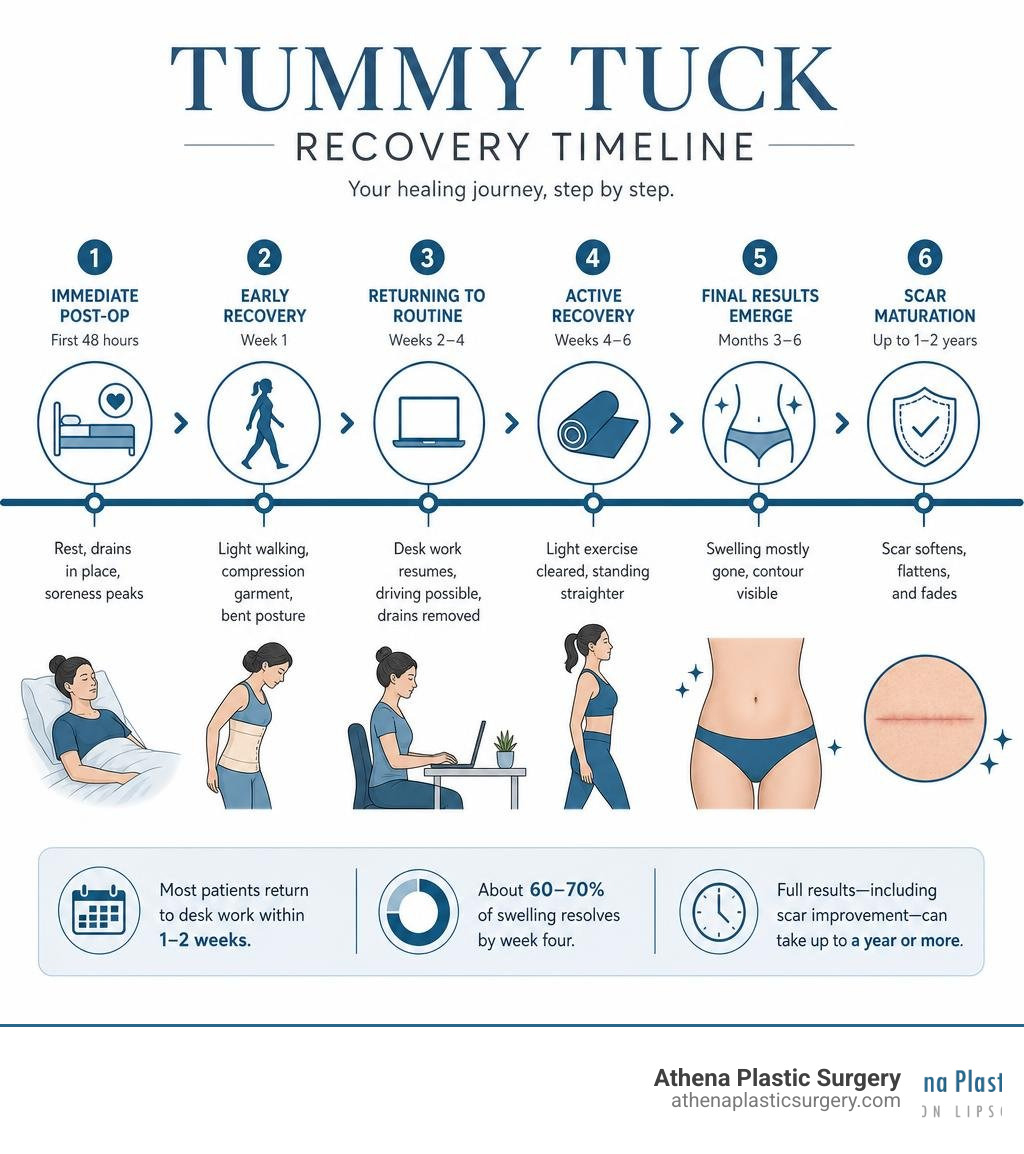
Here’s a quick snapshot of what to expect:
| Phase | Timeframe | Key Milestones |
|---|---|---|
| Immediate post-op | First 48 hours | Rest, drains in place, soreness peaks |
| Early recovery | Week 1 | Light walking, compression garment, bent posture |
| Returning to routine | Weeks 2–4 | Desk work resumes, driving possible, drains removed |
| Active recovery | Weeks 4–6 | Light exercise cleared, standing straighter |
| Final results emerge | Months 3–6 | Swelling mostly gone, contour visible |
| Scar maturation | Up to 1–2 years | Scar softens, flattens, and fades |
Most patients return to desk work within 1–2 weeks. About 60–70% of swelling resolves by week four. Full results — including scar improvement — can take up to a year or more.
Recovery looks different for everyone. Your age, overall health, the type of procedure you had, and how closely you follow post-op instructions all play a role in how quickly you heal.
I’m Dr. Avron Lipschitz, MD, a Board-Certified Plastic Surgeon with over 15 years of experience performing abdominoplasty and guiding patients through every stage of the tummy tuck recovery timeline. Having trained at Johns Hopkins Hospital and completed aesthetic training in New York, I’ve helped thousands of patients heal confidently and achieve lasting results.
Understanding Your Tummy Tuck Recovery Timeline
Embarking on a body contouring journey is an exciting decision, but achieving that beautifully sculpted, flat abdomen requires a healthy partnership between surgical expertise and patient dedication. As we often tell our patients in our Stuart and West Palm Beach clinics, healing from a tummy tuck is a marathon, not a sprint. To help you maintain the right mindset, we always emphasize that Patience is a Virtue and So is Your Tummy Tuck Recovery Timeline.
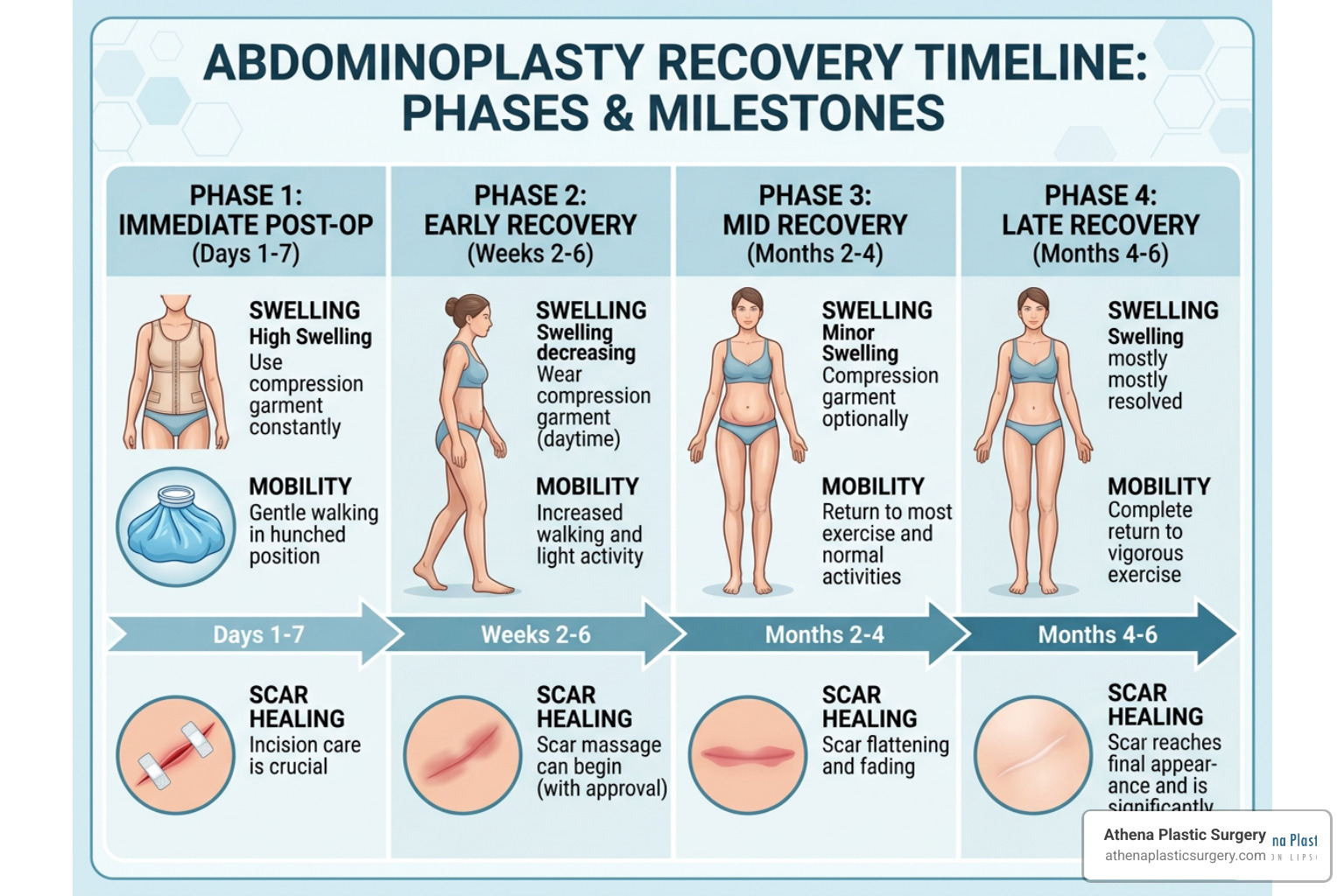
The overall timeline is shaped by how your tissues respond to surgery, whether we repaired separated abdominal muscles (diastasis recti), and how closely you adhere to your recovery guidelines. While the physical transformation begins immediately on the operating table, the true refinement of your new contours unfolds over several months. Understanding this journey step-by-step prevents unnecessary anxiety and helps you celebrate the “small wins” along the way, such as walking a little further each day or transitioning out of your surgical garments.
The First Week: Managing Pain, Swelling, and Mobility
The first seven days after your abdominoplasty are focused entirely on protected rest, pain control, and tissue support. During the first 48 hours, you will feel quite tight, sore, and fatigued as the anesthesia fully wears off. Managing your discomfort is our top priority, and we utilize a combination of prescription pain medications and long-acting nerve blocks administered during surgery to keep you comfortable.
According to the official Tummy Tuck Recovery Guide, wearing your compression garment or abdominal binder is essential during this phase. This medical-grade garment provides constant, gentle pressure that minimizes swelling, supports your newly repaired abdominal wall, and helps your skin adhere to the underlying tissues.
You will also likely have temporary surgical drains in place to prevent fluid buildup (seromas). We will teach you or your caregiver how to empty these drains and record the daily fluid output. While mobility is limited during week one, we do not want you on strict bed rest. We encourage you to take very short, gentle walks around your living space every few hours starting on day one or two to keep your blood circulating and minimize the risk of blood clots.
Weeks Two to Four: Returning to Your Routine
As you enter the second week, you will notice a steady improvement in your energy levels and physical comfort. Many of our patients find that they can transition from prescription pain medication to over-the-counter options by day 10. If you work a sedentary desk job, this is typically the window (between weeks one and two) where you can safely return to work, provided you do not have to lift anything heavy or commute long distances.
According to clinical insights on the Tummy Tuck Recovery Timeline, major milestones occur during weeks two through four. Your surgical drains are typically removed during this period once the daily fluid output drops below a safe threshold. You can also expect to resume driving around week two, as long as you are no longer taking prescription pain medications and can comfortably twist and react behind the wheel without abdominal pulling. While you can gradually increase your daily walking distance, you must continue to avoid strenuous workouts, heavy lifting, and abdominal exercises.
Months Two to Six: Final Results and Scar Maturation
By the second month, you are well on your way to enjoying your final contour. About 60% to 70% of your post-surgical swelling will have resolved by week four, and by month three, the vast majority of residual puffiness will subside. This is when the results of your surgery become highly visible, and you can truly appreciate your flatter, firmer abdominal profile.
An important aspect of this long-term phase is scar care and tissue softening. During months one through three, your incision line may look raised, firm, and pink or red. This is a completely normal part of the body’s inflammatory response. Over months three to six, and continuing for up to a year or more, the scar will gradually soften, flatten, and fade. To achieve the best cosmetic outcome, we guide our patients on specialized techniques to manage Tummy Tuck Scars, including the use of medical-grade silicone sheets or gels. Additionally, if your procedure involved a full abdominoplasty, we will monitor the healing of your new navel to ensure a natural look; you can learn more about this in our guide to the Belly Button After Tummy Tuck.
How the Type of Abdominoplasty Affects Your Healing
Not all tummy tucks are created equal, and the specific surgical technique used has a direct impact on your recovery timeline, incision length, and physical restrictions. Below is a comparison table outlining the recovery expectations for the three primary types of abdominoplasty:
| Type of Tummy Tuck | Incision Length | Muscle Repair Required? | Time Off Work (Desk Job) | Return to Light Exercise |
|---|---|---|---|---|
| Mini Tummy Tuck | Short (similar to a C-section) | Rarely (lower abdomen only) | 5 to 7 days | 2 to 3 weeks |
| Full Tummy Tuck | Hip-to-hip (low on the pubic mound) | Yes (full midline repair) | 10 to 14 days | 4 to 6 weeks |
| Extended / 360 Tummy Tuck | Wraps around the hips/flanks | Yes (full midline and flanks) | 3 to 4 weeks | 6 to 8 weeks |
Mini Tummy Tuck Recovery Timeline
A mini tummy tuck is designed for patients who have a small amount of loose skin and mild muscle laxity confined strictly to the area below the belly button. Because this procedure involves a much shorter incision and does not require repositioning the navel or repairing the upper abdominal muscles, the recovery is significantly faster and less demanding.
If you are a Mini Tummy Tuck Candidate, you can expect to feel much more independent within the first few days. Many patients are able to stand fully upright almost immediately and can return to light household activities and desk work within a week. While you still need to wear a supportive garment and avoid heavy lifting for a few weeks, the overall healing process is highly streamlined.
Full and Extended Tummy Tuck Recovery Timeline
For patients dealing with significant skin laxity, stretched abdominal walls, or separated muscles following pregnancy or massive weight loss, a full or extended abdominoplasty is the gold standard. A full tummy tuck addresses the entire abdominal area, requiring a hip-to-hip incision, a second incision around the belly button, and extensive muscle repair to correct diastasis recti.
An extended tummy tuck goes a step further, extending the incision around the sides of the hips to remove excess tissue from the flanks and lower back. When combined with circumferential liposuction, this is often referred to as a 360 Tummy Tuck. Because these procedures involve extensive tissue undermining and muscle reconstruction, your body requires more time to heal. You will need to maintain a bent-forward posture for the first week to protect the repair, and your return to physical labor or intense exercise will be paced carefully over six to eight weeks.
Essential Tips for a Smoother, Faster Recovery

While your surgical team lays the foundation for a beautiful result, your daily habits at home play a massive role in how smoothly you heal. Following a structured set of Tummy Tuck Recovery Tips can prevent complications, curb excessive swelling, and keep your spirits high during the quiet days of early recovery.
Managing Swelling and Fluid Retention
Swelling is your body’s natural defense mechanism after surgery, but letting fluid accumulate unchecked can slow down your healing. The most effective weapon against fluid retention is the consistent use of your compression garment. For the first few weeks, you should wear it 24/7, only removing it to shower. Some patients benefit from transitioning to an Extra Firm Tummy Tucker for Lower Belly during the later stages of recovery to maintain targeted support.
Your diet also plays a critical role in fluid management:
- Reduce Sodium: High-salt foods cause your body to hold onto excess water, worsening post-op swelling. Stick to fresh, whole foods.
- Stay Hydrated: It sounds counterintuitive, but drinking plenty of water helps flush out retained fluids and toxins.
- Eat Clean Protein: Lean proteins (chicken, fish, eggs, tofu) provide the essential building blocks your tissues need to rebuild and heal.
Safe Movement and Posture Guidelines
Protecting your abdominal wall closure is vital during the first two weeks. Standing up completely straight too early can place excessive tension on your incision, which may lead to wider scars or delayed wound healing.
- The “Beach Chair” Position: When resting in bed or on a recliner, keep your upper body elevated at a 45-degree angle and your knees slightly bent with pillows underneath. This keeps your core relaxed.
- The Log Roll: To get out of bed without straining your abdominal muscles, roll onto your side, swing your legs over the edge of the mattress, and use your arms to push your upper body up.
- Gentle Walking: Walk slightly hunched forward during the first week. Take short, frequent strolls around the house to keep your circulation moving and prevent deep vein thrombosis (DVT).
Warning Signs and Red Flags to Watch For
While mild pain, moderate swelling, and bruising are completely normal parts of the healing process, you should always monitor your body for signs of potential complications. Knowing when to call our office ensures that any issues are addressed promptly and safely.
Contact us immediately if you experience any of the following:
- Fever: A body temperature rising above 100.4°F (38°C) can be an early sign of infection.
- Asymmetrical Swelling or Extreme Pain: If one side of your abdomen becomes rapidly swollen, firm, or significantly more painful than the other, it could indicate a hematoma (blood collection under the skin).
- Incision Changes: Watch for spreading redness, skin that feels unusually hot to the touch, or foul-smelling drainage from your incision or drain sites.
- Signs of DVT: Swelling, redness, warmth, or pain in one of your calves or legs can indicate a blood clot.
- Shortness of Breath or Chest Pain: This is a medical emergency that could indicate a pulmonary embolism. If you experience difficulty breathing, call 911 or go to the nearest emergency room immediately.
Frequently Asked Questions about Tummy Tuck Recovery
When can I stand up straight after a tummy tuck?
Most patients can begin standing noticeably straighter by the end of the first week, but you should not force your body to stretch. Full, comfortable extension usually returns naturally between weeks two and three as the internal swelling subsides and the tissues adapt to their new, tighter position.
How long does numbness last after abdominoplasty?
Temporary numbness or a “wooden” sensation in your lower abdomen is highly common. This occurs because the sensory nerves in the abdominal skin are stretched and disrupted during the procedure. Sensation gradually returns as the nerves regenerate, a process that can take anywhere from six months to a year. You can read more about what to expect regarding Numbness Tummy Tuck on our website.
When can I resume exercise and heavy lifting?
Light walking should begin on day one. You can typically return to light cardiovascular exercise (such as using a stationary bike or walking on a flat treadmill) by week four. However, you must avoid heavy lifting (anything over 10 pounds), strenuous core workouts, planks, and weight training until you are fully cleared by us, which is typically around the six- to eight-week mark.
Conclusion
Your tummy tuck recovery is a highly personal journey that requires a balance of physical rest, proper tissue support, and a patient mindset. By understanding what to expect day-by-day and partnering with an experienced, compassionate surgical team, you can look forward to a safe recovery and beautiful, life-changing results.
At Athena Plastic Surgery, Dr. Avron Lipschitz and our dedicated team are here to support you through every phase of your transformation. If you are ready to take the next step toward a flatter, firmer abdominal contour in the Stuart or West Palm Beach communities, we encourage you to explore our specialized services for a Tummy Tuck Stuart FL or visit our main page to Schedule a Tummy Tuck Consultation with us today.




