


Why Understanding Insurance Coverage for Eyelid Surgery Changes Everything
How to get insurance to pay for eyelid surgery isn’t just about saving money—it’s about recognizing when your drooping eyelids are more than a cosmetic concern. Many people don’t realize that their tired-looking eyes might actually qualify for medical coverage.
Quick Answer: How to Get Insurance to Pay for Eyelid Surgery
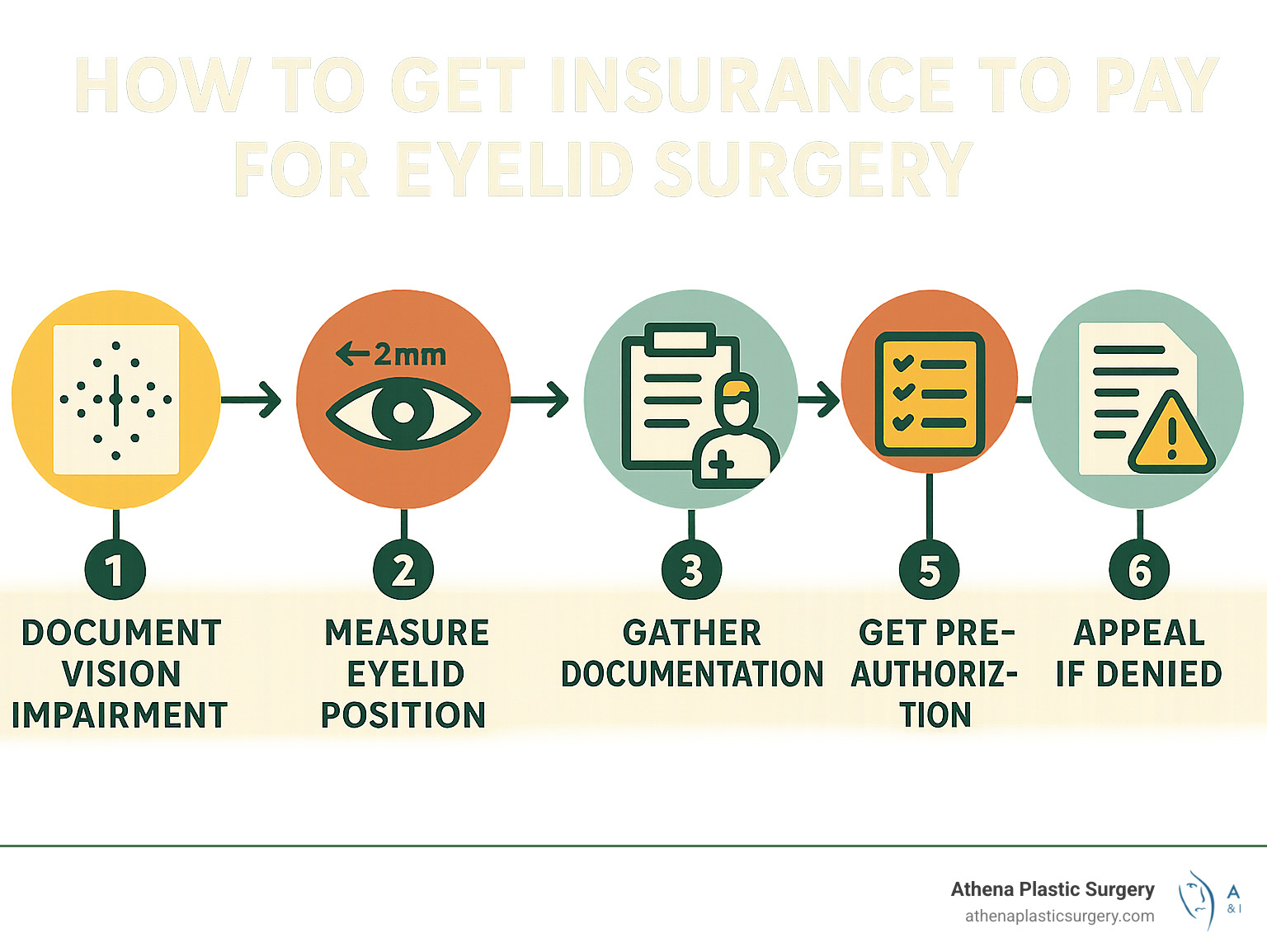
- Document vision impairment – Get a visual field test showing obstruction
- Measure eyelid position – Skin must be within 2mm of your pupil center
- Gather physician notes – Document complaints about daily activities
- Submit standardized photos – Show the physical obstruction clearly
- Get pre-authorization – Submit all documentation before surgery
- Appeal if denied – Provide additional evidence and follow up
The challenge? Insurance companies draw a clear line between cosmetic improvements and medically necessary procedures. While most eyelid surgeries are performed for aesthetic reasons, excess upper eyelid skin that obstructs your vision can qualify for coverage.
According to recent statistics, the average cost of cosmetic eyelid surgery is $3,339—but when the procedure is deemed medically necessary, your insurance may cover it entirely.
As Dr. Avron Lipschitz, a Board-Certified Plastic Surgeon with over 15 years of experience, I’ve helped countless patients steer how to get insurance to pay for eyelid surgery when their drooping lids truly impact their daily lives. My extensive training at Johns Hopkins and years of performing these procedures have taught me exactly what documentation insurance companies require for approval.
Differentiating Cosmetic Desire from Medical Necessity
Here’s the truth: not all eyelid surgery is created equal. When you’re figuring out how to get insurance to pay for eyelid surgery, everything comes down to one crucial question—are your droopy eyelids just making you look tired, or are they actually interfering with how you see and live your daily life?
Let me explain this in simple terms. Your eyelids can develop problems in two main ways, and understanding the difference is key to getting coverage.
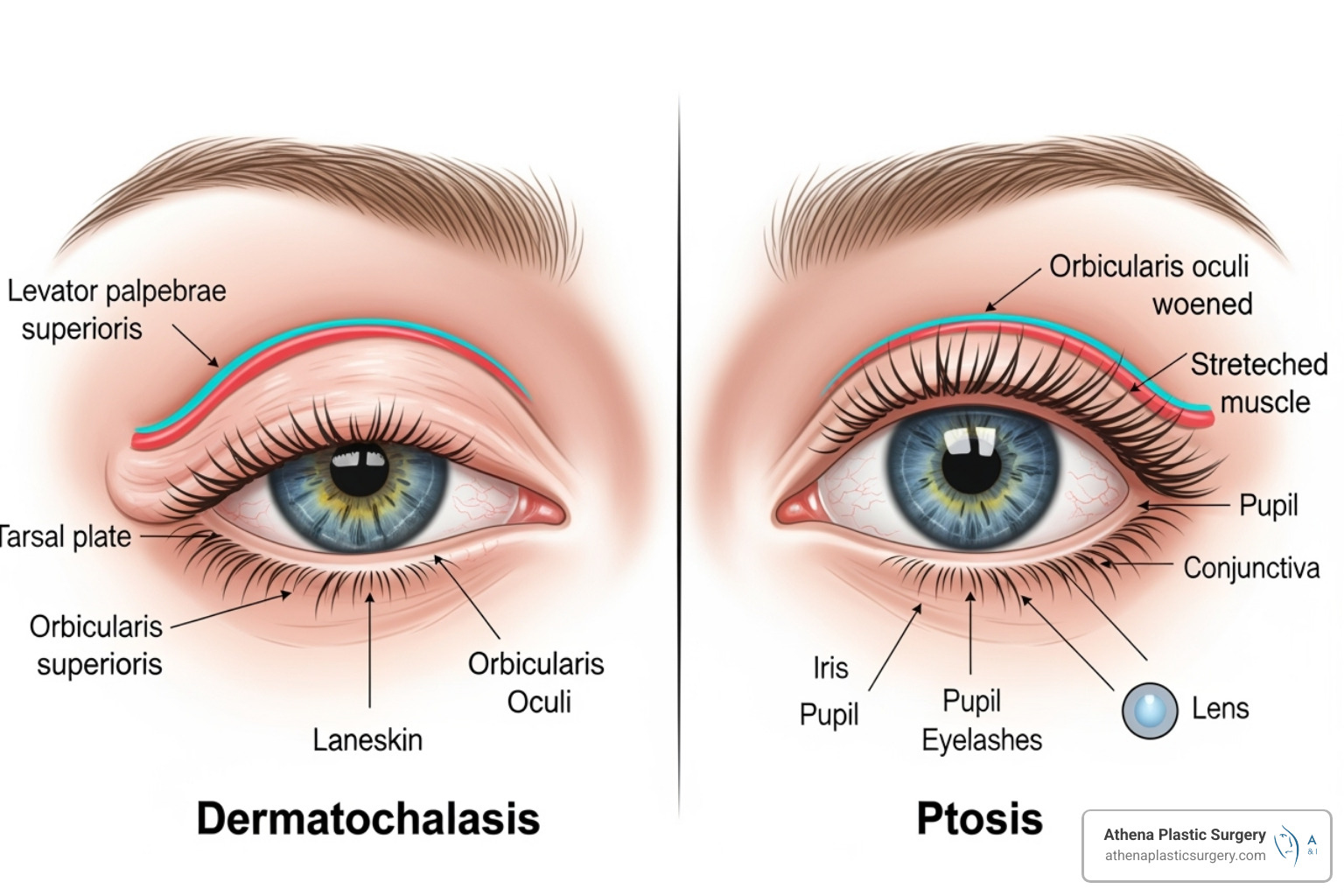
Dermatochalasis is when you have excess, saggy skin on your eyelids. Think of it like a curtain that’s gotten too long—it starts hanging over your eyes. This happens naturally as we age and our skin loses its bounce-back ability. While it can make you look older or tired, it becomes a medical issue when that “curtain” actually blocks your vision.
Ptosis is different—it’s when the eyelid muscle itself gets weak and can’t hold your eyelid up properly. This can happen from birth, injury, or just getting older. When you have ptosis, you might find yourself constantly raising your eyebrows trying to lift your eyelids, which can cause headaches and make you feel exhausted.
Both conditions can turn what looks like a cosmetic concern into a real medical problem. If your tired-looking eyes are also affecting how well you can see, you might be surprised to learn that treatment could be covered by insurance. More info about correcting tired-looking eyes.
The science behind these procedures is solid, with extensive research supporting both the functional and aesthetic benefits of blepharoplasty. Scientific research on blepharoplasty.
When is Eyelid Surgery Medically Necessary?
Insurance companies don’t care if your eyelids make you look older—but they do care if they’re making it hard for you to function safely in your daily life. Here’s when your droopy eyelids cross the line from cosmetic annoyance to medical necessity:
Significant vision problems are the biggest factor. If your upper eyelid skin sags enough to block your side vision, that’s a medical issue. Some insurance companies want to see at least 50% vision obstruction before they’ll approve coverage. Others have their own specific measurements, but the point is the same—your vision needs to be measurably affected.
Daily activities become difficult or dangerous. Can you check your blind spots when driving? Do you have trouble reading because you can’t keep your eyes comfortably open? Is texting or using your phone a strain? These aren’t just minor inconveniences—they’re safety issues that insurance companies recognize.
Chronic headaches from constantly lifting your eyebrows to see better is another red flag. Many of my patients don’t realize they’re doing this until I point it out, but that constant muscle strain can cause serious tension headaches and fatigue.
Eye irritation that won’t go away can happen when excess eyelid skin folds rub together, causing dryness, tearing, or general discomfort that doesn’t respond to eye drops or other treatments.
Sometimes other medical conditions make eyelid surgery clearly necessary—things like eyelid tumors that need removal, injuries that have affected eyelid function, or conditions like Graves’ disease that cause eyelid problems. These are usually straightforward approvals.
The key is proving that your surgery isn’t about looking younger or more refreshed—it’s about being able to see clearly and function normally in your daily life.
Upper vs. Lower Eyelid Surgery Coverage
Here’s where things get tricky, and it’s important to set realistic expectations about how to get insurance to pay for eyelid surgery depending on which eyelids we’re talking about.
Upper eyelid surgery has a much better chance of insurance coverage because it’s more likely to affect your vision. When excess skin hangs over your upper lashes and blocks your sight, or when weak muscles make your eyelids droop, that’s a functional problem insurance companies understand and will often cover.
Lower eyelid surgery is almost always considered cosmetic. Those puffy bags under your eyes and fine lines might make you look tired, but they typically don’t interfere with your vision or daily activities. Insurance companies are pretty clear about this—if it’s about appearance, you’re paying for it yourself.
There are rare exceptions for lower eyelid coverage, like when severe eyelid laxity causes the lower lid to turn outward (ectropion) and leads to chronic eye problems. But honestly, these situations are uncommon.
Most insurance policies have specific language excluding cosmetic procedures, so while we can definitely help you achieve a more refreshed look with lower eyelid surgery, it’s important to budget for this as an out-of-pocket expense. Learn more about correcting puffy eyes.
The bottom line? Focus your insurance efforts on upper eyelid issues that affect your vision, and consider lower eyelid improvements as an investment in how you look and feel.
How to Get Insurance to Pay for Eyelid Surgery: Your Documentation Checklist
Think of getting insurance approval for eyelid surgery like building a legal case—you need solid evidence, clear documentation, and a compelling story. The difference is that instead of convincing a jury, you’re convincing an insurance company that your procedure isn’t about vanity, but about genuine medical need.
Pre-authorization is your golden ticket here. This means getting your insurance company to say “yes, we’ll cover this” before you have surgery. Without pre-authorization, you could end up with a hefty bill even if your condition truly qualifies for coverage.
The process requires teamwork between you, your ophthalmologist (eye doctor), and our team at Athena Plastic Surgery. Each player has a crucial role in building your case. During your initial consultation with us, we’ll assess whether your drooping eyelids likely qualify for coverage and guide you through each step of the documentation process.
The American Academy of Ophthalmology provides valuable insights into this process that can help you understand what to expect. An overview from the American Academy of Ophthalmology.
The Visual Field Test: Proving Your Vision is Impaired
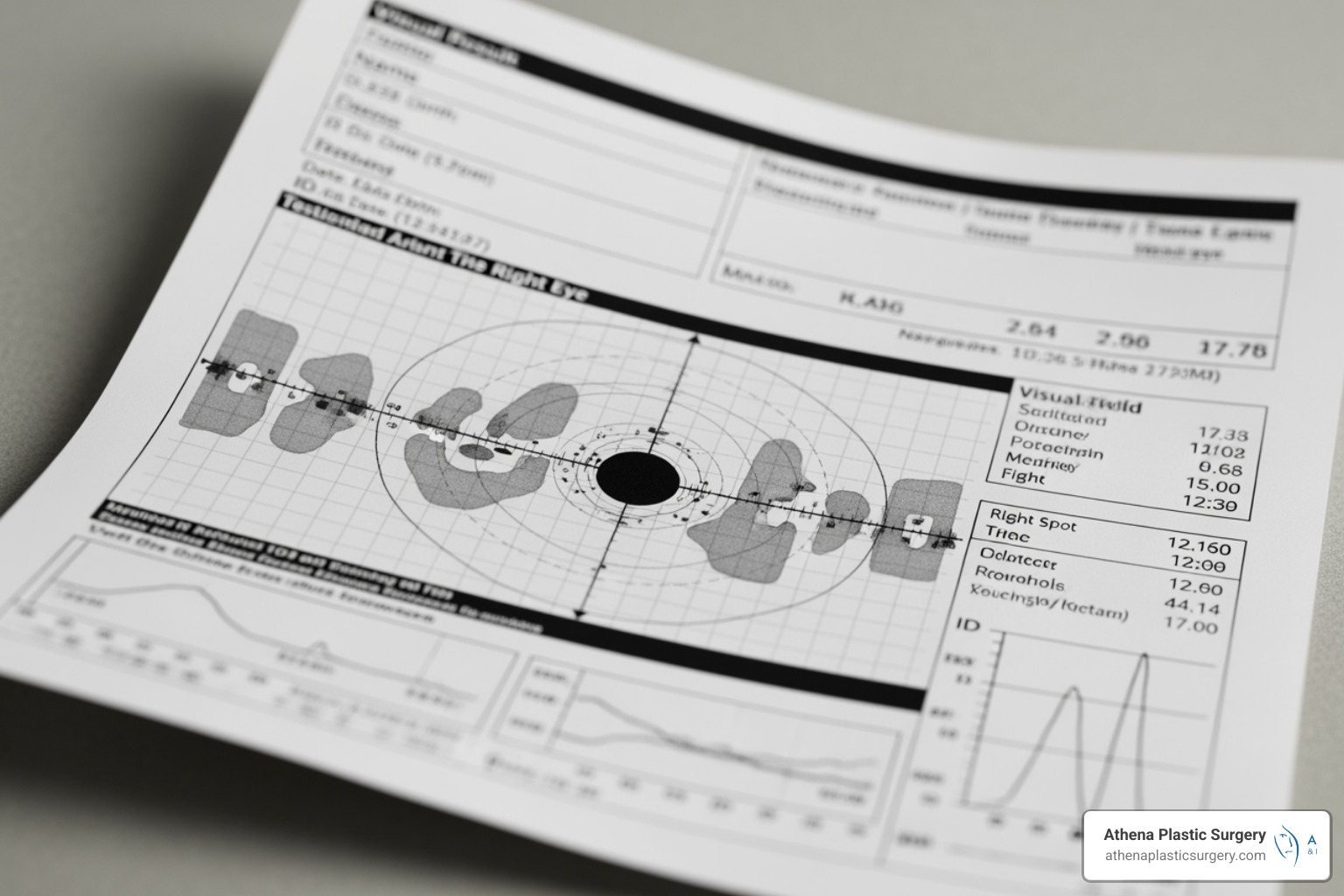
The visual field test is your most powerful piece of evidence when figuring out how to get insurance to pay for eyelid surgery. It transforms your complaint of “I can’t see well” into hard numbers that insurance companies can’t argue with.
Here’s what happens during the test: You’ll sit in front of a dome-shaped machine and stare at a central point. Tiny lights flash around your peripheral vision, and you press a button each time you spot one. It sounds simple, but it creates a detailed map of exactly what you can and can’t see.
The magic happens when you take this test twice. First, they test your vision with your eyelids drooping naturally—this shows how much your vision is currently blocked. Then comes the “taped test” where they gently tape your eyelids up to mimic what you’d look like after surgery. This second test reveals your true visual potential.
The difference between these two results is pure gold for your insurance claim. If the test shows that lifting your eyelids improves your peripheral vision significantly—often by at least 15 degrees or restores 50% of your blocked visual field—you’ve got quantifiable proof that surgery isn’t cosmetic, it’s restorative.
Insurance companies love numbers because they’re objective. You can’t fake a visual field test, and the improvement with taped eyelids clearly demonstrates what surgery could accomplish for your vision.
Essential Physician Notes and Photography
Your medical records need to tell a complete story about how your drooping eyelids affect your daily life. This isn’t just about measurements and medical terms—it’s about documenting the real-world impact on your quality of life.
Your ophthalmologist’s examination notes must include specific details that insurance companies look for. The Margin Reflex Distance (MRD1) measurement is particularly crucial—this measures the distance from your pupil’s center to your upper eyelid edge. Most insurers require this distance to be within 2 millimeters for coverage approval.
But the technical measurements only tell half the story. Your physician notes must also document your functional complaints—the everyday struggles that brought you to seek help. This means detailing how you strain to keep your eyes open while driving, how you get headaches from constantly raising your eyebrows, or how reading becomes exhausting because your eyelids feel heavy.
These aren’t vanity concerns—they’re legitimate medical issues that affect your safety and comfort. The more specific your complaints, the stronger your case becomes.
Standardized photography provides the visual evidence that supports everything else. These aren’t casual selfies—they’re carefully positioned, high-resolution images that clearly show the extent of your eyelid droop and how close the skin hangs to your pupil center.
The photos typically include front-facing shots, side angles, and sometimes images with your chin positioned up and down to show how the drooping affects your vision from different perspectives. When insurance reviewers can actually see the physical obstruction in your photos, combined with your visual field test results, it becomes much harder to deny your claim.
At Athena Plastic Surgery, we understand exactly what documentation insurance companies require because we’ve helped countless patients steer this process successfully. We work closely with you to ensure every piece of evidence is properly gathered and presented. If you’re wondering whether your situation might qualify for coverage, we encourage you to learn more about our candidacy requirements. Find out if you are a good candidate for eyelid surgery.
The Pre-Authorization and Appeals Process
Once you’ve gathered all your medical documentation, visual field test results, and photographs, the next crucial step in how to get insurance to pay for eyelid surgery is navigating the pre-authorization process. Think of this as asking your insurance company for a written promise to cover your procedure before you have it done.

At Athena Plastic Surgery, we handle the heavy lifting of this paperwork for you. We’ll compile everything into a comprehensive submission that includes your physician’s detailed notes explaining the medical necessity, your visual field test results (both with and without your eyelids taped up), standardized photographs showing the obstruction, and a clear explanation of how your drooping eyelids interfere with daily activities like driving or reading.
Here’s the thing about pre-authorization—while it’s an incredibly positive step and significantly increases your chances of coverage, it’s not always a 100% guarantee. Insurance companies occasionally conduct second reviews after your procedure, or administrative hiccups can occur. But don’t let that discourage you. Getting that pre-authorization letter is like having a golden ticket that makes payment much more likely.
What to Do if Your Eyelid Surgery Claim is Denied
Let’s be honest—sometimes insurance companies say no, even when you’ve done everything right. It happens more often than you’d think, and it doesn’t mean your case is hopeless.
The first step is understanding exactly why they denied your claim. Your insurance company must legally tell you their reasoning, and this information becomes your roadmap for moving forward. Common denial reasons include the insurer viewing the procedure as cosmetic rather than medically necessary, insufficient documentation from your doctors, or not meeting their specific criteria for vision impairment or eyelid position measurements.
If your procedure doesn’t qualify for insurance coverage, we understand that the financial aspect can feel overwhelming. The average cost of eyelid surgery is around $3,339 for the surgeon’s fee alone, and when you add anesthesia and facility costs, the total can climb higher.
But here’s what I want you to know—we believe everyone deserves access to care that improves their quality of life. That’s why we work with patients to explore financing options that can make the procedure manageable. Medical credit cards like CareCredit allow you to break the cost into monthly payments. Personal loans specifically for medical procedures are another option. We also offer surgeon payment plans because we’re committed to compassionate care, not just excellent results.
If you have a Health Savings Account (HSA) or Flexible Spending Account (FSA), you can use those pre-tax dollars for the procedure, which effectively reduces your cost. During your consultation with us, we’ll discuss all these options openly—no judgment, just practical solutions. Information on eyelid surgery costs.
How to get insurance to pay for eyelid surgery after an initial rejection
Here’s where persistence really pays off. The appeals process is your second chance to make your case, and frankly, many people give up too easily at this stage.
Start by reviewing that denial letter like it’s a treasure map—because that’s essentially what it is. The letter tells you exactly what additional evidence your insurance company needs to see. Based on those specific concerns, you’ll work with your eye doctor and our team to gather stronger supporting documents. This might mean getting updated visual field tests that show even more pronounced vision problems, more detailed physician notes that emphasize how the condition affects your daily life, or even letters of medical necessity from multiple specialists.
Sometimes a second opinion from another qualified eye specialist can provide the extra validation your insurance company needs to approve the claim.
Writing a compelling appeal letter is crucial—think of it as your chance to tell your story in medical terms. Address each denial reason directly, reference your new supporting documentation, and stick to the medical facts rather than emotional appeals. Insurance reviewers respond to objective evidence, not personal pleas.
The follow-up phase is where many people drop the ball. Don’t just submit your appeal and wait. Call your insurance provider regularly to check on the status. Be polite but persistent—ask for specific timelines and get names of people you’ve spoken with.
Insurance companies are businesses, and sometimes initial denials are just part of their process. By being thorough, persistent, and providing overwhelming evidence of medical necessity, you significantly improve your chances of getting insurance to pay for eyelid surgery that truly improves your vision and quality of life.
Frequently Asked Questions about Insurance and Blepharoplasty
Navigating insurance coverage for eyelid surgery can feel overwhelming, especially when you’re dealing with vision issues that affect your daily life. At Athena Plastic Surgery, we hear these questions every day, and we’re here to help you understand your options clearly.
Can I combine a medically necessary procedure with a cosmetic one?
Absolutely! Many of our patients choose to address both functional and aesthetic concerns during the same surgery. It’s actually quite common and often makes practical sense.
Here’s how it typically works: if your upper eyelid surgery is medically necessary because it’s obstructing your vision, but you also want to improve the appearance of your lower eyelids or add a brow lift for a more refreshed look, we can perform these procedures together.
The insurance coverage gets interesting here. Your insurance will only pay for the medically necessary portion—usually the upper eyelid correction that’s affecting your vision. The cosmetic components become your responsibility. So if we’re doing upper lids for function and lower lids for appearance, you’ll have partial coverage for the upper portion and out-of-pocket costs for the lower portion.
During your consultation, we’ll break down exactly what insurance is likely to cover and what you’ll pay for yourself. This transparency helps you make informed decisions about your care. Many patients find that combining procedures is worth it—you get comprehensive results with one recovery period.
The beauty of addressing both needs at once is that you’re maximizing your time and getting the complete change you’re looking for. Read about the benefits of an eyelid lift to understand how this comprehensive approach can refresh your entire appearance.
What is the average cost of eyelid surgery if insurance won’t pay?
When how to get insurance to pay for eyelid surgery doesn’t work out, or if your procedure is purely cosmetic, you’ll need to plan for the full cost. Let’s be honest about the numbers so you can budget appropriately.
The average surgeon’s fee for eyelid surgery is $3,339, according to recent statistics. But here’s what many people don’t realize—that’s just one piece of the puzzle.
Your total investment includes several components: the surgeon’s fee covers Dr. Avron’s expertise and skill, anesthesia costs ensure your comfort during the procedure, facility fees cover the operating room and equipment, and pre- and post-operative care includes your consultations and follow-up visits.
When you add everything together, most patients can expect to invest between $4,000 to $8,000 or more, depending on whether you’re having upper lids, lower lids, or both done. The complexity of your case and your geographic location also influence the final cost.
Don’t let these numbers discourage you if the procedure would truly improve your quality of life. We offer various financing options including medical credit cards, personal loans, and payment plans through our practice. We believe financial concerns shouldn’t prevent you from seeing clearly and feeling confident. Information on eyelid surgery costs provides more detailed pricing information.
What are the first steps in trying to get insurance to pay for eyelid surgery?
Starting your journey toward insurance coverage doesn’t have to be complicated. Think of it as building a case—each step adds another piece of evidence that your surgery is medically necessary, not just cosmetic.
Your first stop should be a consultation with a qualified plastic surgeon. At Athena Plastic Surgery, Dr. Avron will examine your eyelids, discuss how they’re affecting your daily activities, and determine if your condition might qualify for insurance coverage. We’re looking for signs that your drooping lids are actually interfering with your vision or causing other health issues.
If we believe your case has merit, we’ll refer you to an ophthalmologist for the critical visual field testing. This eye doctor will perform the taped and untaped visual field tests that provide objective proof of your vision impairment. This isn’t just about how you feel—it’s about measurable data that insurance companies can’t argue with.
While you’re going through these evaluations, start documenting your symptoms thoroughly. Keep track of when your eyelids feel heavy, which activities are difficult (like driving at night or reading), and any discomfort you experience. Note if you get headaches from constantly raising your eyebrows to lift the skin out of your visual field.
Don’t forget to review your insurance policy before you get too far into the process. Look for sections about cosmetic surgery exclusions and medically necessary procedures. Understanding your coverage upfront helps set realistic expectations.
Each of these steps builds toward creating a comprehensive case for medical necessity. We’ll guide you through the entire process, making sure you understand what to expect at each stage. What to know before your procedure offers additional insights into preparing for your eyelid surgery journey.
Your Path to Clearer Vision and Coverage
You’ve made it through the journey of understanding how to get insurance to pay for eyelid surgery, and that’s no small feat! The process can feel overwhelming at first, but when you break it down into manageable steps, it becomes much more achievable—especially when your drooping eyelids are genuinely affecting your vision and daily life.
The truth is, insurance companies aren’t trying to make things difficult just for the sake of it. They simply need solid proof that your surgery addresses a medical problem, not just cosmetic concerns. And honestly, that makes sense from their perspective.
The most important thing to remember? Documentation is your best friend. Every measurement, every visual field test result, every photograph, and every note from your doctor builds your case. Think of it like telling a story—your story—about how drooping eyelids impact your ability to drive safely, read comfortably, or go through your day without constant eye strain or headaches.
Medical necessity truly is the golden key that open ups insurance coverage. While you might love the idea of looking more refreshed (and that’s a wonderful bonus!), what insurance companies care about is whether you can see properly and function normally in your daily activities.
Here’s something many patients don’t realize: upper eyelid surgery has a much better chance of coverage than lower eyelid procedures. If your upper lids are drooping into your line of sight, you’re already on the right track. Lower lid puffiness, while bothersome, rarely qualifies for medical coverage.
Don’t get discouraged if you face an initial denial. It happens more often than you’d think, and it doesn’t mean your case isn’t valid. The appeals process exists for a reason, and persistence often pays off. Sometimes insurance companies need to see that extra bit of documentation or hear your story explained in a slightly different way.
At Athena Plastic Surgery, we’re not just your surgeons—we’re your advocates. Dr. Avron’s extensive training at Johns Hopkins has given him deep insight into what insurance companies look for, and our team has helped countless patients in the Stuart communities steer this process successfully. We understand both the medical and administrative sides of this journey.
Your vision is too precious to ignore, and the impact of constantly struggling with drooping eyelids goes far beyond appearance. If you’re squinting to see clearly, tilting your head back to look under heavy lids, or dealing with the frustration of impaired peripheral vision, it’s time to take action.
The best part? You don’t have to figure this out alone. We’re here to guide you through every step, from that initial assessment to gathering documentation and working with your insurance company. Our goal is to make this process as smooth as possible while helping you achieve both clearer vision and the confidence that comes with it.
Ready to explore whether your eyelid concerns might qualify for insurance coverage? We’d love to meet with you and discuss your options. Schedule a consultation to discuss your blepharoplasty options with our team today. Let’s work together toward clearer vision and a more comfortable, confident you.




