


What You Need to Know About a Tummy Tuck Scar
A tummy tuck scar is a permanent but highly concealable feature of abdominoplasty — and with the right care, it can fade to a thin, pale line hidden beneath your underwear or swimwear.
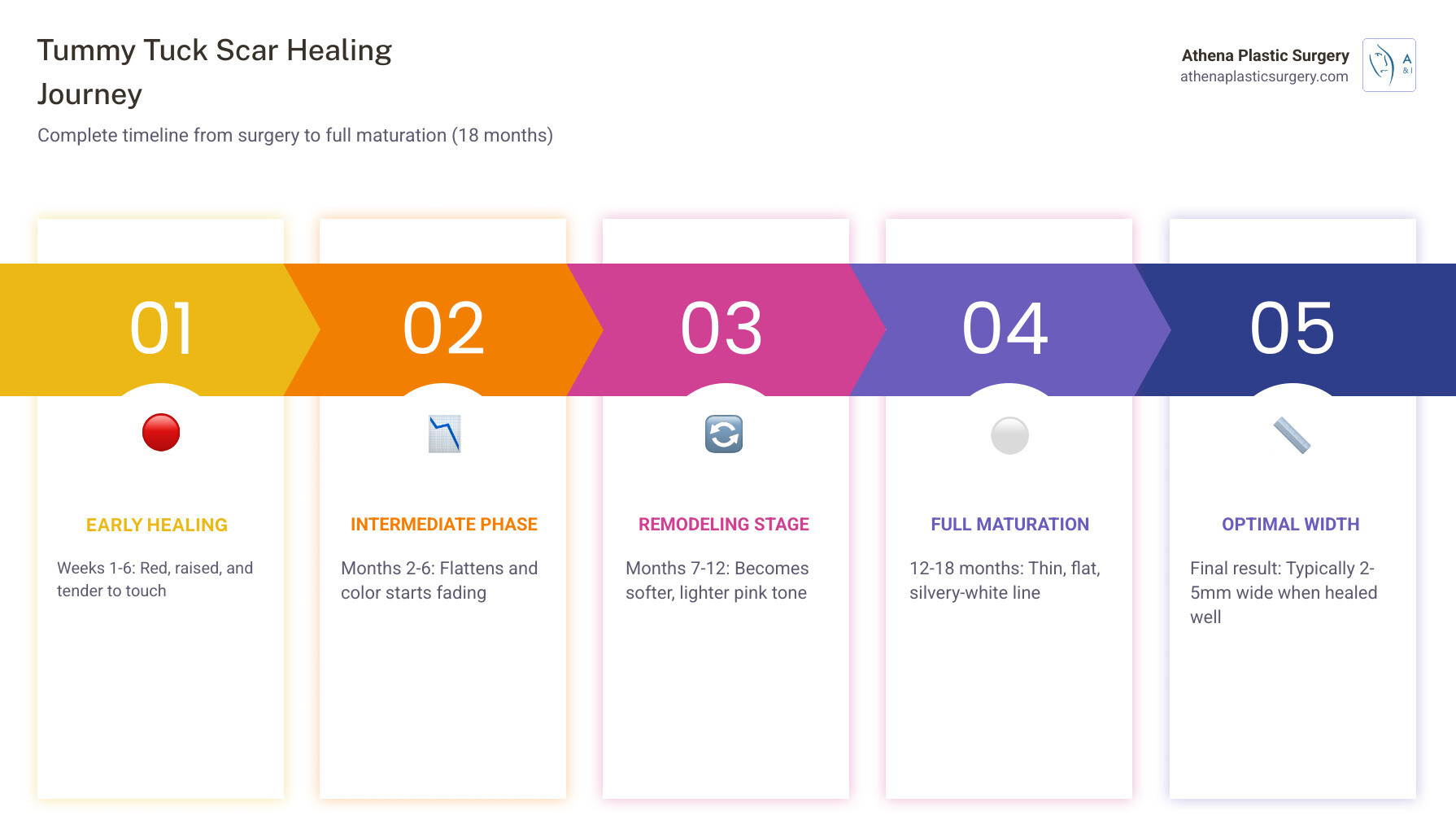
Here’s what to expect at a glance:
| Stage | Timeframe | Scar Appearance |
|---|---|---|
| Early healing | Weeks 1-6 | Red, raised, tender |
| Intermediate | Months 2-6 | Flattening, color fading |
| Remodeling | Months 7-12 | Softer, lighter pink |
| Full maturation | 12-18 months | Thin, flat, silvery-white line |
Key facts:
- The main incision runs horizontally across the lower abdomen, hip to hip, just above the pubic area
- A fully healed scar is typically 2-5mm wide with good outcomes
- Scars never disappear completely, but they can become very hard to notice
- Strategic placement means most scars stay hidden under standard underwear and bikini bottoms
- Silicone-based products, sun protection, and scar massage are the most effective tools for minimizing appearance
Many patients find that, over time, the scar becomes the least memorable part of their transformation — and some even choose to turn it into art with a cover-up tattoo.
I’m Dr. Avron Lipschitz MD, a board-certified plastic surgeon with over 15 years of experience performing abdominoplasty and guiding patients through every stage of tummy tuck scar healing and management. In this guide, I’ll walk you through everything from incision types and recovery timelines to advanced treatments and tattoo camouflage options.
Must-know tummy tuck scar terms:

Understanding Your Incision: Types and Placement

When we plan a tummy tuck, one of our primary goals at Athena Plastic Surgery is to ensure the resulting tummy tuck scar is as discreet as possible. Strategic placement is the secret to a result that looks natural even in a bikini. Most surgeons follow the “bikini line” rule, placing the horizontal incision low enough on the abdomen that it is easily covered by standard underwear or swimwear.
The Tummy Tuck – Incisions and Scars vary depending on how much skin needs to be removed and the specific contouring goals of the patient. For a standard tummy tuck scar, the line usually extends from hip bone to hip bone, following the natural curve of your pelvic area.
| Procedure Type | Incision Location | Scar Length/Shape | Navel Incision? |
|---|---|---|---|
| Mini Tummy Tuck | Above pubic area | 15-20cm (similar to C-section) | No |
| Full Tummy Tuck | Hip-to-hip | Long horizontal curve | Yes |
| Extended Tummy Tuck | Across hips to back | Very long horizontal | Yes |
| Fleur-de-Lis | Horizontal + Vertical | Upside-down “T” shape | Yes |
Mini vs. Full Tummy Tuck Incisions
For patients who only have a small “pooch” or excess skin below the belly button, a mini tummy tuck candidate may be the ideal choice. The tummy tuck scar for a mini procedure is significantly shorter, typically ranging from 15 to 20cm. It often looks like a slightly extended C-section scar. Because the upper abdomen isn’t treated, there is usually no incision around the navel, which simplifies the healing process.
Specialized Techniques: Fleur-de-Lis and Reverse
In cases of massive weight loss (often 50 pounds or more), a standard horizontal incision might not be enough to address the skin laxity. We may recommend an extended tummy tuck or a Fleur-de-Lis. The Fleur-de-Lis technique adds a vertical midline incision to the traditional horizontal one, creating an upside-down “T.” While this results in more visible scarring, it allows for maximum skin removal and a much tighter waistline.
Conversely, a “reverse” tummy tuck is used when the skin laxity is primarily in the upper abdomen. In this case, the tummy tuck scar is placed in the creases under the breasts (inframammary folds), making it almost invisible when standing.
The Journey to Recovery: What to Expect
Healing is a marathon, not a sprint. It is vital to have realistic expectations for your before and after tummy tuck results. Initially, your tummy tuck scar will look angry—red, raised, and perhaps a bit bumpy. This is a normal part of the inflammatory phase of healing.
As the months pass, the scar undergoes “remodeling.” By the 12-to-18-month mark, most patients see their scar settle into a thin, flat, silvery-white line that is roughly 2-5mm wide. You can learn more about the specifics of this process at the Cleveland Clinic’s guide to tummy tuck scars.
The Complete Tummy Tuck Scar Healing Timeline
- Weeks 1-4: The incision is fresh. It may be held together by surgical glue, tapes, or sutures. Expect redness and some swelling.
- Months 2-6: This is the “awkward phase.” The scar might actually look darker or more prominent as blood flow to the area increases to support healing. You might also notice numbness near the tummy tuck scar, which is common as small nerve endings regenerate.
- Months 7-12: The scar begins to soften and flatten. The deep red color fades to a lighter pink.
- Months 12-18: Full maturation. The scar reaches its final color and texture.
Factors Influencing Your Final Result
No two people heal exactly the same way. Several factors play a role in how your tummy tuck scar turns out:
- Genetics: If your family has a history of keloids or hypertrophic (raised) scars, you may be more prone to them.
- Surgical Tension: A skilled surgeon ensures the skin is closed with the right amount of tension. Too much tension can cause the scar to widen.
- Smoking: This is a big one. Smoking constricts blood vessels and significantly increases the risk of wound separation and poor scarring.
- Nutrition: Your body needs “building blocks” to repair itself. Proper nutrition for healing—specifically high protein, Vitamin C, and Zinc—is essential.
Professional Strategies to Minimize Your Tummy Tuck Scar
At Athena Plastic Surgery, we don’t just perform the surgery and send you on your way; we provide a comprehensive protocol to look and feel your best with a tummy tuck. Minimizing a tummy tuck scar requires a proactive approach during the first year of recovery.
Topical Treatments and Daily Care
Silicone is widely considered the “gold standard” for scar management. Whether you use silicone gel or sheets, these products create a protective barrier that hydrates the scar and regulates collagen production. For maximum benefit, these should be worn 12-24 hours a day for at least 2-3 months once the incision has fully closed.
Another key technique is scar massage. Starting around week 3 or 4 (once cleared by us), gently massaging the scar in circular motions for 5-10 minutes a day helps break up tough scar tissue and improves blood flow. This can significantly tighten sagging skin results by ensuring the underlying tissue remains supple.
Lifestyle Habits for Optimal Healing
Sun protection is non-negotiable. UV rays can cause permanent hyperpigmentation (darkening) of a healing tummy tuck scar. Even on cloudy days in West Palm Beach or Stuart, you should apply SPF 50+ to the area or keep it covered with UV-protective clothing for at least 18 months.
Additionally, focus on your diet. According to research on nutrition and wound healing, staying hydrated and consuming adequate protein helps your body produce the collagen necessary for a strong, thin scar.
Advanced Treatments and Surgical Revision Options
Sometimes, despite your best efforts and ours, a tummy tuck scar doesn’t heal as expected. If you develop a thickened, raised, or itchy scar, we have several tools to help. This is often part of the discussion when comparing lipoabdominoplasty vs. tummy tuck and the resulting scar quality.
Non-Surgical Interventions: Lasers and Microneedling
If the scar remains red or raised after several months, laser therapy or microneedling can be game-changers.
- Vascular Lasers: These target the blood vessels in the scar to reduce redness. Most patients need about 3-6 sessions.
- Fractional Lasers: These create microscopic “injuries” in the scar to stimulate the growth of new, healthy skin cells.
- Microneedling: This helps smooth out the texture of the scar by encouraging collagen remodeling.
- Steroid Injections: For hypertrophic or keloid scars, a series of steroid injections can help flatten the tissue and reduce itching.
When to Consider Tummy Tuck Scar Revision
We generally recommend waiting at least 12 to 18 months before considering a surgical scar revision. This gives the original tummy tuck scar enough time to fully mature. If the scar is widened (greater than 1cm) or malpositioned, a revision involves surgically removing the old scar and re-stitching the area with even more meticulous care to ensure a better result the second time around. You can find more technical details on problematic scarring here.
Ink Your Incision: Best Tummy Tuck Cover Up Tattoos
For many, the final step in their aesthetic journey is “inking the incision.” Once a tummy tuck scar is fully healed, it can serve as a canvas for beautiful artwork. This is a popular way to regain total confidence, especially if you’re concerned about the appearance of the belly button after a tummy tuck.
Medical Tattooing vs. Decorative Art
There are two main routes you can take:
- Paramedical Micropigmentation (Medical Tattooing): This involves a specialist using skin-toned pigments to “blend” the scar into the surrounding skin. It doesn’t hide the scar with a design but rather makes it visually disappear.
- Decorative Cover-Up Tattoos: This is where you work with a traditional tattoo artist to create a design—like floral vines, lace patterns, or mandalas—that follows the curve of your tummy tuck scar. The texture of the scar can actually be used to add dimension to the tattoo.
Timing and Safety for Post-Surgical Ink
You must wait until the scar is fully matured—typically 12 to 18 months—before getting a tattoo. Tattooing over “young” scar tissue can be painful, and the ink may not hold properly, leading to a blurred or distorted design. Always get clearance from your surgeon before heading to the tattoo studio, and ensure your artist has experience working with surgical scars.
Frequently Asked Questions about Tummy Tuck Scars
What are the signs of an infected tummy tuck scar?
While we take every precaution to prevent infection, it is important to know the red flags. According to the CDC’s guidelines on surgical site infections, you should contact us immediately if you experience:
- A fever over 100.4°F
- Spreading redness or heat around the incision
- Thick yellow or green discharge
- A foul smell coming from the wound
- Increasing pain rather than decreasing pain
Can a C-section scar be removed during a tummy tuck?
Yes! In fact, this is one of the most common requests we receive. During a full abdominoplasty, the skin containing the old C-section scar is typically removed entirely. This allows us to replace a potentially jagged or tethered scar with a single, clean tummy tuck scar placed lower on the bikini line. This is a great option for mothers wondering how long after baby can you have a tummy tuck.
How long does it take for the belly button scar to heal?
The umbilical (belly button) incision often takes about 7 to 10 days longer to heal than the main horizontal incision. This is because the navel is a “damp” environment where bacteria can linger. We provide specific cleaning instructions to ensure this area heals well and the scar remains hidden within the natural contours of your new belly button. If you are concerned about the financial aspect of these follow-ups, we can discuss tummy tuck cost and what is included during your consultation.
Conclusion
A tummy tuck scar is a small trade-off for the life-changing confidence that comes with a toned, flat abdomen. At Athena Plastic Surgery, Dr. Avron and our team are dedicated to providing the aesthetic excellence and compassionate care you deserve. Whether you are in West Palm Beach or Stuart, we are here to guide you through every step—from the first incision to the final fade.
If you’re ready to take the next step in your transformation and want to discuss how we can minimize your future tummy tuck scar, we invite you to schedule a consultation for your tummy tuck today. Together, we can create a personalized plan that helps you look and feel your absolute best.




