


Lipoabdominoplasty vs tummy tuck are popular surgical options for those seeking transformative body contouring. While both procedures aim to improve the abdominal region, understanding their unique differences can help you make a more informed decision. Here’s a quick comparison:
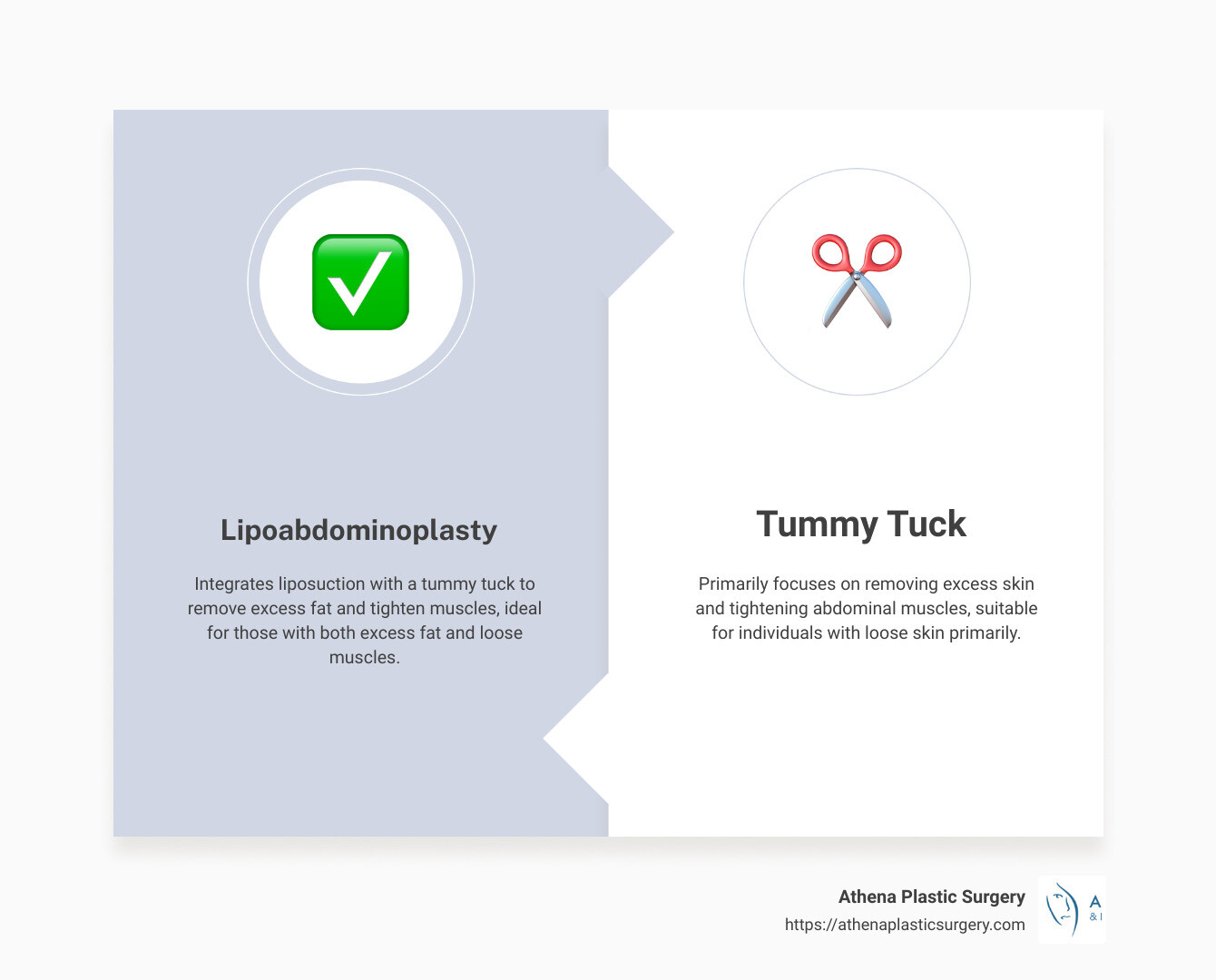
- Lipoabdominoplasty: Combines liposuction and a tummy tuck to remove excess fat and tighten muscles.
- Tummy Tuck: Focuses on removing excess skin and tightening the abdominal muscles.
- Ideal Candidates: Lipoabdominoplasty is well-suited for individuals with excess fat and loose muscles, while a tummy tuck is typically chosen for loose skin primarily.
Whether you’re aiming to refine your body after significant weight loss or restore your pre-pregnancy shape, these procedures offer distinct pathways to achieve your aesthetic goals. Choosing the right option hinges on individual needs and desired outcomes. Both methods promise a flatter, more contoured abdomen, but the nuances between them can influence your choice significantly.
My name is Avron Lipschitz MD, and as an experienced plastic surgeon, I’ve guided many through the intricacies of procedures like lipoabdominoplasty vs tummy tuck. My approach integrates advanced surgical techniques and personalized care to ensure each patient achieves their desired change. Up next, let’s explore what makes lipoabdominoplasty a unique combination of artistry and medical science.
Lipoabdominoplasty vs tummy tuck terms to remember:
– 360 tummy tuck
– male tummy tuck
– mini tummy tuck cost
What is Lipoabdominoplasty?
Lipoabdominoplasty is a transformative combination procedure that marries the benefits of a tummy tuck with those of liposuction. This innovative approach tackles multiple layers of the abdomen, offering a comprehensive solution for those seeking significant body contouring.

The Combination Advantage
Unlike a standard tummy tuck, which primarily focuses on removing excess skin and tightening abdominal muscles, lipoabdominoplasty incorporates targeted fat removal through liposuction. This dual-action approach not only tightens muscles and removes loose skin but also sculpts the body by addressing stubborn fat deposits.
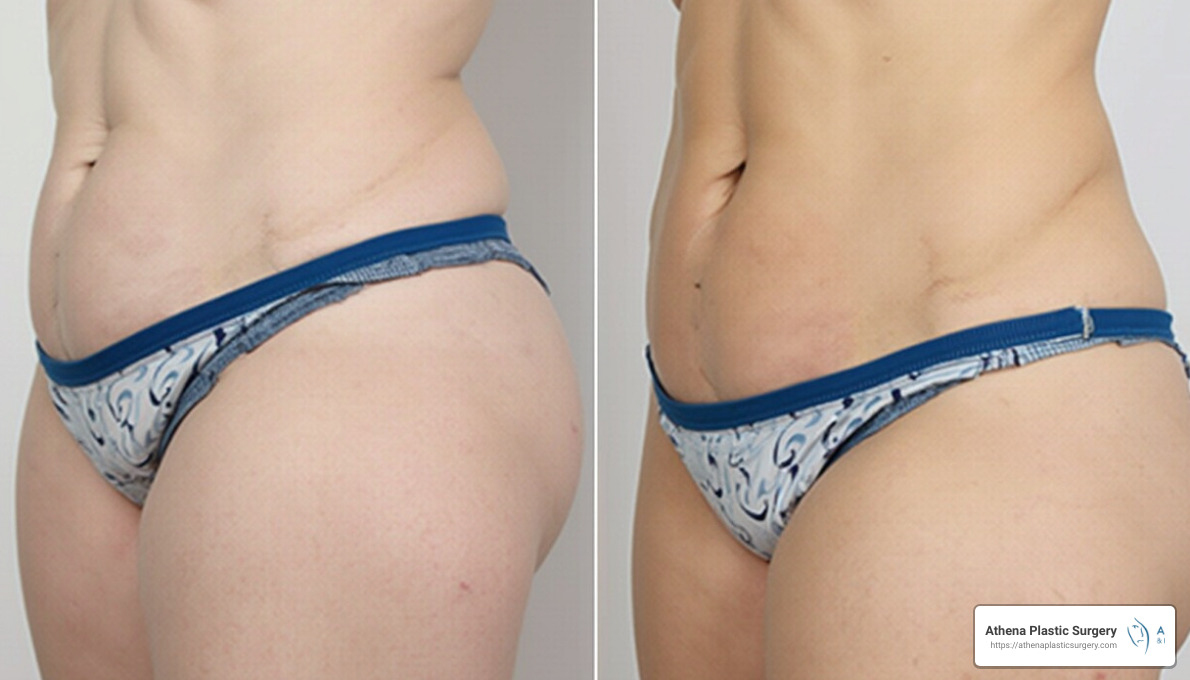
Targeted Fat Removal and Abdominal Wall Reconstruction
Dr. Erwin Bulan, a renowned expert in body-shaping procedures, emphasizes that lipoabdominoplasty provides more flexibility in shaping the abdomen and surrounding areas. By using liposuction, this procedure can effectively target larger fat deposits, particularly around the waist and flanks, that a tummy tuck alone might miss.
After the fat is removed, the abdominal wall is reconstructed. This involves tightening the abdominal muscles, which may have weakened or separated due to factors like pregnancy or significant weight loss. This reconstruction not only improves the flatness of the abdomen but also improves core strength and posture.
Ideal for Comprehensive Body Contouring
For individuals with both excess fat and loose muscles, lipoabdominoplasty offers a more comprehensive body contouring solution. By treating the skin, fat, and muscle layers, it addresses abdominal wall dysfunctions such as diastasis rectus (separation of the abdominal muscles) and even some hernias.
In summary, lipoabdominoplasty is not just a surgical procedure; it’s a blend of artistry and medical science, designed to deliver dramatic, lasting results. This approach ensures a more contoured and aesthetically pleasing abdomen, helping patients achieve their body goals more effectively.
Up next, let’s dive deeper into the specifics of a tummy tuck and how it differs from this combination procedure.
Tummy Tuck: What You Need to Know
A tummy tuck, also known as abdominoplasty, is a popular surgical procedure designed to improve the appearance of the midsection. It’s often sought by individuals who have experienced significant weight loss, pregnancy, or aging, which can lead to loose skin and weakened abdominal muscles.
Tackling Loose Skin and Stretch Marks
One of the primary goals of a tummy tuck is to remove excess skin, particularly in the lower abdomen. This is especially beneficial for those who have lost a lot of weight and are left with sagging skin. Additionally, a tummy tuck can help reduce the appearance of stretch marks, particularly those located below the belly button, by removing the affected skin.
Muscle Tightening for a Firmer Core
During the procedure, the surgeon tightens the abdominal muscles, which can become stretched or separated due to pregnancy or weight fluctuations. This muscle tightening not only flattens the abdomen but also improves core stability and posture, making it a popular choice for women looking to restore tone after childbirth.
Understanding the Types: Full vs. Partial Abdominoplasty
There are different types of abdominoplasty procedures to suit various needs:
Full Abdominoplasty: This involves a comprehensive approach, addressing the entire abdomen. It includes muscle tightening and removal of excess skin above and below the belly button.
Partial Abdominoplasty (Mini Tummy Tuck): Ideal for those with excess skin and fat primarily below the belly button. It’s less invasive than a full tummy tuck and typically involves a shorter recovery time.
The Role of Skin Elasticity
Skin elasticity is an important factor in determining the success of a tummy tuck. Patients with good skin elasticity tend to achieve better results, as the skin can more easily conform to the new contours of the abdomen.
A tummy tuck is not just about physical change; it’s about boosting confidence and improving quality of life. Whether you’re looking to regain your pre-pregnancy body or improve your post-weight loss appearance, understanding the intricacies of a tummy tuck can help you make an informed decision.
Next, we’ll explore how liposuction plays a role in body sculpting and how it differs from a tummy tuck.
Liposuction: Key Facts
Liposuction is a popular procedure for removing stubborn fat deposits that don’t respond to diet and exercise. It’s a go-to choice for those looking to refine their body shape without a significant impact on the skin.
Targeting Stubborn Fat
The main aim of liposuction is to eliminate localized fat pockets. These are often resistant to weight-loss efforts and can be found in areas like the abdomen, thighs, arms, and hips. By focusing on these specific areas, liposuction helps create a more proportionate and contoured body shape.
Minimal Skin Impact
Unlike a tummy tuck, liposuction doesn’t address excess skin. It’s best suited for individuals with good skin elasticity and muscle tone, as the skin needs to shrink back after the fat is removed. This makes it ideal for those who are close to their ideal weight but struggle with isolated fat deposits.
Small Incisions, Big Results
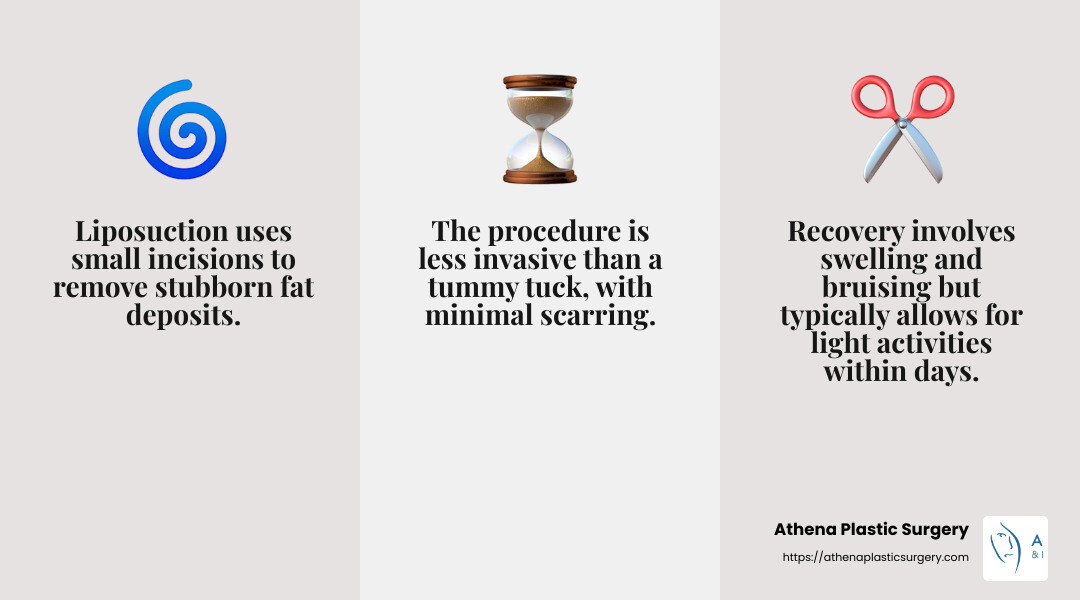
One of the advantages of liposuction is its minimally invasive nature. The procedure involves making small incisions through which a thin tube, called a cannula, is inserted. This tube is used to break up and suction out the fat, resulting in minimal scarring. The small incisions mean the scars are usually tiny and fade over time.
Recovery Time
Liposuction generally has a shorter recovery period compared to more invasive procedures like a tummy tuck. Patients can expect some swelling and bruising initially, but these typically subside within a few weeks. Most people can return to light activities within a few days and resume normal activities within a couple of weeks.
Invasive Yet Effective
While liposuction is less invasive than a tummy tuck, it still requires precision and expertise to achieve the best results. A skilled surgeon can sculpt the body by removing fat in a way that improves natural contours, offering a significant aesthetic improvement.
Liposuction is not a weight-loss solution but a body sculpting tool. It provides long-lasting results for those who maintain a stable weight and healthy lifestyle. Next, we’ll dig deeper into the differences between lipoabdominoplasty vs tummy tuck, highlighting how each procedure targets different layers—skin, fat, and muscle.
Lipoabdominoplasty vs Tummy Tuck: Key Differences
When deciding between lipoabdominoplasty vs tummy tuck, understanding how each procedure works is crucial. Both aim to contour the body, but they do so by addressing different layers and issues within the abdominal area.
Three Layers Treatment
Lipoabdominoplasty is a comprehensive procedure that combines the benefits of a tummy tuck with liposuction. It targets all three layers: skin, fat, and muscle. This means not only is excess fat removed, but loose skin is tightened, and underlying muscles are repaired. This is particularly beneficial for individuals with significant skin laxity and muscle separation.
In contrast, a tummy tuck focuses primarily on skin and muscle. It involves removing excess skin and tightening the abdominal muscles, making it ideal for those who have experienced weight loss or pregnancy, which often leads to stretched skin and weakened muscles.
Abdominal Wall Dysfunction
Abdominal wall dysfunction, such as diastasis rectus (muscle separation) or a hernia, often requires more than just fat removal. Lipoabdominoplasty allows for the reconstruction of the abdominal wall, addressing these issues effectively. This procedure not only improves the appearance but also improves core strength and posture.
A standard tummy tuck can also repair muscle separation and hernias, but it may not provide the same level of fat removal and contouring as lipoabdominoplasty. It’s a great choice if the primary concern is muscle and skin rather than fat.
Comprehensive Body Contouring
For those seeking a more dramatic change, lipoabdominoplasty offers a more comprehensive approach. By combining liposuction with muscle and skin tightening, it delivers a more sculpted and toned appearance. This procedure is ideal for patients with significant fat deposits around the abdomen and flanks.
On the other hand, a tummy tuck provides excellent results for individuals mainly concerned with loose skin and muscle laxity. It offers a smoother, firmer midsection but might not address larger fat deposits as effectively as lipoabdominoplasty.
In summary, the choice between lipoabdominoplasty vs tummy tuck depends on your specific needs and goals. If you’re dealing with excess fat, loose skin, and muscle issues, lipoabdominoplasty might be the way to go. For those focused on skin and muscle tightening, a tummy tuck could be the perfect solution.
Next, let’s explore what recovery looks like for each of these procedures, and how you can manage discomfort and achieve the best results.
Recovery and Results
Understanding the recovery process is key to achieving the best results from your lipoabdominoplasty vs tummy tuck procedure. Here’s what you can expect:
Recovery Phases
After surgery, recovery is a journey marked by different phases. Lipoabdominoplasty recovery typically involves an initial two-week period where rest is crucial. During this time, you’ll likely experience swelling and discomfort. Patients are often advised to avoid strenuous activities to allow the body to heal properly.
For a standard tummy tuck, the recovery timeline is similar. The first week is generally the most uncomfortable, with significant swelling and some pain. Gradually, you’ll be able to return to light activities, but it’s important to avoid heavy lifting or intense exercise for at least six weeks.
Compression Garments
Compression garments play a vital role in the recovery process. They help reduce swelling, support the healing tissues, and improve overall comfort. You’ll need to wear these garments consistently for several weeks post-surgery to ensure optimal results.
Swelling and Discomfort Management
Swelling is a normal part of recovery. It can last several weeks but will gradually decrease. Your surgeon may recommend specific strategies to manage discomfort, which might include pain medication and gentle movements to keep blood flowing.
Light Activities
While rest is important, engaging in light activities like walking can aid recovery. It helps boost circulation and can reduce the risk of complications. Start with short walks and gradually increase your activity level as advised by your surgeon.
Full Healing and Final Results
Full healing from either procedure can take several months. By the six-month mark, most patients see the final results, with the abdomen appearing flatter and more toned. It’s important to follow your surgeon’s guidance throughout this period to ensure the best outcome.
Scar Visibility
Scarring is a natural part of any surgical procedure. For both lipoabdominoplasty and a tummy tuck, scars are typically placed strategically along the lower abdomen, often hidden below the bikini line. Over time, these scars will fade and become less noticeable.
In summary, while recovery requires patience and care, the end result can be a more contoured and confident you. Next, let’s address some frequently asked questions about these procedures, including recovery time and safety considerations.
Frequently Asked Questions about Lipoabdominoplasty vs Tummy Tuck
What is the recovery time for lipoabdominoplasty?
Recovery from lipoabdominoplasty can vary from person to person, but generally, you can expect an initial recovery period of about two weeks. During this time, you may experience pain, swelling, and bruising, which is normal. Compression garments are essential as they help reduce swelling and support the healing tissues. Most people can return to normal activities within a few weeks, but it’s crucial to avoid heavy lifting or strenuous exercise for at least six weeks to ensure proper healing.
Which is better, lipo or tummy tuck?
Choosing between liposuction and a tummy tuck depends on your specific needs and goals. Liposuction is ideal for removing stubborn fat deposits with minimal impact on the skin. However, it doesn’t address issues like loose abdominal muscles or excess skin. In contrast, a tummy tuck is more comprehensive, targeting skin removal, tightening muscles, and improving the appearance of stretch marks. If you’re looking for dramatic results and have issues with muscle separation or significant excess skin, a tummy tuck might be the better option.
Is lipoabdominoplasty safe?
Lipoabdominoplasty is considered a safe procedure when performed by a qualified and experienced surgeon. Any body-contouring surgery carries some risks, but improvements in surgical techniques have improved safety over the years. A retrospective study has shown that these procedures are generally safe, with a low incidence of complications. To minimize risks, follow your surgeon’s pre- and post-operative instructions carefully. Always consult with a board-certified plastic surgeon to discuss your specific concerns and ensure you’re a suitable candidate for the procedure.
Making the Right Choice for Your Body
Choosing between lipoabdominoplasty and a tummy tuck can be a big decision. Understanding who the ideal candidates are for each procedure can help guide your choice.
Ideal Candidates
Skin Elasticity: If you have good skin elasticity, you might be a better candidate for liposuction alone. This is because liposuction removes fat but doesn’t tighten skin. If your skin is loose, a tummy tuck or lipoabdominoplasty, which includes skin tightening, might be more suitable.
Significant Weight Loss: Those who have lost a lot of weight often have excess skin. A tummy tuck can remove this extra skin and tighten muscles, helping to achieve a smoother appearance. In some cases, combining it with liposuction (lipoabdominoplasty) can improve the results by also removing stubborn fat.
Pregnancy: Pregnancy can stretch abdominal muscles and skin. A tummy tuck is often chosen by women looking to restore their pre-pregnancy shape by tightening loose muscles and removing excess skin. Lipoabdominoplasty can be beneficial if there are also areas of stubborn fat to be addressed.
Realistic Expectations
It’s important to have realistic expectations about what these procedures can achieve. Neither option is a weight-loss solution. Instead, they are about contouring and improving the body’s shape. Discussing your goals with a surgeon can help set realistic expectations and ensure you choose the right procedure.
Consultation
A consultation with a board-certified plastic surgeon is crucial. They can assess factors like your skin elasticity, muscle tone, and overall health to recommend the best procedure for you. During this consultation, you can discuss all your concerns and get answers to any questions you might have.
By understanding these factors, you can make an informed decision that aligns with your aesthetic goals and needs.
Conclusion
At Athena Plastic Surgery, we understand that choosing the right procedure for your body is a deeply personal decision. Our goal is to support you through this journey with advanced techniques and a commitment to aesthetic excellence.
Led by the Johns Hopkins-trained Dr. Avron, our team is dedicated to providing compassionate care custom to the unique needs of each patient. Whether you’re considering lipoabdominoplasty or a tummy tuck, we are here to guide you every step of the way.
Serving the Stuart communities, we pride ourselves on delivering results that improve not only your appearance but also your confidence. Our approach combines cutting-edge technology with an understanding of the artistry involved in body contouring.
If you’re ready to explore your options and take the next step towards achieving your aesthetic goals, we invite you to schedule a consultation with us. At Athena Plastic Surgery, your change is our top priority, and we look forward to helping you feel your best.




