


Mandelic acid chemical peel is your new best friend for achieving glowing skin with minimal downtime. These peels gently exfoliate, brightening your skin while reducing acne and fine lines. They are superficial, meaning they don’t penetrate deeply, making them safer and with fewer side effects than deeper peels. You’re steps closer to refreshd skin with these natural-looking results.
Chemical peels have gained popularity as a solution for skin rejuvenation, especially among those looking to tackle signs of aging. Among various facial treatments, mandelic acid stands out for its unique benefits. By removing dead cells from the skin’s surface, it fosters new cell growth, leaving you with refreshed, radiant skin. Women seeking safe, effective solutions for aging concerns will find mandelic acid chemical peel to be a great choice.
I am Avron Lipschitz MD, an internationally recognized plastic surgeon with extensive expertise in aesthetic procedures and mandelic acid chemical peel treatments. My goal is to help you achieve the appearance you desire through expert care and cutting-edge techniques.
Easy mandelic acid chemical peel word list:
– chemical peel dr dennis gross
– chemical peel for acne scars
– chemical peel process day by day
What is a Mandelic Acid Chemical Peel?
A mandelic acid chemical peel is a type of superficial peel that offers a gentle yet effective exfoliation. It’s part of the alpha hydroxy acid (AHA) family, which includes other popular acids like glycolic and lactic acid. However, mandelic acid is unique due to its larger molecular structure. This structure allows it to penetrate the skin more slowly, minimizing irritation and making it suitable for sensitive skin types.

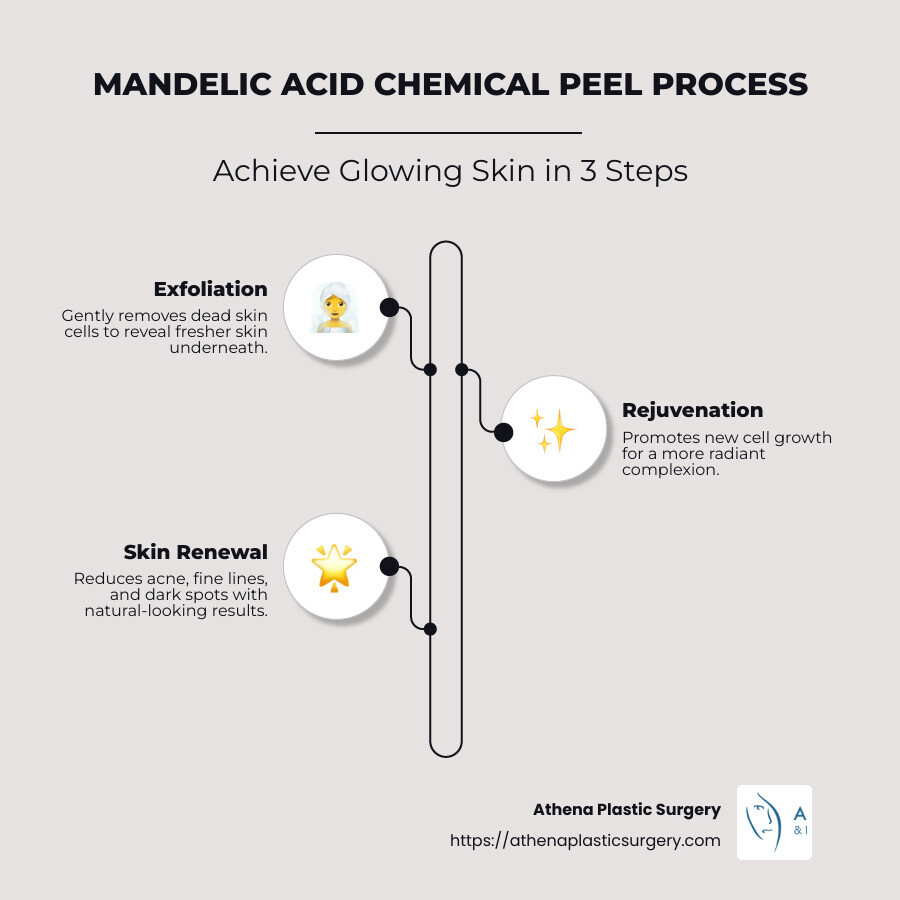
Superficial peels, like mandelic acid peels, work by removing the outermost layer of dead skin cells. This process reveals the fresher, healthier skin underneath. The gentle exfoliation helps improve skin texture, reduce acne, and lighten dark spots. It also aids in the reduction of fine lines, giving your skin a smoother, more youthful appearance.

Mandelic acid’s gentle nature makes it a preferred choice for those new to chemical peels or those with delicate skin. Its slow penetration reduces the risk of redness and irritation, common concerns with other AHAs. This peel is not only effective but also versatile, working well on various skin tones and types.
For those interested in achieving glowing skin without the downtime associated with more aggressive treatments, mandelic acid peels offer a promising solution. With regular use, they can help maintain a clear, bright complexion that feels as good as it looks.
In summary, a mandelic acid chemical peel provides a safe and effective way to refresh your skin with minimal risk. Its gentle exfoliation process makes it an excellent option for those seeking to improve their skin’s appearance without the harshness of deeper peels.
Benefits of Mandelic Acid Peels
Mandelic acid peels are a popular choice for those looking to improve their skin’s appearance without irritation. Let’s explore the key benefits of these gentle yet effective treatments.
Acne Reduction
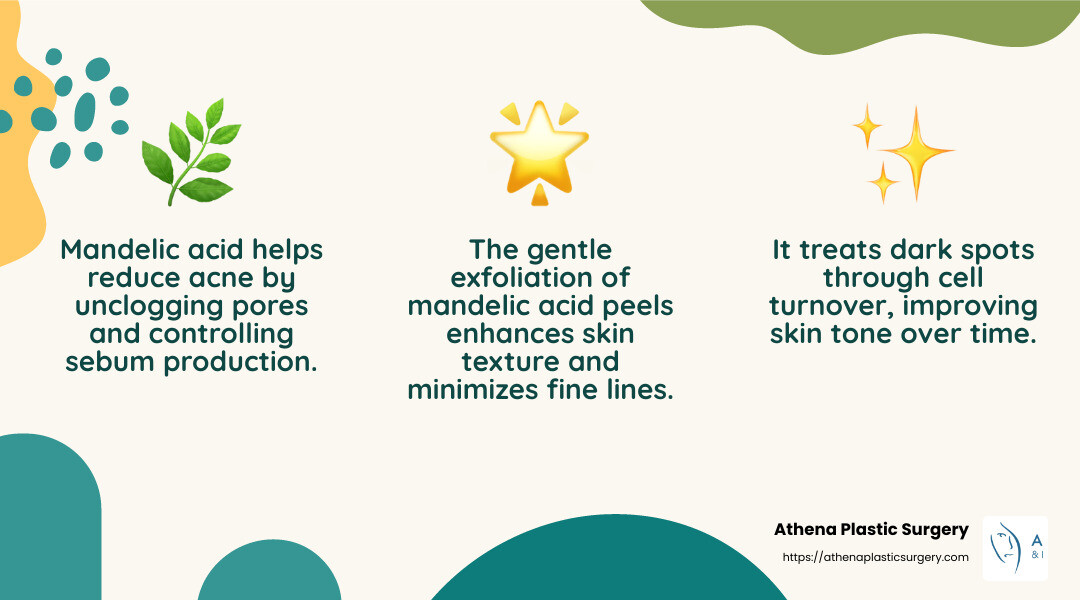
Mandelic acid is a powerful ally in the fight against acne. Its antibacterial properties help unclog pores and control sebum production. This makes it effective in reducing acne breakouts and preventing future ones. Plus, its gentle nature means it can be used on sensitive skin types without causing irritation.
Dark Spot Treatment
Dark spots, also known as hyperpigmentation, can be a common skin concern. Mandelic acid peels work to lighten these areas by promoting cell turnover. This process helps fade dark patches and even out skin tone over time, leaving you with a more uniform complexion.
Skin Texture Improvement
One of the standout benefits of mandelic acid peels is their ability to improve skin texture. By exfoliating the outer layer of dead skin cells, these peels reveal smoother, fresher skin beneath. This can help refine your skin’s surface, making it feel softer and more even.
Fine Lines Reduction
While mandelic acid is less aggressive than other AHAs, it still effectively reduces the appearance of fine lines. The gentle exfoliation stimulates collagen production, which can help plump the skin and smooth out wrinkles, giving you a more youthful look.
Compatible with All Skin Types
Thanks to its larger molecular structure, mandelic acid penetrates the skin more slowly. This reduces the risk of irritation, making it suitable for all skin types, including those with darker skin tones. Unlike some other chemical peels, mandelic acid is less likely to cause post-inflammatory hyperpigmentation, a common concern for individuals with darker complexions.
In conclusion, mandelic acid chemical peels offer a range of benefits, from reducing acne to improving skin texture and minimizing fine lines. Their gentle nature makes them an excellent choice for anyone seeking refreshed skin with minimal risk of irritation. Whether you’re dealing with acne, dark spots, or simply want to improve your skin’s overall appearance, mandelic acid peels can be a valuable addition to your skincare routine.
How to Use Mandelic Acid Peels Safely
Using mandelic acid chemical peels safely is key to achieving glowing skin without unwanted side effects. Here’s a simple guide to ensure you get the best results every time.
Patch Test
Before diving into a full facial peel, always start with a patch test. This helps you check for any adverse reactions. Apply a small amount of the peel on a discreet area, like near your jawline. Wait 24-48 hours to ensure your skin tolerates it well.
Application Steps
Cleanse Your Skin: Begin with a gentle, non-acid cleanser to remove any dirt or oil. Pat your skin dry.
Prep Your Skin: Use a pH prep solution or witch hazel to further cleanse the surface. If you have sensitive skin, you can skip this step.
Apply the Peel: Use a cotton pad or your fingertips to apply a thin layer of the mandelic acid serum. Start from your forehead and work downwards, ensuring even coverage. Avoid rubbing it in.
Timing: Leave the peel on for 5-10 minutes, depending on your skin’s sensitivity. If it’s your first time, consider starting with a shorter duration.
Rinse Off: Use warm-to-cool water to thoroughly rinse your face. Ensure all traces of the peel are removed.
Neutralize: Optionally, use a post-peel neutralizer to halt the acid’s activity, especially if you feel any discomfort.
Post-Peel Care
After the peel, your skin may feel warm or appear slightly pink. This is normal. To help your skin recover:
Moisturize: Use a non-acidic, non-retinoid moisturizer to soothe your skin. Products containing ingredients like argan oil or green tea are ideal.
Avoid Harsh Products: Refrain from using any other exfoliants or retinoids for a few days.
Sun Protection
Freshly peeled skin is more sensitive to the sun, so sun protection is crucial.
SPF 30 or Higher: Apply a broad-spectrum sunscreen with at least SPF 30 daily, even if you’re indoors. If you wear foundation, ensure it contains SPF.
Limit Sun Exposure: Try to minimize direct sun exposure for several days post-peel to prevent any sun damage.
Following these steps will help you safely enjoy the benefits of mandelic acid peels, leaving your skin looking refreshed and radiant.
Next, we’ll dive into how mandelic acid compares with other popular chemical peels like glycolic and salicylic acid.
Comparing Mandelic Acid with Other Chemical Peels
When it comes to chemical peels, mandelic acid is often compared to other popular options like glycolic acid, lactic acid, and salicylic acid. Understanding the differences can help you choose the right peel for your skin type and concerns.
Glycolic Acid
Glycolic acid is another alpha hydroxy acid (AHA) like mandelic acid. It’s known for its small molecular size, which allows it to penetrate deeper into the skin. This makes it effective for treating fine lines and uneven texture. However, its deeper penetration can also lead to more irritation, especially for sensitive skin types.
Lactic Acid
Lactic acid is a milder AHA, derived from milk. It’s great for those with dry or sensitive skin due to its moisturizing properties. While it’s gentler than glycolic acid, it may not be as effective for acne-prone skin compared to mandelic acid. Lactic acid is often used for improving skin hydration and reducing signs of aging.
Salicylic Acid
Salicylic acid is a beta hydroxy acid (BHA), which means it’s oil-soluble. This makes it particularly effective for treating acne, as it can penetrate oily skin and unclog pores. However, it can be drying and may cause irritation, especially if overused.
Irritation Levels
Mandelic Acid: Known for its gentle nature, mandelic acid has a larger molecular structure, which means it penetrates the skin more slowly and reduces the risk of irritation. This makes it suitable for all skin types, including sensitive skin.
Glycolic Acid: Due to its small molecular size, glycolic acid can cause more irritation, especially for those with sensitive skin.
Lactic Acid: Generally well-tolerated, lactic acid is less irritating than glycolic acid but may still cause mild irritation for very sensitive skin.
Salicylic Acid: Can be drying and irritating if used too frequently, especially on dry or sensitive skin types.
In summary, while each acid has its unique benefits and potential drawbacks, mandelic acid offers a balanced approach with minimal irritation, making it an excellent choice for those seeking a gentle yet effective peel. Next, we’ll answer some frequently asked questions about mandelic acid chemical peels to further guide your skincare journey.
Frequently Asked Questions about Mandelic Acid Chemical Peels
What does a mandelic acid peel do?
A mandelic acid chemical peel works wonders for your skin by unclogging pores and controlling sebum production. This helps in reducing acne and preventing future breakouts. Thanks to its antibacterial properties, mandelic acid also keeps your skin clear and healthy. It’s a gentle exfoliant, making it suitable for all skin types, even sensitive ones.
What happens after a mandelic acid peel?
After a mandelic acid peel, you can expect your skin to feel softer and look more refreshed. Some people might experience mild flaking, which is normal and indicates that the peel is working to remove dead skin cells. The best results typically become visible after a few sessions, as your skin gradually improves in texture and tone.
How often should I do a mandelic acid peel?
For optimal results, it’s generally recommended to have a mandelic acid peel every 2 to 4 weeks. However, this can vary based on individual skin needs and goals. Be mindful of sun sensitivity after a peel; your skin will be more vulnerable to UV rays. It’s crucial to apply a broad-spectrum SPF daily to protect your skin and maintain the benefits of the peel.
By incorporating mandelic acid peels into your skincare routine, you can achieve a clearer, more radiant complexion with minimal irritation. Up next, we’ll dive into the conclusion and discuss how Athena Plastic Surgery can help tailor a personalized treatment plan just for you.
Conclusion
At Athena Plastic Surgery, we prioritize skincare safety and personalized treatment plans to ensure the best possible outcomes for our clients. Our team, led by the skilled Dr. Avron, is committed to providing advanced cosmetic solutions with a focus on aesthetic excellence and compassionate care.
When it comes to mandelic acid chemical peels, we understand the importance of tailoring the approach to suit individual skin types and concerns. These peels offer a gentle yet effective way to refresh the skin, addressing issues like acne, dark spots, and uneven texture without causing excessive irritation.
Our clinics in West Palm Beach and Stuart, FL, are equipped with state-of-the-art facilities to deliver these treatments safely and effectively. We emphasize the significance of post-peel care, including sun protection and hydration, to maximize the benefits and protect your skin.
If you’re considering a mandelic acid peel, we invite you to consult with our experts. We’ll work closely with you to develop a personalized skincare regimen that aligns with your unique needs and goals. Trust Athena Plastic Surgery to guide you on your journey to healthier, glowing skin.
For more information on our services, visit our Skin Care page.




