
The New Era of Aesthetic Improvement
Minimally invasive plastic surgery offers a modern approach to aesthetic improvement with reduced downtime, minimal scarring, and natural-looking results compared to traditional surgical procedures.
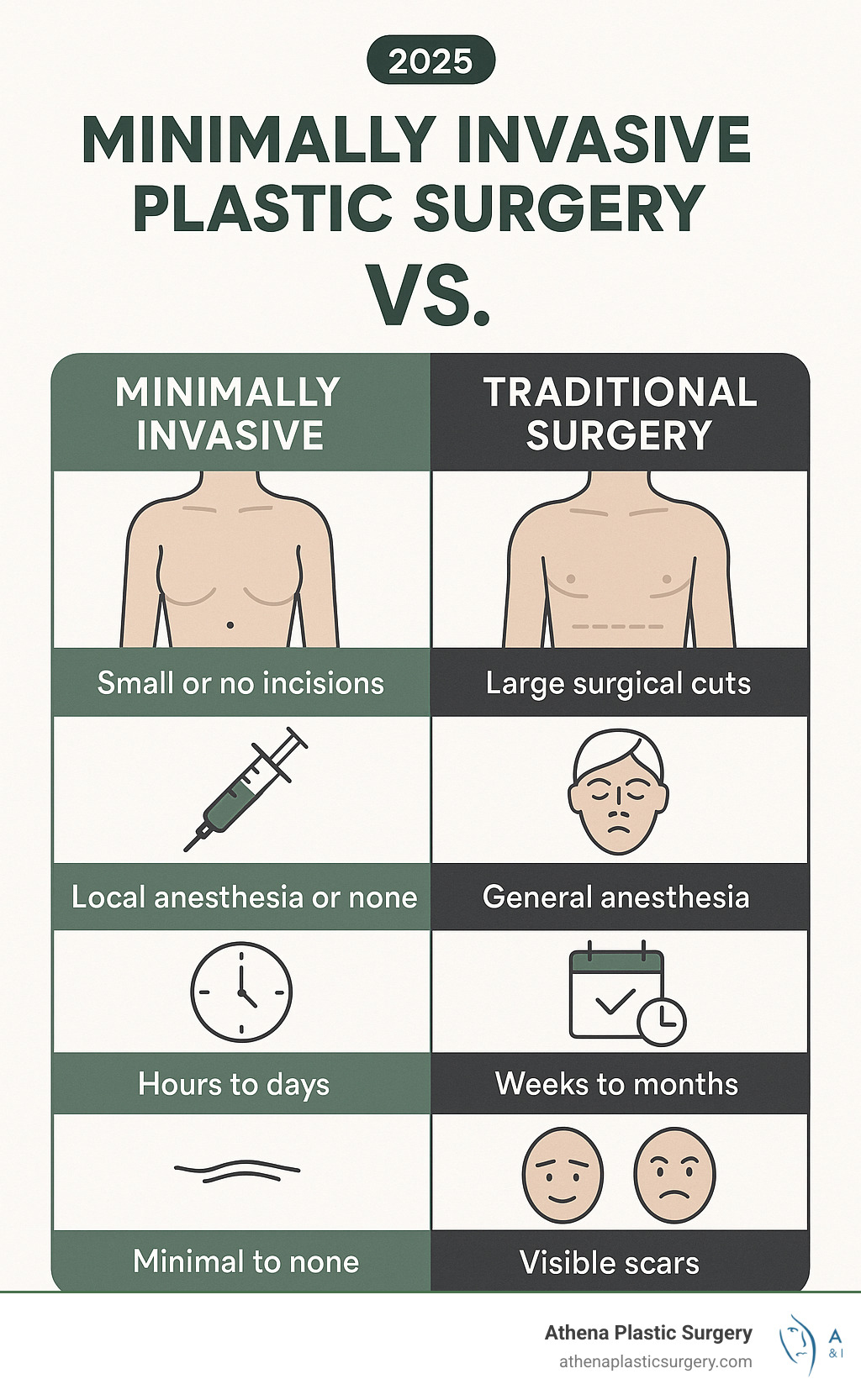
Key differences between minimally invasive and traditional surgery:
- Incisions: Small or no incisions vs. large surgical cuts
- Anesthesia: Local anesthesia or none vs. general anesthesia
- Recovery: Hours to days vs. weeks to months
- Scarring: Minimal to none vs. visible scars
- Results: Gradual, natural improvement vs. dramatic change
- Risks: Lower complication rates vs. higher surgical risks
The aesthetic industry has shifted as more people choose procedures that fit busy lifestyles. Many want to avoid traditional surgery due to the lengthy recovery and risks, as one expert notes, “For so many of us, we’ve avoided even thinking about taking the plunge into traditional plastic surgery because of one crucial aspect – the surgery itself.”
This reflects a desire for effective results without the fear, downtime, or dramatic changes of invasive surgery. Minimally invasive options can address fine lines, volume loss, or skin laxity, allowing a quick return to daily life.
Advanced laser, radiofrequency, and injectable technologies allow for significant improvements with little to no pain, side effects, or scarring. These short office visits are ideal for busy professionals who want to look refreshed without disrupting their schedules.
I’m Dr. Avron Lipschitz, a Board-Certified Plastic Surgeon with over 15 years of experience in advanced aesthetic procedures, including extensive training in minimally invasive plastic surgery techniques at top institutions like Johns Hopkins Hospital. As an international trainer and key opinion leader in the field, I’ve helped thousands of patients achieve their aesthetic goals through both surgical and non-surgical approaches.
Quick look at minimally invasive plastic surgery:
Minimally Invasive vs. Traditional Surgery: What’s the Difference?
The main difference between minimally invasive and traditional surgery is the approach and intensity. Traditional surgery involves larger incisions, general anesthesia, and significant tissue manipulation, like a classic facelift. In contrast, minimally invasive procedures use smaller or no incisions at all, often relying on local anesthesia. Many are outpatient procedures, reducing the risks that come with general anesthesia.
This gentler approach means reduced tissue trauma, resulting in less swelling, bruising, and discomfort. While traditional surgery often delivers dramatic, long-lasting results, minimally invasive treatments usually provide more subtle, natural-looking improvements by working with the body’s own processes, like boosting collagen production.
| Feature | Traditional Facelift | Liquid Facelift (Minimally Invasive) |
|---|---|---|
| Invasiveness | High (surgical incisions, tissue removal) | Low (injections, no incisions) |
| Anesthesia | General anesthesia | Local anesthesia, topical numbing |
| Downtime | Weeks to months | Little to no downtime (hours to days) |
| Cost | Higher upfront cost | Lower per session, but ongoing maintenance |
| Result Longevity | Many years (often 10+) | Months to 2 years, requires maintenance |
While a single minimally invasive session costs less upfront, the need for multiple treatments and maintenance can add up. It’s important to discuss the total long-term cost during your consultation.
The Key Benefits of a Lighter Touch
The popularity of minimally invasive plastic surgery is a response to what people want from aesthetic treatments. Here are the key benefits:
- Quicker recovery: Most patients return to normal routines within hours or a few days, minimizing disruption to work and social life.
- Minimal scarring: Smaller or no incisions mean you won’t have visible marks, ensuring a natural, refreshed look.
- Lower risk of complications: Without major incisions or general anesthesia, these procedures carry significantly fewer risks than traditional surgery.
- Natural-looking results: These treatments improve your existing features for a refreshed version of yourself, rather than creating a dramatic change.
- Convenience and affordability: Many treatments can be completed quickly and are often more budget-friendly than surgery, making aesthetic improvements more accessible.
Want to explore your options further? Learn more about non-surgical facial rejuvenation and find what might be right for you.
Understanding the Limitations and Risks
While minimally invasive options are excellent, it’s important to understand their limitations.
- Temporary results: Most results are not permanent. Botox lasts 3-6 months, while fillers can last 6 months to two years. This means you’ll need multiple sessions to maintain your look.
- Not for significant sagging: For substantial skin laxity, traditional surgery may be more effective. Minimally invasive options are best for early to moderate signs of aging.
- Potential side effects: Side effects are usually mild and temporary, including swelling, bruising, and redness. Mild discomfort or temporary numbness can also occur. Serious complications like infection or nerve injury are rare.
- Realistic expectations: These treatments provide subtle, natural improvements, not dramatic changes. Full results may require a series of treatments.
- Budgeting: Remember to budget for maintenance treatments due to the temporary nature of the results. We’ll always be honest about what’s achievable and help you create a realistic plan.
Popular Types of Minimally Invasive Plastic Surgery

The field of minimally invasive plastic surgery offers a wide range of solutions. Treatments can be categorized by their function: adding volume, tightening skin, or improving texture. Combination therapies, such as using injectables with an energy-based device, often yield the most natural and satisfying results.
Technological advancements in laser, radiofrequency, and ultrasound allow for precise treatments with minimal discomfort. These innovations mean we can address your concerns with remarkable precision, using a toolbox of specialized instruments to help you look and feel your best.
Injectables: Restoring Volume and Smoothing Lines
Injectables are often the first thing people think of when it comes to minimally invasive plastic surgery.
- Neuromodulators for dynamic wrinkles: Treatments like Botox use purified proteins to temporarily relax the muscles that create expression lines. The result is smoother skin that still lets you express yourself naturally, with results lasting three to six months. Many find the cosmetic benefits of Botox are significant.
- Dermal fillers for volume loss: As we age, we lose facial volume. Hyaluronic acid fillers use a substance your body already produces to plump up hollowed cheeks, soften deep lines, and improve lips for a more youthful look.
- Collagen stimulators: These work behind the scenes to encourage your body to produce more of its own collagen, leading to gradual but longer-lasting improvements.
Injectables can address multiple concerns in one visit, from treating facial wrinkles with dermal fillers to a comprehensive liquid facelift.
Energy-Based Devices: Tightening and Toning from Within
Energy-based devices work deep within your skin, encouraging your body to rebuild and refresh itself from the inside out.
- Radiofrequency (RF) treatments: These devices use controlled heat to reach deep skin layers, contracting existing collagen and stimulating new growth. This results in tighter, smoother skin over time. The Thermage treatment is an excellent example of how RF technology delivers impressive results.
- Ultrasound therapy for skin lifting: This technology uses focused ultrasound energy to bypass the skin’s surface, targeting the same deep tissue layers addressed in a surgical facelift to trigger the body’s regenerative response. Ultherapy is a perfect example of this technology in action.
How they stimulate collagen: Both RF and ultrasound create controlled micro-injuries deep in your skin, prompting your body to produce new collagen and elastin. Ideal candidates for skin tightening are typically people with mild to moderate skin laxity who want noticeable improvement without surgical downtime.
Skin Resurfacing: Improving Texture and Tone
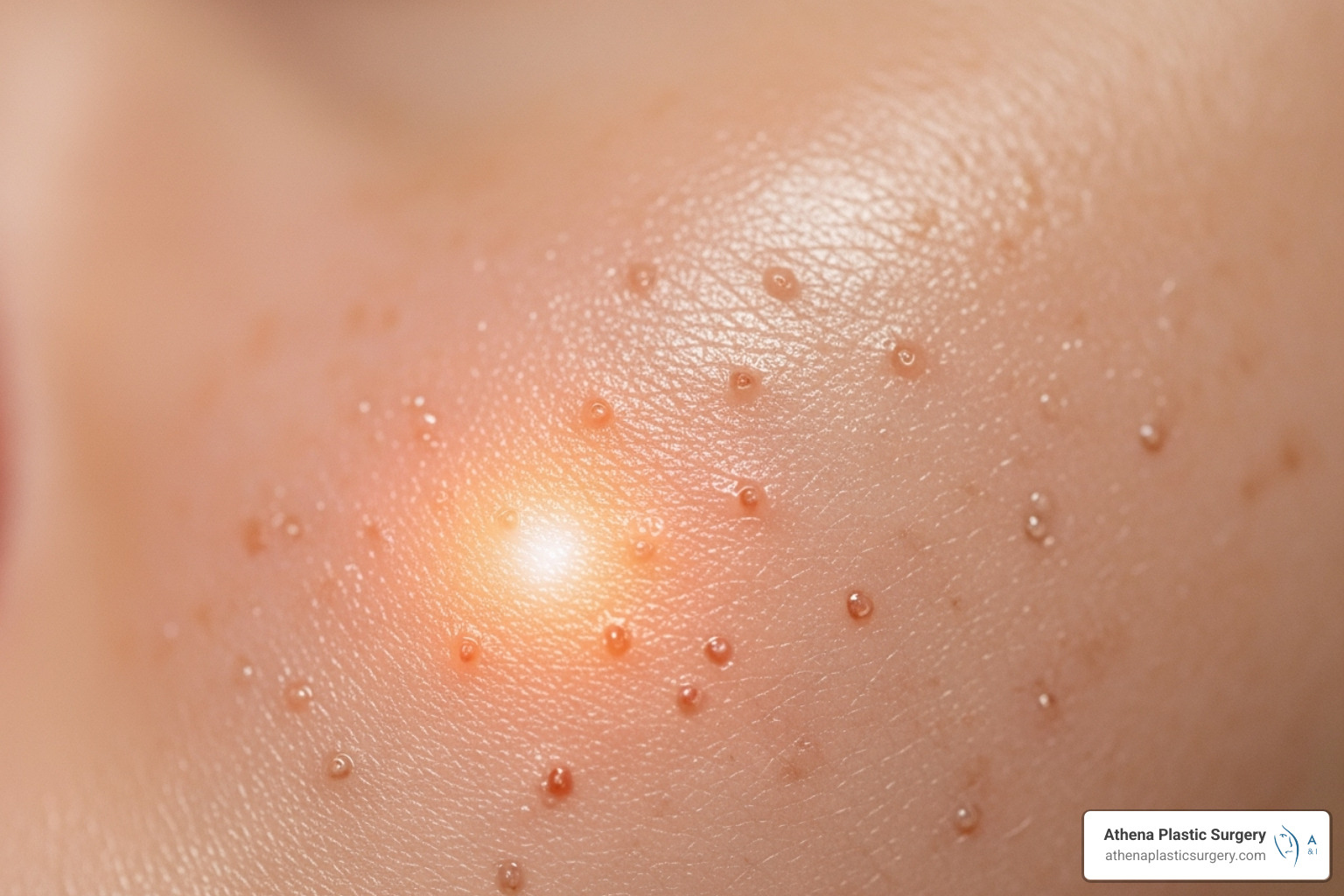
Skin resurfacing treatments offer solutions for everything from sun damage to acne scars to dull skin.
- Chemical peels for exfoliation: These treatments remove damaged outer skin layers, revealing fresher skin underneath. The depth of the chemical peels can be customized to address fine lines, uneven pigmentation, and rough texture.
- Microneedling for collagen induction: This treatment uses tiny needles to create microscopic channels in your skin, triggering a healing response that boosts collagen and elastin. This improves texture and reduces scarring. Combining it with radiofrequency, as with micro-needling with EndyMed Intensif, provides both texture improvement and skin tightening.
- IPL Photofacials for pigmentation: Intense pulsed light (IPL) targets issues like sun spots, broken capillaries, or redness. The light energy is absorbed by these problem areas, causing them to fade. For our patients in the Stuart area, IPL Limelight Photofacial Rejuvenation is a popular option for a radiant glow.
Advanced Techniques: Lifts Without the Surgery
For patients who want more dramatic results without surgery, we have innovative options that bridge the gap.
- PDO Thread Lifts for subtle lifting: The PDO Thread Lift uses absorbable threads inserted under the skin to physically lift sagging tissue. How threads work is by stimulating collagen production for long-term improvement, addressing concerns like sagging cheeks and jowls with minimal downtime.
- Non-surgical rhinoplasty: Using carefully placed dermal fillers, we can smooth bumps, refine the tip, or improve symmetry in one appointment. Many patients use non-surgical rhinoplasty to “test drive” changes before considering surgery.
- Minimally invasive neck lifts: Using advanced radiofrequency delivered through tiny incisions, this procedure tightens skin and melts unwanted fat under the chin. The minimally invasive neck lift provides dramatic improvement with a fraction of the downtime required for traditional surgery.
Your Guide to a Successful Treatment Journey

A successful minimally invasive plastic surgery journey is a partnership between you and your provider. Setting clear goals about what you’d like to change is the first step. The consultation process is a detailed discussion about your health, lifestyle, and aesthetic goals. Pre-treatment preparation, like avoiding certain medications, helps ensure a smooth procedure. Following post-treatment care instructions is crucial for healing and achieving the best results.
Factors to Consider Before Your Procedure
Before moving forward, we want to ensure you’re making the best decision for your unique situation.
- Your aesthetic goals: Your goals must be realistic. We’ll have an honest conversation about whether minimally invasive treatments or surgical options are more appropriate to achieve your desired outcome.
- Health and anatomy: Your skin thickness, bone structure, and overall health are key factors in our recommendations. Research on The spectrum of nonsurgical cosmetic procedures shows that a careful evaluation of each patient is required.
- Understanding the treatment plan: Many procedures require a series of treatments. We’ll map out your entire journey, including timelines for touch-ups, so there are no surprises.
- Total cost and budget: We believe in transparency about the total cost, including maintenance and follow-up sessions, so you can plan your budget accordingly.
- Aftercare requirements: Committing to aftercare, which varies by treatment, is crucial for getting the results you want and avoiding complications.
How to Choose the Right Provider for Minimally Invasive Plastic Surgery
Choosing your provider is one of the most important decisions you’ll make.
- Board certification: This should be non-negotiable. A surgeon certified by the American Board of Plastic Surgery has met rigorous standards for training and care. You can Find a board-certified plastic surgeon via ASPS.
- Experience with specific procedures: Ask how many times the provider has performed your desired procedure. You want an expert.
- Reviewing before-and-after photos: Review their photo gallery to see if their aesthetic style and skill level align with your goals. Look for patients with similar concerns.
- Reading patient testimonials: Read reviews on multiple platforms to get a sense of the patient experience and how the practice handles concerns.
- Building a trusting relationship: You should feel comfortable with your provider. A good provider listens, educates, and guides you toward treatments that make sense for you.
Maximizing Your Results for the Long Term
Getting great results is just the beginning. Maintaining them is key.
- Following provider directions: Our aftercare guidelines are designed to optimize your healing and results. Follow them closely.
- Adhering to a home care regimen: A consistent, high-quality home care regimen will protect and extend your investment.
- Sun protection: Daily broad-spectrum sunscreen is critical to preserving your results and preventing new damage.
- Healthy lifestyle: Good nutrition, exercise, and hydration support healthy skin. Smoking is particularly harmful as it impairs healing.
- Scheduling follow-up treatments: Most minimally invasive procedures require maintenance. We’ll create a personalized schedule to keep you looking refreshed year-round.
The Future of Aesthetics
The field of minimally invasive plastic surgery is evolving rapidly, making aesthetic improvements more accessible and effective. Emerging technologies, like advanced laser and radiofrequency devices, offer precise targeting with minimal side effects. New generations of injectables are also lasting longer and working more effectively.
Combination treatments are becoming more sophisticated and customized. For example, combining neuromodulators with fillers can improve overall skin quality, while pairing radiofrequency microneedling with other technologies creates comprehensive results.
Personalized medicine in cosmetics is becoming a reality through 3D facial analysis and AI, which help visualize results and create individualized plans. This data-driven approach removes guesswork from aesthetic planning.
There is also a shift toward preventative treatments, with more people starting procedures in their twenties and thirties to slow the aging process. The growing role of minimally invasive plastic surgery reflects patient demand for excellent results without the downtime of surgery. While surgical procedures will always have their place, the future clearly favors less invasive options that fit modern lifestyles.
Begin Your Change with Confidence
This guide has explored minimally invasive plastic surgery, which offers remarkable results without the risks of traditional surgery. Key benefits like quicker recovery times, minimal scarring, natural-looking results, and incredible convenience make these procedures ideal for busy lifestyles. From injectables to energy devices, there is a solution for nearly every goal.
Knowledge is power in aesthetics. Understanding treatments and having realistic expectations leads to a successful experience and confident decisions. The foundation of a successful journey is choosing the right provider. Partner with a board-certified plastic surgeon who listens to your concerns and creates a personalized treatment plan just for you.
At Athena Plastic Surgery, we understand that deciding to improve your appearance is both exciting and sometimes a little nerve-wracking. That’s why Dr. Avron and our entire team are committed to making your experience as comfortable and rewarding as possible. With Johns Hopkins training and years of experience in advanced aesthetic procedures, we’re here to guide you through every step of your change.
Your confidence matters to us. We’ve seen how the right treatment can not only improve your appearance but also boost your self-esteem and overall quality of life. Whether you’re considering your first aesthetic treatment or looking to maintain results from previous procedures, we’re here to help you achieve your goals safely and effectively.
Ready to take the next step? We’d love to meet with you for a personalized consultation where we can discuss your specific concerns and explore the best options for your unique situation. For those in the Stuart area and beyond, we invite you to Explore your plastic surgery options in West Palm Beach and find how we can help you look and feel your absolute best.