


Why Pain Management After Rhinoplasty Matters More Than You Think
An anti inflammatory rhinoplasty recovery plan can mean the difference between a smooth, comfortable healing process and weeks of unnecessary pain, swelling, and opioid dependence. Here’s what you need to know at a glance:
Quick Answer: Anti-Inflammatory Rhinoplasty Recovery Options
| Approach | Examples | Key Benefit |
|---|---|---|
| Anti-inflammatory medications | Celecoxib (COX-2 inhibitor) | 76.2% reduction in opioid use |
| Diet & nutrition | Pineapple, leafy greens, turmeric | Reduces inflammation naturally |
| Physical strategies | Head elevation, cold compresses | Minimizes swelling and bruising |
| Medical interventions | Dexamethasone, nerve blocks | Faster recovery, less nausea |
| Avoid | NSAIDs with antiplatelet effects, alcohol, sodium | Prevents excess bleeding and swelling |
Despite being one of the most common cosmetic procedures performed in the US, rhinoplasty has traditionally come with a routine prescription for opioids — often 20 to 30 pills — even though research shows the average patient uses fewer than 7. That gap between what’s prescribed and what’s actually needed has real consequences, from unused pills ending up in the wrong hands to patients becoming dependent on medication they didn’t need in the first place.
The good news? Evidence now strongly supports a smarter approach: multimodal, opioid-sparing pain management that combines anti-inflammatory medications, dietary changes, and simple physical strategies to control swelling and discomfort — without over-relying on narcotics.
I’m Dr. Avron Lipschitz, MD, a Board-Certified Plastic Surgeon with over 15 years of experience performing advanced aesthetic procedures, including rhinoplasty, and I’ve seen how an individualized anti inflammatory rhinoplasty protocol leads to faster, more comfortable recoveries. In the sections below, I’ll walk you through exactly what the evidence says — and what it means for your recovery.
The Biological Role of Inflammation in Nasal Surgery
When we perform a rhinoplasty, we are carefully reshaping the delicate structural framework of your nose. Whether we are adjusting cartilage, reducing a nasal bridge bump, or performing nasal osteotomies (deliberately and precisely repositioning the nasal bones), the surrounding tissues experience a controlled form of trauma.
In response, your body launches a highly coordinated immune defense. This initial inflammatory phase is actually a necessary part of the wound healing process. Blood vessels dilate to deliver oxygen, white blood cells, and essential nutrients to the surgical site. However, while some inflammation is vital for tissue repair, an excessive or prolonged inflammatory response can lead to unwanted side effects:
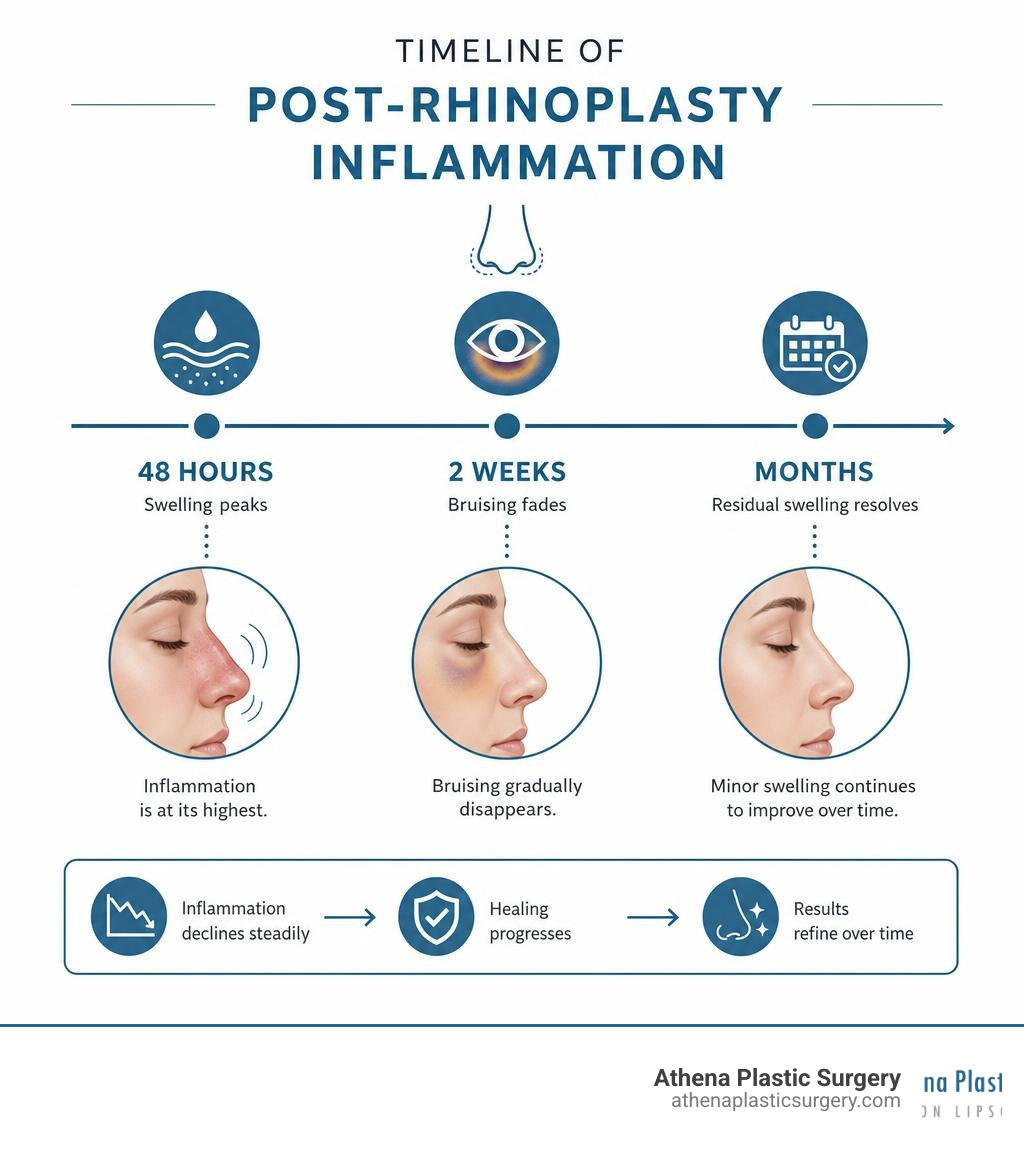
- Edema (Swelling): Excess fluid accumulates in the interstitial spaces of your facial tissues, peaking around 48 hours post-surgery.
- Ecchymosis (Bruising): Tiny blood vessels leak into the surrounding skin, leaving behind the classic “black eyes” that gradually fade over one to two weeks.
- Subcutaneous Scarring: Prolonged, uncontrolled swelling can trigger the overproduction of thick collagen fibers beneath the skin. This can blur the beautiful, crisp contours we worked so hard to create—especially around the nasal tip.
To achieve the best possible aesthetic outcome, we must keep this inflammatory cascade in check. Medical research has shown that we can decisively influence this healing environment right from the start. For example, a landmark clinical trial on the Preoperative Use of Dexamethasone in Rhinoplasty demonstrated that a single 10 mg intravenous dose of dexamethasone (a potent anti-inflammatory corticosteroid) administered right before surgery significantly reduced periorbital swelling and bruising at the 7-day mark.
By proactively calming the immune system’s initial overreaction, we set the stage for a much smoother, faster rhinoplasty recovery with far less post-operative distress.
NSAIDs vs. Opioids: A Paradigm Shift in Pain Management
For decades, the standard post-operative pain regimen after nasal surgery relied heavily on narcotic pain relievers. However, the medical community has undergone a massive paradigm shift. We now know that 97.1% of rhinoplasty patients are traditionally prescribed an average of 28 opioid pills postoperatively, yet the average opioid consumption within fourteen days post-rhinoplasty is actually only 6.15 ± 4.85 pills. This means over 70% of these highly addictive medications go unused, sitting in home medicine cabinets and presenting a major public health risk.
Furthermore, opioids do nothing to treat the actual source of your discomfort: tissue inflammation. They simply mask the pain while introducing unpleasant side effects like severe nausea, vomiting, constipation, and drowsiness.
To combat this, we utilize multimodal analgesia—combining different types of non-narcotic medications that target pain through entirely different biological pathways. One of the most effective tools in this approach is the use of selective NSAIDs (Non-Steroidal Anti-inflammatory Drugs) like Celecoxib (Celebrex).

The Power of Celecoxib and Nerve Blocks
In a clinical study published in Facial Plastic Surgery & Aesthetic Medicine, researchers evaluated The Efficacy of Oral Celecoxib Following Surgical Rhinoplasty. The findings were remarkable: patients given 200 mg of celecoxib twice daily for 5 days prior to rhinoplasty experienced a 76.2% decrease in postoperative opioid use and an 83.4% decrease in postoperative nausea and vomiting.
We also frequently pair these medications with targeted intraoperative nerve blocks. Data shows that 42% of patients without a perioperative nerve block required additional opioids compared to a mere 2.5% of those who received a nerve block. Even better, patients receiving a nerve block had a 74-minute shorter postoperative recovery time and required anti-nausea medications in only 7.5% of cases (compared to 42.5% of patients without a block).
Debunking the NSAID Bleeding Myth
Many patients ask: “Won’t NSAIDs make me bleed more?”
While traditional, non-selective NSAIDs like aspirin or high-dose ibuprofen can interfere with blood clotting (platelet aggregation), selective COX-2 inhibitors like Celecoxib do not share this risk. In fact, a massive retrospective review of 168,990 patients undergoing nasal surgery published in Plastic and Reconstructive Surgery found that Nonsteroidal Antiinflammatory Drug Use after Nasal Surgery Is Not Associated with Increased Postoperative Complications. Patients prescribed postoperative NSAIDs did not show any statistically significant increase in epistaxis (nosebleeds), septal hematoma, or 30-day reoperation rates.
| Feature | Selective NSAIDs (e.g., Celecoxib) | Traditional Opioids (e.g., Oxycodone) |
|---|---|---|
| Primary Action | Directly reduces tissue swelling and inflammation | Blocks pain signals in the brain |
| Opioid-Sparing | Reduces narcotic needs by over 76% | N/A (Is a narcotic) |
| Nausea & Vomiting Risk | Extremely low (reduces nausea by 83.4%) | High |
| Addiction/Abuse Risk | Zero | High |
| Bleeding Risk | No significant increase shown in nasal surgery | None |
Implementing an Anti Inflammatory Rhinoplasty Protocol
Optimizing your recovery starts long before you arrive at our surgical suite. We recommend implementing a dedicated anti inflammatory rhinoplasty protocol starting two weeks before your surgery and continuing for six weeks afterward.
Preoperative Preparation
During your preparation phase, it is vital to clear your body of substances that promote inflammation or increase bleeding risks. You should stop taking aspirin, high-dose over-the-counter ibuprofen, and certain herbal supplements two weeks prior to surgery. For a detailed roadmap on how to set yourself up for success, read our guide on how to prepare for a rhinoplasty in Stuart.
Dietary Recommendations: What to Eat
Your diet serves as the raw material for cellular repair. Focus your meals on whole, nutrient-dense foods that naturally calm the immune system:
- Leafy Greens & Cruciferous Vegetables: Kale, spinach, and broccoli are packed with antioxidants and Vitamin K, which helps prevent bruising.
- Healthy Fats: Every cell membrane in your body is made of fat. Prioritize high-quality fats like avocados, extra virgin olive oil, and linseed oil.
- Clean Proteins: Select wild-caught fish (rich in anti-inflammatory omega-3 fatty acids) or pasture-raised meats.
- Bromelain-Rich Fruits: Fresh pineapple contains bromelain, a natural enzyme widely recognized for its ability to digest inflammatory proteins and reduce swelling.
- Spices: Season your meals with turmeric and black pepper dissolved in a healthy oil (which dramatically increases the absorption of curcumin, turmeric’s active anti-inflammatory compound).
Foods and Substances to Avoid
Just as some foods heal, others actively fuel the inflammatory fire. Avoid the following:
- Refined Sugars & White Flour: Sugar interacts with your body’s reward system and triggers systemic inflammatory pathways, draining vital resources from your immune system.
- High-Sodium Foods: Excess salt causes your body to retain fluids, directly worsening facial and nasal swelling.
- Processed Meats & Trans Fats: Avoid fast food, fried items, and margarine.
- Alcohol & Smoking: Both severely dehydrate the tissues, impair blood flow, and prolong your recovery timeline.
Non-Dietary Strategies to Minimize Swelling and Bruising
While medication and nutrition build a strong foundation from the inside out, physical, non-dietary strategies are essential for managing local swelling and keeping you comfortable on the outside.
1. Keep Your Head Elevated
Gravity is your best friend during early recovery. For the first 10 to 14 days, keep your head elevated at a 30-to-45-degree angle at all times—including while resting or sleeping. Using a recliner chair or stacking extra pillows to prop yourself semi-upright will prevent fluid from pooling in your facial tissues.
2. Apply Cold Therapy Wisely
During the first 48 hours, apply cold compresses or cool, damp cloths to your forehead and cheeks. This constricts local blood vessels and dramatically limits bruising and swelling. However, never apply ice or cold packs directly to your nose or nasal cast, as the pressure and extreme cold can compromise skin circulation and disrupt the underlying nasal structure.
3. Gentle Lymphatic Drainage Massage
Once your nasal splint is removed (typically 5 to 7 days post-surgery), very gentle lymphatic drainage massage around the cheeks and eyes can help stimulate the lymphatic system to clear trapped fluid, speeding up the decongestion process.
4. Nasal Taping
We often instruct patients—especially those recovering from a bulbous nose rhinoplasty—to tape their nose at night. Applying medical tape in a specific pattern compresses the skin against the underlying cartilage, preventing fluid from expanding the tissues overnight and helping to refine the nasal tip.
5. Limit Physical Strain
To prevent blood pressure spikes that can trigger bleeding or swelling, avoid strenuous exercise. Keep your heart rate low, sneeze with your mouth open, and avoid blowing your nose. If you are wondering when it is safe to return to your normal workout routine, check out our guide on when you can hit the treadmill after rhinoplasty.
For more professional tips on optimizing your recovery environment, you can read HealFast’s guide on reducing post-rhinoplasty inflammation.
Frequently Asked Questions About Anti Inflammatory Rhinoplasty
What is the timeline for an anti inflammatory rhinoplasty recovery?
The recovery timeline varies based on individual healing responses, skin thickness, and the complexity of the procedure. Generally, acute swelling and bruising peak within the first 48 hours and begin to fade visibly by day 7, when your external splint is removed. Most patients feel comfortable returning to work or school within 10 to 14 days.
While about 85% of the swelling resolves within the first month, residual swelling—especially around the nasal tip—can persist for up to a year. Adhering to an anti-inflammatory diet for at least six weeks helps ensure this residual swelling resolves as cleanly and quickly as possible.
Can I use natural supplements as part of an anti inflammatory rhinoplasty diet?
Yes, natural supplements can be incredibly beneficial, but they must be managed carefully. Bromelain (from pineapple) and quercetin are excellent for minimizing bruising and swelling. Vitamin C supports collagen synthesis, while Vitamin K helps with proper blood clotting.
However, some “natural” supplements like garlic, ginkgo biloba, ginseng, and high-dose Vitamin E can actually thin your blood and increase your bleeding risk. Always consult with us before starting any new supplement regimen around the time of your surgery.
Are NSAIDs safe to use immediately after nasal surgery?
Yes, selective NSAIDs (like Celecoxib) are highly safe and effective when prescribed as part of a professional, multimodal pain protocol. Traditional, over-the-counter NSAIDs like aspirin, ibuprofen, or naproxen should be avoided immediately before and after surgery because they inhibit platelet function and can increase your risk of nosebleeds (epistaxis) or septal hematomas. Always follow our specific, customized medication schedule for your safety.
Conclusion
At Athena Plastic Surgery, we believe that achieving an outstanding cosmetic result goes hand-in-hand with providing a safe, comfortable, and scientifically backed recovery. By replacing outdated, opioid-heavy pain management with a modern, anti inflammatory rhinoplasty protocol, we help our patients in Stuart and West Palm Beach, FL, enjoy a faster, more predictable healing journey.
Please note that because every patient’s nasal anatomy, skin thickness, and surgical goals are unique, the cost of a rhinoplasty varies depending on the specific details of the procedure. We encourage you to visit our website or contact our office directly to schedule a personalized consultation with us for accurate, individual pricing.
Ready to take the next step toward your aesthetic goals? Schedule a consultation for Rhinoplasty with our expert team at Athena Plastic Surgery today.




