


Understanding the “Lunchtime Facelift”: PDO Thread Lift Basics
A PDO thread lift is a minimally invasive cosmetic procedure that uses dissolvable sutures to lift and tighten sagging skin without surgery. For those considering this treatment, here’s what you need to know:
PDO Thread Lift at a Glance:
– What it is: A non-surgical procedure using dissolvable threads inserted under the skin
– How it works: Threads provide immediate lifting + stimulate collagen production
– Best for: Mild to moderate skin laxity in people aged 35-55
– Treatment areas: Face (cheeks, jawline, brows), neck, and some body areas
– Results last: 12-18 months (threads dissolve in about 6 months)
– Recovery time: Minimal (24-48 hours before returning to normal activities)
– Cost range: $500-$5,000 depending on treatment area and number of threads
As we age, our skin naturally loses collagen and elasticity, leading to sagging and wrinkles. While traditional facelifts have been the gold standard for addressing these concerns, many people aren’t ready for surgery or the extended downtime it requires.
Enter the PDO thread lift – often called the “lunchtime facelift” because it can be completed in under an hour with minimal recovery time. This innovative procedure uses polydioxanone (PDO) threads, which have been safely used in surgical sutures since the 1980s.
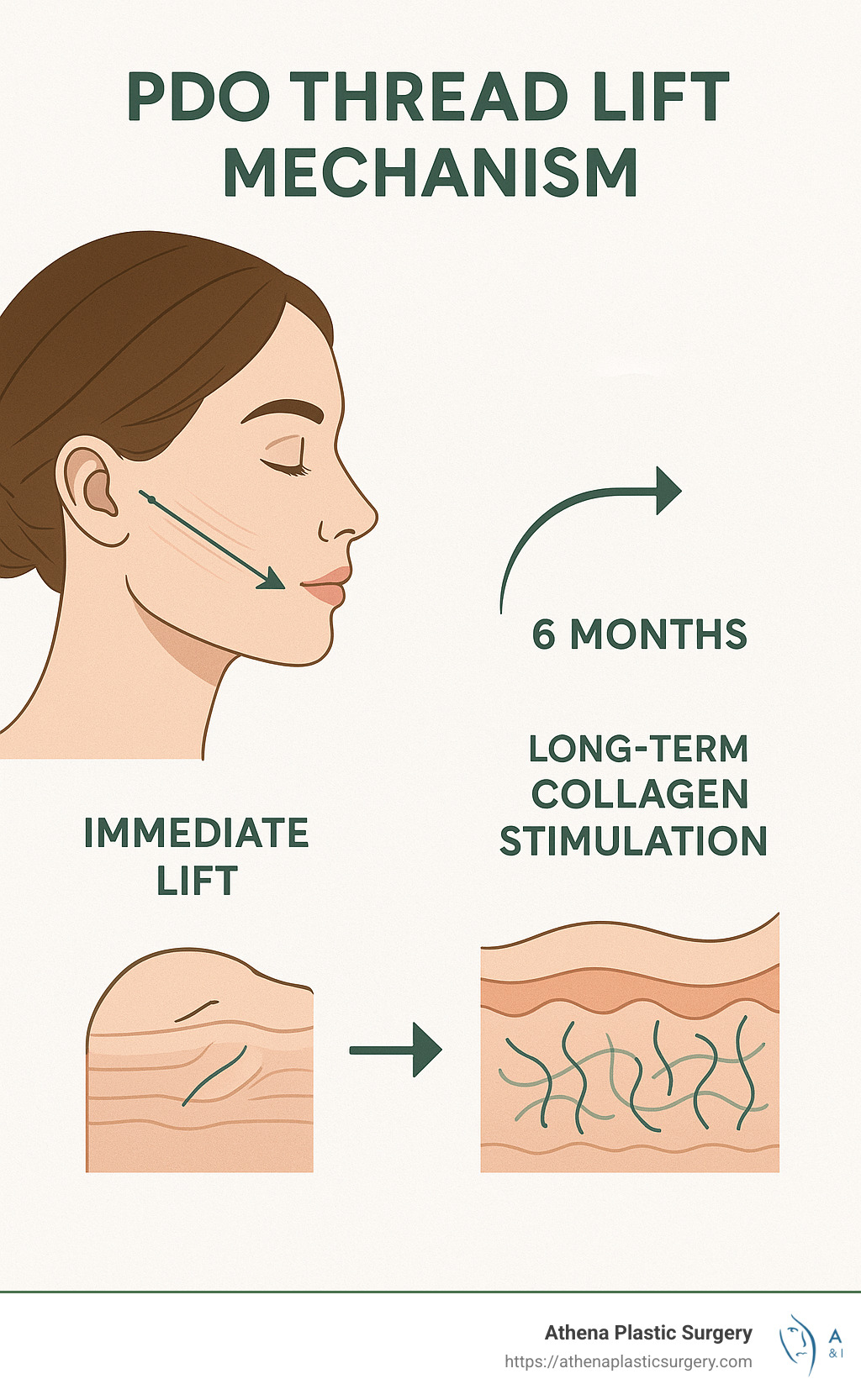
The treatment works in two ways: first, the threads physically lift sagging tissue for an immediate improvement; second, they trigger the body’s healing response, stimulating new collagen production that continues to improve skin texture and firmness over time.

I’m Dr. Avron Lipschitz, a Board-Certified Plastic Surgeon with over 15 years of experience performing advanced aesthetic procedures including PDO thread lifts at Athena Plastic Surgery. As an international trainer and key opinion leader in minimally invasive facial rejuvenation, I’ve helped thousands of patients achieve natural-looking results with PDO thread lift techniques custom to their unique facial anatomy and aesthetic goals.
PDO thread lift terms to learn:
– collagen lifting threads
– threading cosmetic procedure
– cat eye thread lift
What Is a PDO Thread Lift?
A PDO thread lift is a remarkable cosmetic procedure that uses special medical-grade threads made from polydioxanone (PDO) – a safe, biodegradable material that surgeons have trusted in medical procedures since the 1980s. These threads are incredibly fine (thinner than a human hair) yet strong enough to gently lift and reposition facial tissues that have begun to sag with age.
You might have heard the nickname “lunchtime facelift” – and it’s well-earned! Most PDO thread lift procedures wrap up in under an hour, letting you return to your normal routine with minimal downtime. This is worlds apart from traditional surgical facelifts that can keep you at home recovering for weeks.
“We’re essentially repurposing something that’s been trusted in medicine for decades,” explains Dr. Avron of Athena Plastic Surgery. “What makes PDO threads so for facial rejuvenation is how we’ve adapted this proven material to create beautiful results without the recovery time of surgery.”
When these specialized threads are placed beneath your skin, they create an immediate scaffolding effect that physically lifts sagging tissue. But what makes a PDO thread lift truly special is its dual approach – you get both an instant lift and long-term benefits as your body responds to the threads.
How Do PDO Threads Work?
The science behind how PDO thread lifts transform your appearance involves two fascinating processes:
First, there’s the immediate mechanical lift. Your provider carefully places threads along your natural facial contours and then gently adjusts them to reposition tissues that have begun to sag. This gives you that “just lifted” look that you’ll notice as soon as you look in the mirror after your procedure.
But the real magic happens in the weeks that follow. Your body recognizes these threads as “foreign” visitors, triggering a healing response called fibroblast activation. This biological process stimulates your cells to produce fresh collagen around the threads.
“I like to explain it to my patients as setting up a construction project in your skin,” says Dr. Avron. “The threads act as scaffolding that not only physically supports your tissues but also signals your body to build its own natural support structure through neocollagenesis – essentially creating new collagen where you need it most.”
This collagen-building cascade continues for months after your procedure. The PDO threads themselves naturally dissolve through hydrolysis after about six months, but the collagen they’ve helped your body generate can maintain your refreshed appearance for 12-18 months or sometimes longer.
Key Differences From Surgical Facelift
While both PDO thread lifts and surgical facelifts aim to turn back the clock on aging, they differ significantly in approach, invasiveness, and recovery:
A PDO thread lift requires only local anesthesia, making the experience more comfortable and reducing risks. Instead of surgical incisions, your provider creates tiny entry points that heal quickly without noticeable scarring. The entire procedure typically takes just 30-45 minutes – truly a “lunchtime” option – and most people return to work within 24-48 hours.
In contrast, a surgical facelift usually requires general anesthesia, creates actual incisions around the ears and hairline, takes 3-5 hours to perform, and needs 2-3 weeks of recovery before you can return to work. While surgical results typically last longer (7-10 years versus 1-3 years for threads), they come with higher risks and a significantly higher price tag ($7,000-$15,000+ versus $500-$5,000 for thread lifts).
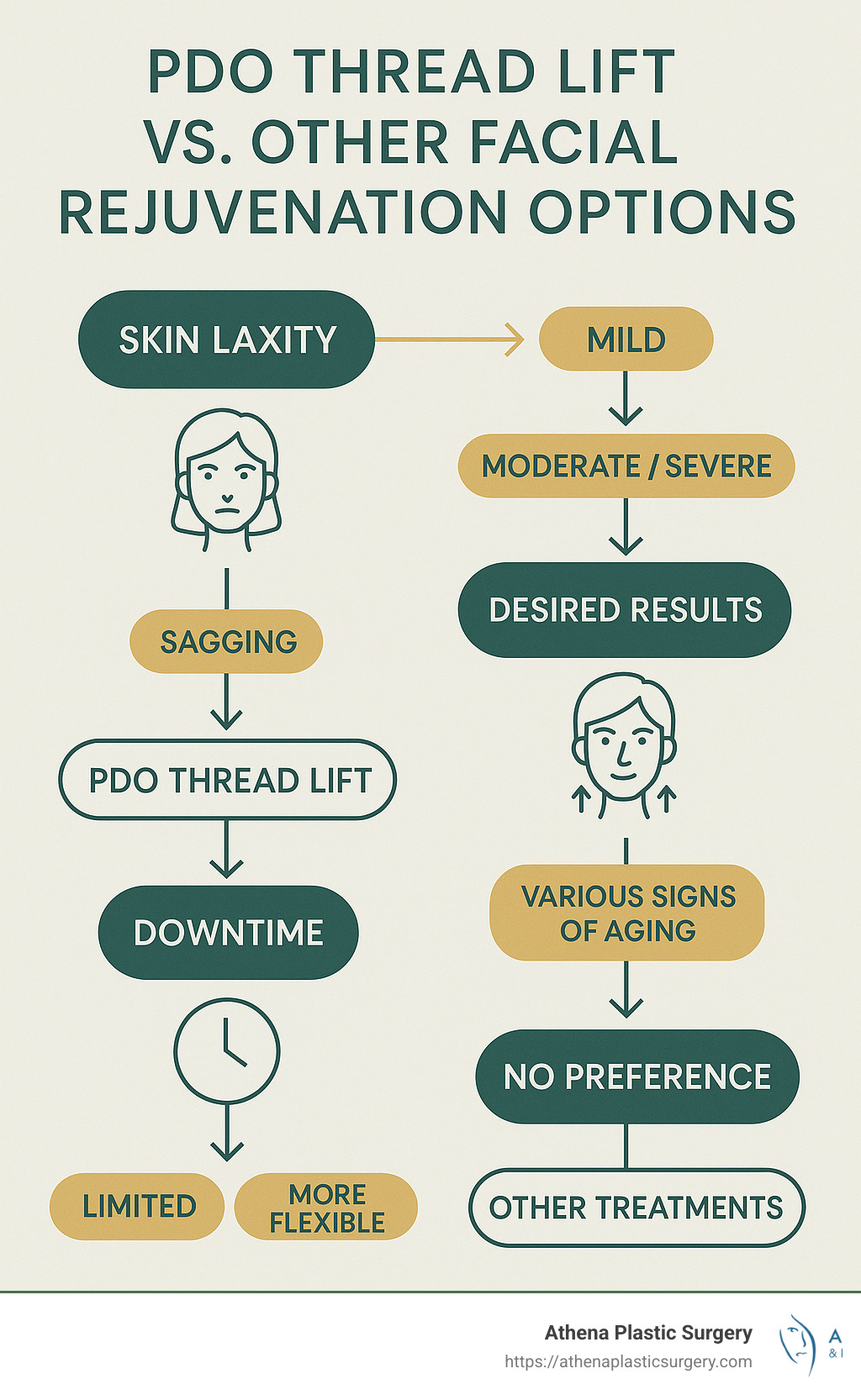
“A surgical facelift remains the gold standard for addressing severe skin laxity and advanced signs of aging,” notes Dr. Avron. “However, for patients with mild to moderate concerns who aren’t ready for surgery, PDO thread lifts offer an excellent middle-ground solution that can deliver beautiful, natural-looking results without the downtime or commitment of surgery.”
Thread Materials, Designs & Treatment Areas
When it comes to PDO thread lifts, not all threads are created equal. The beauty of this treatment lies in its versatility – different materials and designs can be customized to address your specific concerns and target various areas of the face and body.
PDO vs. Other Thread Materials
While PDO threads dominate the market, there are actually several thread materials available, each with unique properties and benefits.
PDO (Polydioxanone) threads are the most widely used and for good reason. These threads dissolve naturally in about 6 months but continue stimulating collagen for 12-16 months afterward. With an extensive safety record dating back to the 1980s, PDO threads offer reliable tissue repositioning and skin revitalization. Think of them as the trusted veterans of the thread lift world.
PLA (Polylactic Acid) threads pack a stronger punch than their PDO cousins. They take longer to dissolve – about 12 months – and trigger more robust collagen production. If you’re dealing with more noticeable skin laxity, PLA threads might be your answer.
PCA (Polycaprolactone) threads are the marathon runners of the bunch, lasting 12-15 months before dissolving. They stimulate the most collagen of all thread types and work well for severe sagging. While incredibly effective, they’re less commonly used than PDO or PLA.
“At Athena Plastic Surgery, we primarily use PDO threads due to their well-established safety profile and reliable results,” explains Dr. Avron. “The extensive history of PDO in surgical applications gives us confidence in their biocompatibility and predictable absorption patterns.”
Matching Thread Type to Goal
The design of the thread is just as important as the material – each serves a specific purpose in a PDO thread lift:
PDO Mono Threads (smooth) are the fine artists of the thread world. These thin, smooth threads create a delicate mesh-like scaffold under the skin, primarily improving skin texture and quality. They work wonders for fine lines, crepey skin around the neck, under-eye area, and mouth lines. Think of them as the foundation builders – they don’t lift dramatically but improve the overall canvas.
PDO Cog Threads (barbed) are the heavy lifters. Featuring tiny barbs or “micro-extensions” that anchor into tissue, these threads excel at repositioning sagging skin. If you’re concerned about jowls, nasolabial folds, or mid-face descent, cog threads offer the strongest lifting capacity. They’re particularly effective along the jawline, cheeks, and eyebrows.
PDO Screw Threads (twisted) bring volume back to depleted areas. Created by intertwining two or more threads in a helical pattern, these threads add fullness while providing moderate lift. They’re ideal for hollow cheeks, thin lips, and volume loss in the mid-face, lips, and temples.
A 45-year-old patient from Stuart, FL shared her experience: “I was amazed at how Dr. Avron customized my treatment. He used cog threads along my jawline for lifting and mono threads on my neck for skin tightening. The combination gave me exactly what I wanted—definition without looking ‘done.'”
Popular Zones Treated With a PDO Thread Lift
The versatility of PDO thread lifts makes them suitable for numerous areas beyond just the face:
On the face, these threads work magic for restoring volume and lifting sagging cheeks, defining the jawline, softening smile lines (nasolabial folds), reducing the appearance of marionette lines for a less downturned mouth, and creating subtle brow lifts for that coveted “cat eye” effect.
The neck – often the first area to show aging – responds beautifully to PDO threads. They can smooth vertical neck bands, tighten loose skin under the chin, and improve those horizontal “necklace lines” that appear with age.
Even the body has become territory for these innovative threads. Emerging applications include tightening mild skin laxity on upper arms, improving crepey skin texture on the abdomen, addressing sagging skin above the knees, and providing subtle lifting effects for the buttocks.
“One of the most satisfying applications is the ‘cat eye thread lift,'” notes Dr. Avron. “By strategically placing cog threads at the outer brow, we can create a subtle almond-shaped eye appearance that looks completely natural.”
What makes PDO thread lifts truly remarkable is how they can restore that youthful V-shape to the face – lifting and defining the jawline while supporting the mid-face – all without the downtime of traditional surgery. Whether you’re looking for subtle rejuvenation or a more noticeable lift, there’s likely a thread type and placement strategy that can help achieve your goals.
Candidate Suitability, Procedure & Recovery
When patients visit us at Athena Plastic Surgery asking about a PDO thread lift, one of the first things we discuss is whether they’re an ideal candidate. Not everyone will benefit from this innovative procedure, and being honest about this helps set realistic expectations from the start.
Ideal Candidates
The sweet spot for PDO thread lifts typically falls between ages 35-55, though we’ve seen great results in patients both younger and older. What matters most isn’t your age on paper, but rather the condition of your skin.
“I always tell my patients that the perfect candidate is someone who’s noticed some sagging but doesn’t yet need a surgical facelift,” explains Dr. Avron. “They’re the ones who say, ‘I just want to look refreshed, not different.'”
You’re likely a good fit for a PDO thread lift if you have mild to moderate skin laxity with good underlying elasticity. Your skin should still have some “bounce back” quality when pinched. Patients who maintain good overall health and have realistic expectations about the subtle improvements this procedure delivers are typically the most satisfied with their results.
Many of our happiest patients are those who want to address early signs of aging but aren’t ready for surgery – whether due to concerns about downtime, cost, or simply feeling that surgery seems too extreme for their current needs.
Who Should Avoid PDO Thread Lifts
Not everyone is an ideal candidate, and we’re straightforward about this during consultations. You should probably consider alternatives if you have severe skin laxity (the kind that you can easily pinch an inch or more), as you might need the more dramatic results that only surgery can provide.
Other factors that might make you unsuitable include active skin infections, blood clotting disorders, or autoimmune conditions affecting skin healing. If you’re pregnant or breastfeeding, we’ll recommend waiting. Those with a history of keloid scarring should also proceed with caution.
Perhaps most importantly, patients with unrealistic expectations about what a thread lift can achieve might be disappointed. As Dr. Sam Naficy, a respected colleague in the field, notes: “It’s better for someone in their early 40s with mild signs of aging and decent skin elasticity.” We couldn’t agree more.
Pre-Procedure Checklist for a PDO Thread Lift
Proper preparation can significantly improve both your safety and results. When patients schedule their PDO thread lift at Athena Plastic Surgery, we provide detailed guidance on how to prepare in the days leading up to treatment.
About a week before your procedure, we’ll ask you to stop taking blood thinners (with your physician’s approval), including aspirin, ibuprofen, omega-3 supplements, and vitamin E. Even green tea extract can increase bruising risk, so we recommend pausing that as well.
You’ll also need to temporarily discontinue certain skincare treatments two weeks prior, including retinoids, chemical peels, and laser treatments, as these can sensitize your skin.
“I always emphasize the importance of stopping smoking at least two weeks before the procedure,” Dr. Avron notes. “Many patients don’t realize how significantly smoking impairs healing and can affect their results.”
Other helpful preparations include avoiding alcohol for 48 hours before treatment and staying well-hydrated. Some patients find taking arnica montana (if approved by their doctor) helps reduce bruising potential.
Your consultation is where we really personalize your approach. Bring a list of all medications and supplements you’re taking, and come prepared to discuss your specific concerns and goals. This helps us create a treatment plan custom to your unique facial anatomy.
More info about How Do PDO Threads Work
Step-by-Step PDO Thread Lift Procedure
Many patients tell us they feel more comfortable knowing exactly what to expect during their PDO thread lift. The entire procedure typically takes 30-45 minutes from start to finish, and we break it down into simple steps.
We begin with thorough cleansing and disinfection of your face, followed by taking before photos for comparison. Dr. Avron then carefully marks the entry points and thread vectors – essentially mapping out the path each thread will take beneath your skin to create the optimal lifting effect.
Next comes the comfort measures. We apply a topical anesthetic and then administer small injections of local anesthetic at the entry points. We give this time to take effect, ensuring you’re comfortably numb before proceeding.
The actual thread insertion takes about 20-30 minutes. Using a thin needle, Dr. Avron creates tiny entry points, then inserts a cannula (a blunt-tipped hollow needle) along the predetermined paths in the subcutaneous layer. The threads are carefully fed through these cannulas into position.
“The technique is really an art form,” explains Dr. Avron. “It’s about understanding the underlying facial anatomy and knowing exactly where to place each thread for natural-looking results.”
Once the threads are in place, Dr. Avron gently pulls them to achieve the desired lift, anchors them securely, and trims any excess material. Throughout this process, he’s checking for symmetry and ensuring the results look completely natural.
One patient from West Palm Beach shared: “I was nervous about pain, but it was much more comfortable than I expected. I felt some pressure and tugging, but the local anesthetic kept me comfortable throughout. Before I knew it, Dr. Avron was showing me the results in the mirror!”
PDO Thread Lift Recovery & Aftercare
The minimal downtime is one of the most appealing aspects of a PDO thread lift. Most of our patients return to work and most normal activities within 24-48 hours, which is why the nickname “lunchtime facelift” has stuck.
During the first 24 hours after your procedure, you’ll want to apply cold compresses to reduce swelling (20 minutes on, 20 minutes off) and sleep with your head liftd on pillows. Most patients experience only mild discomfort that’s easily managed with over-the-counter pain relievers, though we may prescribe something stronger if needed.
For the first week, you’ll need to be mindful of your facial movements. Think of it as giving those newly placed threads time to settle in. Avoid extreme facial expressions, skip using straws, and definitely don’t smoke or purse your lips. Strenuous exercise, saunas, and hot showers are also off-limits temporarily, as these increase blood flow to the face.
“The first 48 hours are the most critical,” advises Dr. Avron. “This is when the threads are settling into position and beginning to anchor. Following aftercare instructions during this period significantly impacts your final results.”
By the second week, you’ll gradually return to your normal activities as we direct. Most bruising and swelling resolves within a few days, though some patients experience mild sensations of tightness or tenderness that can last a bit longer. These are normal parts of the healing process and typically resolve on their own.
Throughout your recovery, our team at Athena Plastic Surgery remains available to answer questions and address concerns. We schedule follow-up appointments to monitor your healing and ensure you’re getting the beautiful results you expect from your PDO thread lift.
Benefits, Longevity, Costs & Combination Options
When it comes to facial rejuvenation, a PDO thread lift offers that perfect middle ground many patients are looking for—noticeable improvement without the commitment of surgery. Let’s explore what makes this treatment so appealing to so many of my patients at Athena Plastic Surgery.
Key Benefits of PDO Thread Lifts
The beauty of a PDO thread lift is that you’ll walk out of our office with immediate visible improvement. That instant gratification factor is something my patients absolutely love! But what’s even more exciting is how your results continue to improve over the following months as your body responds by producing fresh collagen.
Unlike more invasive procedures, there’s no need for general anesthesia or surgical incisions. The entire treatment typically takes less than an hour—truly earning its “lunchtime facelift” nickname. Many of my patients appreciate that they can return to most of their normal activities within just 24-48 hours, with only minor swelling and bruising that’s easily concealable with makeup.
“The best compliments my patients receive after a PDO thread lift aren’t ‘Wow, you look different!’ but rather ‘You look so refreshed—did you change your haircut?'” I often tell my patients. That’s because the results preserve your natural facial expressions and animation while subtly lifting and tightening in all the right places.
What I particularly love as a surgeon is the versatility these threads offer. We can target specific concerns—whether that’s a softening jawline, drooping cheeks, or neck laxity—and often treat multiple areas in a single session.
Longevity of PDO Thread Lift Results
“How long will it last?” This is probably the most common question I hear about PDO thread lifts. The journey of your results follows a predictable timeline:
Right after your procedure, you’ll see an immediate lifting effect, though there might be some swelling that resolves within the first week. During the first few months, the magic really happens as your body ramps up collagen production around the threads, improving both skin texture and firmness.
Most patients experience peak results around 3-6 months post-procedure. While the PDO threads themselves dissolve completely by about 6-9 months, the collagen framework they’ve helped your body build continues to provide benefits.
The scientific literature generally reports visible improvements lasting up to one year, but in my clinical experience at Athena Plastic Surgery, many patients—especially those with good skin elasticity who follow proper skincare routines—enjoy results for 1-3 years.
Factors that can extend your results include younger age (30s-40s), maintaining stable weight, following a good skincare regimen, avoiding smoking, and protecting your skin from sun damage. For patients seeking additional information on the science behind thread lift longevity, I often recommend reviewing the scientific research on longevity.
Costs of PDO Thread Lifts
Investing in your appearance is personal, and I believe in complete transparency about costs. The price of a PDO thread lift varies based on several factors, including your geographic location, the provider’s expertise, number of threads used, areas treated, and thread types selected.
Here at Athena Plastic Surgery in Stuart, Florida, our PDO thread lift treatments typically range from $1,500-$2,500 for single-area treatments (like just the jawline), $2,500-$4,000 for multi-area facial treatments, and $3,000-$5,000 for comprehensive face and neck treatments.
While these procedures aren’t covered by insurance since they’re cosmetic, we offer several financing options to help make treatments more accessible. Some of my patients have also successfully used their HSA or FSA funds, depending on their specific plan guidelines.
I always remind patients that while cost is certainly a consideration, expertise and experience should be the primary factors in choosing your provider. The investment in proper technique and safety pays dividends in both results and peace of mind.
Combining PDO Thread Lifts with Other Treatments
One of the most exciting aspects of PDO thread lifts is how beautifully they complement other aesthetic treatments. Think of facial rejuvenation as a symphony—threads provide the structure, while other treatments add harmony in different ways.
Neuromodulators like Botox® or Dysport® work wonderfully when administered about 1-2 weeks before a thread lift. By relaxing the muscles that contribute to sagging, they improve and extend your thread lift results, particularly in areas like the forehead and around the eyes.
Dermal fillers are the perfect partners for adding volume where threads provide lift. I typically recommend scheduling filler treatments either two weeks before or after your thread lift, focusing on areas like the temples, tear troughs, and cheeks.
For patients concerned about skin texture, treatments like laser resurfacing or RF microneedling can address fine lines and pigmentation issues while your threads work on laxity. These are best scheduled 3-4 weeks apart from your thread lift.
For more comprehensive rejuvenation, deeper tissue-tightening treatments like Ultherapy or HIFU can set a fantastic foundation when scheduled 1-2 months before your thread lift.
“I think of facial rejuvenation as a house,” I often tell my patients. “The foundation needs to be solid, the framework needs to be strong, and then we add the finishing touches. When we combine treatments thoughtfully, we’re addressing each of these elements for the most natural, comprehensive results.”
For patients interested in learning more about how threads stimulate collagen production, I recommend reading more about Collagen Lifting Threads on our website.
Risks, Side Effects & How to Maximize Results
Let’s be honest – while PDO thread lifts offer impressive benefits with minimal downtime, they’re still a medical procedure. Understanding the potential risks helps you make an informed decision and ensures you know what to expect.
Potential Risks and Side Effects
If you’re considering a PDO thread lift, you should know that studies show about 15-20% of patients experience minor complications. That might sound concerning, but take a deep breath – most of these issues are temporary and easily managed.
After your procedure, you’ll likely experience some swelling and bruising – this is completely normal and typically fades within a week. Many of my patients describe a feeling of tightness, almost like their skin is being gently pulled. This sensation gradually improves as the threads settle and integrate with your tissues.
“Most patients tell me they’re surprised by how comfortable the recovery is,” says Dr. Avron. “One patient from Palm City mentioned she only needed regular Tylenol for the first day, and by day three, she was comfortable enough to attend her daughter’s recital.”
Beyond these expected effects, less common complications include visible or palpable threads (you can feel them under your skin), thread migration (where threads shift slightly from their original position), or small dimples or puckering in the skin. These occur in about 1-5% of cases and often resolve with gentle massage or time.
Truly rare complications include infection, prolonged inflammation, or thread breakage. Serious events like nerve injury are extremely uncommon when the procedure is performed by qualified medical professionals.
Scientific research on complication rates
Minimizing Risks Through Provider Selection
The truth is, your choice of provider makes all the difference between a successful PDO thread lift and a disappointing experience. This isn’t the time to hunt for bargains or try an inexperienced practitioner.
Board certification matters tremendously. A board-certified plastic surgeon, dermatologist, or facial plastic surgeon brings deep understanding of facial anatomy – knowing precisely where to place threads for both safety and optimal results.
Experience counts too. At your consultation, don’t be shy about asking your provider how many thread lifts they’ve performed. Request before and after photos of their actual patients, not stock images.
“I’ve spent years perfecting my thread lift technique,” explains Dr. Avron. “My Johns Hopkins training provided an exceptional foundation in facial anatomy, which is absolutely crucial for safe, effective thread placement.”
The consultation itself reveals a lot about your provider’s approach. A thorough evaluation should include a detailed discussion of your goals, a careful examination of your facial structure, and a customized treatment plan – not a one-size-fits-all recommendation.
Finally, quality providers offer attentive follow-up care. Your journey doesn’t end when you walk out the door after your procedure. Proper monitoring ensures any potential issues are caught and addressed early.
Red-Flag Symptoms After a PDO Thread Lift
While some discomfort is expected after your PDO thread lift, certain symptoms warrant immediate attention. Think of these as your “call the doctor now” signals:
Severe or increasing pain that isn’t responding to your prescribed medications could indicate a problem. Discomfort should gradually improve, not worsen, after the first 48 hours.
Significant asymmetry that becomes more pronounced rather than resolving might suggest thread displacement. Some initial asymmetry is normal due to swelling, but this should improve, not worsen, over time.
Signs of infection include fever, increasing redness, warmth, or pus around the entry points. Infections are rare but require prompt treatment.
If you notice thread material visible or protruding through your skin (extrusion), contact your provider immediately. This can usually be addressed with a simple in-office procedure.
Sudden or worsening swelling after the initial recovery period or any unusual skin changes like blanching, discoloration, or numbness also warrant prompt attention.
“I always tell my patients – when in doubt, reach out,” says Dr. Avron. “I’d much rather reassure you that something is normal than miss an opportunity to address a genuine concern early.”
Pro Tips to Extend Your PDO Thread Lift
Think of your PDO thread lift as an investment in your appearance. With proper care, you can maximize both the quality and longevity of your results.
Sun protection isn’t just good advice – it’s essential. UV exposure breaks down collagen – the very thing your thread lift is working to build. Make applying broad-spectrum SPF 30+ as automatic as brushing your teeth. Add wide-brimmed hats and sunglasses for extra protection, especially during Florida’s intense sunshine.
Your skincare routine deserves an upgrade too. Once you’re fully healed (typically after 2-3 weeks), introducing retinoids can help support the collagen-building effects of your threads. Vitamin C serums provide antioxidant protection, while peptide-rich products further improve firmness. Dr. Avron can recommend professional-grade products custom to your specific needs.
What you put inside your body matters just as much as what you put on it. Staying well-hydrated keeps your skin plump and healthy, while a diet rich in collagen-supporting nutrients (think vitamin C, protein, and zinc) provides the building blocks your skin needs. Try to limit sugar and processed foods, which can accelerate collagen breakdown through a process called glycation.
Maintaining a stable weight is surprisingly important for your thread lift results. Significant weight fluctuations can affect facial volume and potentially impact how your threads hold tissues in place.
“One of my patients from Jupiter credits her amazing two-year results to her consistent skincare routine and the fact that she scheduled maintenance treatments before her results fully diminished,” shares Dr. Avron. “Proactive maintenance is always more effective than waiting until all your improvements have faded.”
Consider complementary treatments like radiofrequency or ultrasound therapy between thread lift sessions to further stimulate collagen and extend your results. Many patients find that regular “collagen-boosting” treatments like microneedling or PRP (platelet-rich plasma) help maintain their youthful appearance for longer.
With thoughtful aftercare and the right professional guidance, your PDO thread lift can provide beautiful, natural-looking rejuvenation that keeps people guessing about your secret to looking so refreshed.
Frequently Asked Questions about PDO Thread Lift
Does a PDO Thread Lift hurt?
One of the most common questions I hear from patients considering a PDO thread lift is about pain during the procedure. The good news is that discomfort is typically minimal.
Before placing any threads, we apply a topical numbing cream and then inject local anesthesia to the treatment areas. This means you’ll be awake but comfortable throughout the procedure. Most patients describe feeling pressure, tugging, or a strange “pulling” sensation rather than actual pain.
“I was honestly nervous about how it would feel,” shares Maria, a 48-year-old patient from Stuart. “But after the initial pinch of the anesthetic injections, I just felt some strange pressure. Dr. Avron kept checking on my comfort level, and before I knew it, we were finished. It was so much easier than I expected!”
After your treatment, you might experience mild tenderness or a feeling of tightness for a few days. This is completely normal and typically responds well to over-the-counter pain relievers like Tylenol. The sensation is often described as similar to the soreness after a dental procedure—noticeable but not significantly disruptive to your daily activities.
How long before I see final results?
The journey to your final PDO thread lift results unfolds in stages, which is part of what makes this treatment so appealing for those wanting natural-looking improvement.
Right after your procedure, you’ll notice an immediate lifting effect—think of this as the “mechanical” phase where the threads physically lift your tissues. However, this initial result might be partially masked by some swelling, which is perfectly normal.
As the first week passes and swelling subsides, you’ll begin to see your true initial results. But the magic of a PDO thread lift really happens over the following months:
“I tell my patients to think of their thread lift results like a fine wine—they get better with time,” explains Dr. Avron. “While you’ll walk out of our office looking better than when you walked in, the real change happens gradually as your body builds new collagen.”
Between 1-3 months after your procedure, the biological phase kicks in as your body produces fresh collagen around the threads. Your skin texture improves, fine lines soften, and the lifted contours begin to look more natural.
Most patients reach their peak results around 3-6 months post-procedure, when collagen remodeling reaches its maximum effect. This gradual improvement timeline means friends and family are more likely to comment that you look “well-rested” or “refreshed” rather than asking what procedure you’ve had done.
Can I repeat a PDO Thread Lift after results fade?
Absolutely! One of the benefits of a PDO thread lift is that it can be repeated when results begin to diminish, typically after 12-18 months. In fact, many patients find that subsequent treatments produce even better results because they build upon the collagen foundation established by the initial procedure.
At Athena Plastic Surgery, we view thread lifts as part of a long-term rejuvenation strategy rather than a one-time fix. Dr. Avron typically recommends waiting until the previous threads have fully dissolved (about 6-9 months) before placing new ones, though this timeline can vary based on individual factors.
“I’ve had patients maintain their youthful appearance for years with strategic retreatment,” Dr. Avron notes. “Each time we perform a thread lift, we have the opportunity to assess how your tissues responded previously and refine our approach accordingly.”
Your follow-up treatments might use different thread types, placement patterns, or quantities based on how your skin responded to the initial procedure. Many of our Stuart and Palm Beach patients opt for annual maintenance sessions using fewer threads to preserve their results before significant laxity returns.
Some patients also choose to alternate between thread lifts and complementary treatments like Ultherapy or radiofrequency procedures for comprehensive rejuvenation. During your consultation at Athena Plastic Surgery, we’ll help you develop a personalized treatment plan that addresses your unique aging pattern and aesthetic goals.
Consistent skincare, sun protection, and healthy lifestyle choices significantly extend the longevity of your PDO thread lift results between treatments. Think of your at-home routine as maintaining the foundation while periodic thread lift treatments rebuild and reinforce it.
Conclusion
The PDO thread lift represents an exciting middle ground in facial rejuvenation—more effective than topical treatments yet less invasive than surgery. This innovative approach has transformed how we think about facial rejuvenation, offering a compelling option for those not quite ready for surgery but wanting more than what creams and serums can provide.
Throughout my years of practice at Athena Plastic Surgery, I’ve seen how thread lifts can restore confidence and refresh appearances with remarkable efficiency. The beauty of this procedure lies in its balance—meaningful results without the extended recovery or permanence of surgical intervention.
Success with a PDO thread lift comes down to several key factors working in harmony. Proper candidate selection is absolutely crucial—those with mild to moderate skin laxity typically see the most satisfying outcomes. Equally important are realistic expectations about what the procedure can and cannot accomplish. A thread lift will refresh and refresh, but it won’t deliver the dramatic change of a surgical facelift.
Your choice of provider makes all the difference in your results. Expert provider selection should focus on finding a board-certified physician with specialized training in thread lift techniques. At Athena Plastic Surgery, we pride ourselves on staying at the forefront of thread lift innovations and techniques.
Every face tells a unique story, which is why we believe in a customized approach to thread lifts. The type of threads used and their precise placement should be custom to your specific facial anatomy and aesthetic goals. Following your procedure, diligent aftercare becomes essential—those who carefully follow post-procedure instructions invariably achieve better, longer-lasting results.
For truly comprehensive rejuvenation, many of our patients benefit from complementary treatments like strategic filler placement or skin resurfacing alongside their thread lift. And thinking beyond the initial procedure, a thoughtful maintenance planning approach ensures sustained improvement over time.
At Athena Plastic Surgery, my Johns Hopkins training provides the foundation for every PDO thread lift procedure I perform. Our philosophy blends technical precision with an artistic vision—we aim to improve your natural beauty rather than change your fundamental appearance. Whether you’re noticing early jowling, mid-face descent, or neck laxity, we’re here to help you determine if a thread lift aligns with your rejuvenation goals.
The journey to looking refreshed and revitalized doesn’t have to involve major surgery or lengthy recovery. For many of my patients, the “lunchtime facelift” has provided just the right amount of lift and restoration at just the right time in their lives.
Ready to learn more about how a PDO thread lift can refresh your appearance with minimal downtime? Contact Athena Plastic Surgery today to schedule your personalized consultation.