
Why Understanding Facelift Surgery Matters for Your Rejuvenation Journey
Plastic surgery face lift procedures have helped millions of people restore their youthful appearance and boost their confidence. As we age, gravity, sun exposure, and natural changes in our skin create visible signs like sagging jowls, deep facial folds, and loose neck skin that can make us look tired or older than we feel.
What is a plastic surgery face lift?
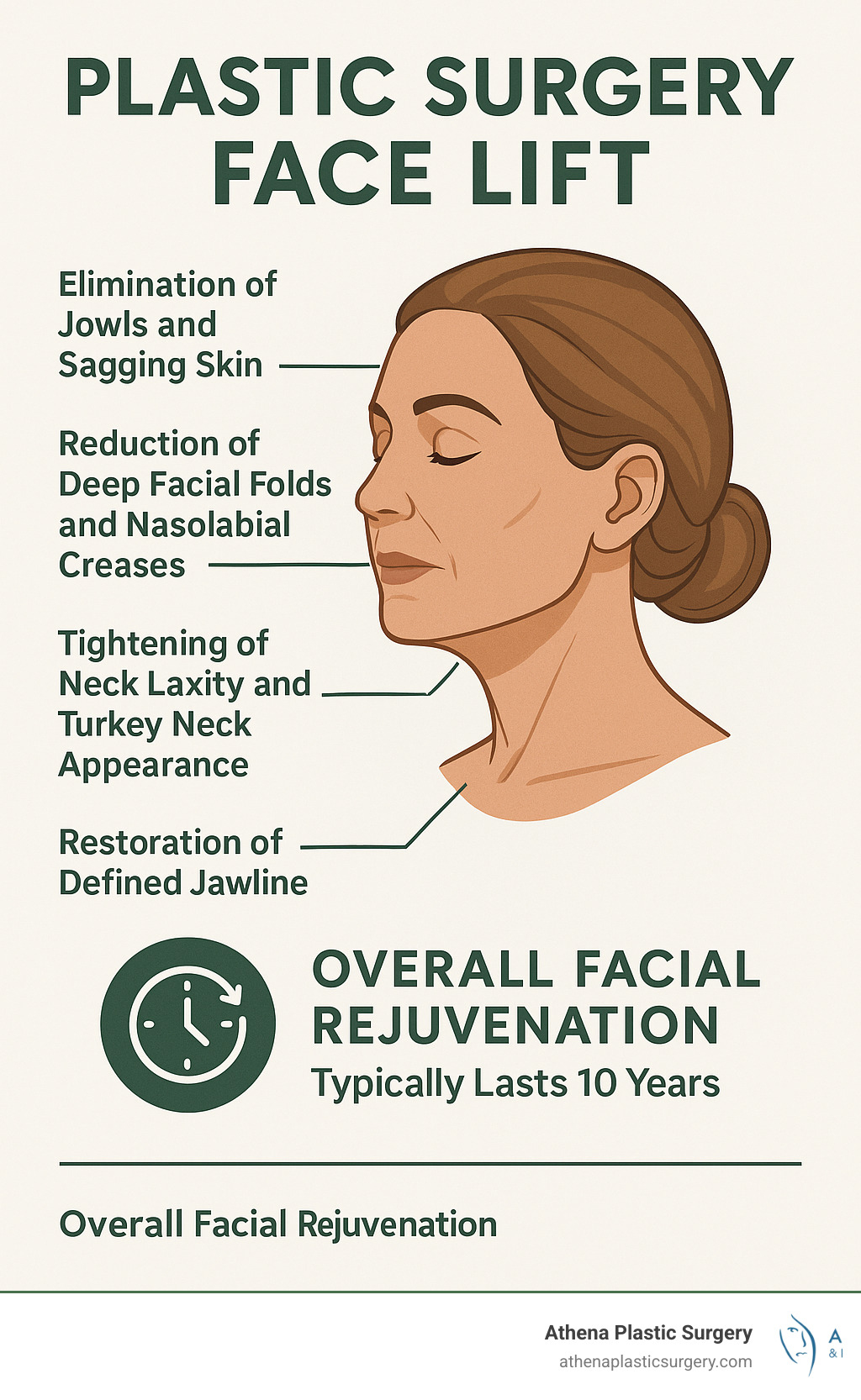
- Definition: A surgical procedure (also called rhytidectomy) that tightens sagging facial skin and underlying muscles
- Purpose: Addresses jowls, deep nasolabial folds, marionette lines, and neck laxity
- Results: Can make patients look 6-12 years younger on average
- Duration: Results typically last 10+ years
- Recovery: Most patients return to work within 1-2 weeks
Modern facelift techniques focus on repositioning deeper facial tissues rather than simply pulling skin tight, creating natural-looking results that improve your features without changing your fundamental appearance. The procedure has evolved significantly from older methods, with surgeons now able to achieve refreshed, youthful contours while maintaining each patient’s unique facial characteristics.
Whether you’re considering a mini facelift for early signs of aging or a comprehensive deep plane facelift for more advanced concerns, understanding your options is crucial for making an informed decision about your facial rejuvenation journey.
I’m Dr. Avron Lipschitz, a Board-Certified Plastic Surgeon with over 15 years of experience performing thousands of plastic surgery face lift procedures. As an international trainer and speaker in facial plastic surgery, I’ve dedicated my career to helping patients achieve natural, long-lasting results through advanced surgical techniques and personalized care.
Common plastic surgery face lift vocab:
What is a Facelift and What Can It Achieve?
A facelift, also known as a rhytidectomy or meloplasty, is a cosmetic surgical procedure designed to create a younger, more refreshed look in the face and neck. It specifically targets the visible signs of aging by reducing sagging skin and smoothing deep folds on the cheeks and jawline. While it can take years off your appearance, a plastic surgery face lift cannot stop the natural aging process, but rather sets the clock back, allowing you to age gracefully from a more youthful starting point.
During a facelift, we don’t just pull the skin tight. Modern techniques involve carefully lifting and repositioning the underlying tissues and muscles, particularly the superficial musculoaponeurotic system (SMAS) layer. This deep structural work is key to achieving natural, long-lasting results. Excess skin is then carefully removed, and the remaining skin is re-draped smoothly over the newly contoured face. Sometimes, fat may also be removed or repositioned to restore lost volume, giving a fuller, more youthful contour.
A plastic surgery face lift can dramatically improve:
- Relaxation of the skin causing sagging
- Deepening fold lines between the nose and mouth (nasolabial folds)
- Fallen or disappeared fat in the mid-face
- Jowls along the jawline
- Loose skin and excess fat in the neck, often called a “double chin” or “turkey neck” (especially when combined with a neck lift)
It’s truly incredible what a well-executed facelift can achieve. To learn more about the specific changes you can expect, we invite you to explore What Kind of Changes Can I Expect from a Facelift?. For a broad overview from a leading authority, the American Society of Plastic Surgeons overview of facelift surgery offers additional insights.
The Key Benefits of a Facelift
Beyond simply looking younger, a plastic surgery face lift offers a host of benefits that can significantly improve your quality of life and confidence. We often hear from our patients how much a facelift has lifted their spirits, not just their skin!
Here are some of the key improvements a facelift can provide:
- Smoother Skin: By removing excess skin and tightening the remaining skin, we can reduce the appearance of wrinkles and fine lines.
- Reduced Wrinkles and Folds: Deep creases, especially between the nose and mouth, are significantly softened.
- Redefined Jawline: Those pesky jowls that blur your jawline are eliminated, restoring a sharp, youthful contour.
- Restoring a Youthful Neck Contour: Often combined with a neck lift, a facelift can eliminate loose neck skin and banding, giving you a smooth, neat neck.
- Looking 6-12 Years Younger: According to studies, patients who have had facelift surgery report looking an average of 12 years younger, while another study found they appear nearly 6 years younger. Imagine turning back the clock by a decade!
- Increased Self-Confidence: When you look good, you feel good. Many patients find that a refreshed appearance translates into greater self-assurance in both their personal and professional lives.
A facelift is more than just a physical change; it’s an investment in yourself and your well-being. Find more reasons to consider this transformative procedure at 5 Reasons to Get a Facelift.
Who is a Good Candidate for a Facelift?
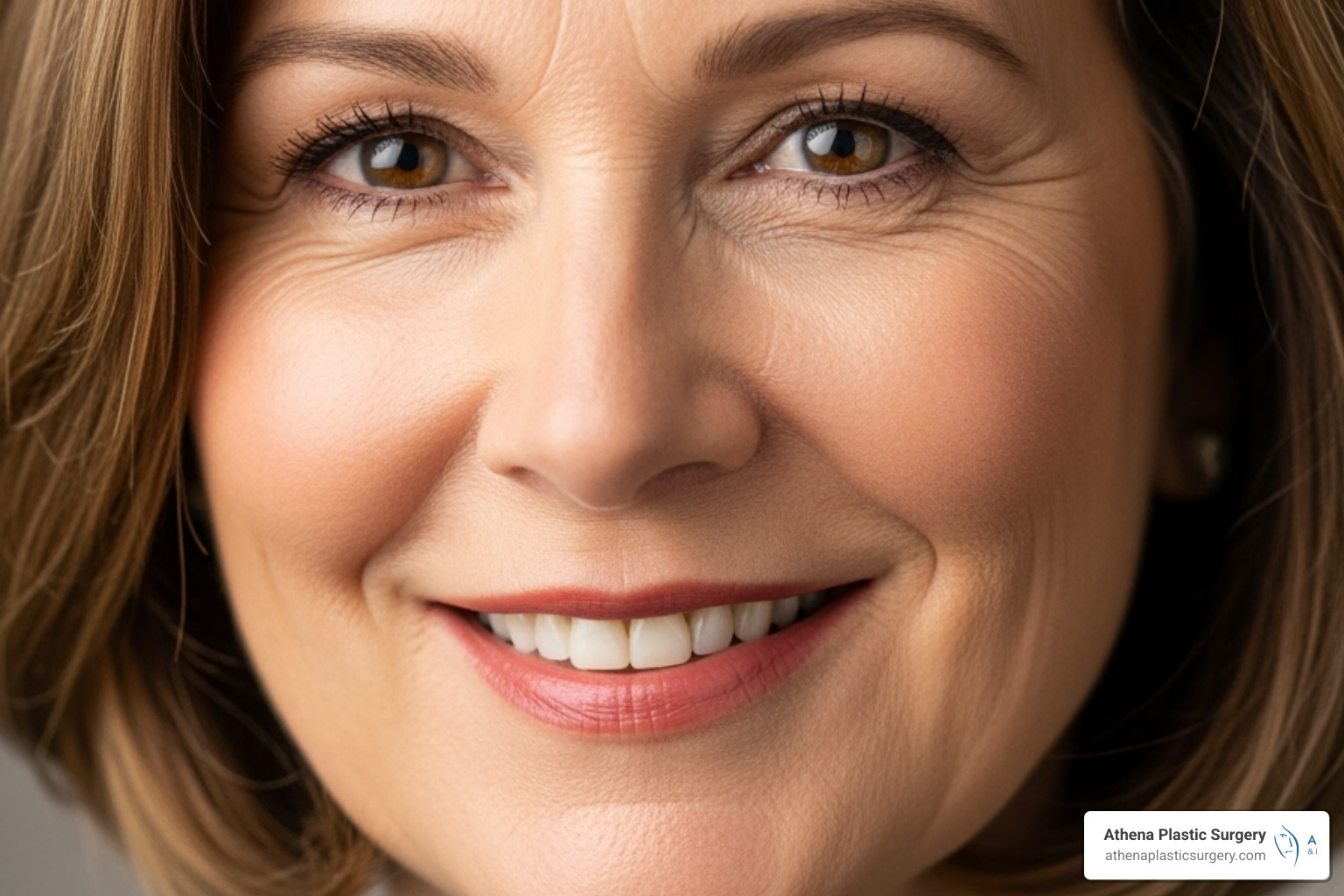
So, who exactly is the ideal candidate for a plastic surgery face lift? While there’s no strict age limit, most facelift patients are in their 50s and 60s, as this is when the signs of aging often become more pronounced and bothersome. However, both younger and older individuals can benefit, depending on their specific concerns.
A good candidate typically exhibits:
- Significant Facial Sagging: This includes noticeable jowls, deep nasolabial folds, sagging cheeks, and loose skin in the neck. If you can gently lift your cheek and jawline skin with your fingers and see a significant improvement, you’re likely a good candidate.
- Good Overall Health: Candidates must be in good physical health and have medical clearance from their primary physician. Any underlying health conditions, such as poorly controlled diabetes or high blood pressure, must be managed.
- Non-Smokers: Smoking significantly impairs the healing process and increases the risk of complications. We advise stopping smoking at least 3 weeks before surgery, and ideally, not starting again afterwards.
- Realistic Expectations: A facelift will provide a refreshed, more youthful appearance, but it won’t change your fundamental look or make you look 20 again. Understanding the limitations and potential outcomes is crucial.
- Stable Weight: Significant weight fluctuations can affect your results. It’s recommended that patients be as close to their ideal weight as possible before surgery.
If you’re wondering if a plastic surgery face lift is right for you, we encourage you to explore Are You a Candidate for Facelift?.
From Mini to Deep Plane: Types of Facelift Procedures
Just as every face is unique, so too is every plastic surgery face lift. We believe in a customized approach, tailoring the technique to your specific needs, the severity of your aging signs, and your desired outcomes. There isn’t a one-size-fits-all solution, and that’s a good thing!
The world of facelift surgery has evolved tremendously over the past few decades. Today, we have several sophisticated techniques at our disposal, each designed to address different levels of aging and achieve specific goals. Think of it like choosing the right tool for the job – a mini facelift might be perfect for someone with early signs of aging, while a deep plane facelift could be the answer for more advanced concerns.
| Facelift Type | Ideal Candidates | Incision Size | Recovery Time | Longevity of Results |
|---|---|---|---|---|
| Mini Facelift | Early aging signs, mild jowls | Small, limited to ear area | 7-10 days | 7-10 years |
| Traditional (SMAS) Facelift | Moderate to significant aging | Full incision around ear | 2-3 weeks | 10-12 years |
| Deep Plane Facelift | Advanced aging, deep folds | Full incision around ear | 3-4 weeks | 10+ years |
The Mini Facelift
If you’re noticing the first whispers of aging – perhaps some early jowling or mild sagging along your jawline – a mini facelift might be your perfect match. This procedure is like the gentle introduction to facial rejuvenation, targeting early signs of aging in the lower face and jowl area specifically.
The beauty of a mini facelift lies in its subtlety and efficiency. We use shorter incisions that are carefully hidden around the ears, making this a less invasive option compared to traditional techniques. Most patients are pleasantly surprised by how manageable the recovery is, with most people feeling comfortable returning to their normal activities within 7-10 days.
While the results are more modest than a full facelift, they’re still quite impressive, typically lasting 7-10 years. It’s an excellent choice for patients in their 40s and early 50s who want to address aging before it becomes more pronounced. For more detailed information about targeting specific areas, check out our Jowl Lift page.
The Traditional (SMAS) Facelift
When people think of a plastic surgery face lift, they’re often thinking of the traditional SMAS facelift. This is our workhorse procedure – comprehensive, reliable, and delivering excellent results for patients with moderate to significant aging concerns.
The traditional facelift provides comprehensive rejuvenation by addressing both the face and neck areas. What makes this technique special is how we work with the SMAS layer – that’s the deeper structural layer of your face. By carefully repositioning the SMAS layer, we’re able to create more natural and longer-lasting results than simply pulling on the skin.
This approach addresses the full spectrum of aging concerns, from jowls and nasolabial folds to neck laxity and overall facial sagging. The results are typically longer-lasting than a mini facelift, often maintaining their impact for 10-12 years. Learn more about this comprehensive approach at Face Lift Surgery.
The Deep Plane Facelift
The deep plane facelift represents the pinnacle of facial rejuvenation surgery. This advanced technique is like the difference between a good renovation and a complete architectural change – it addresses aging at the deepest structural level.
What sets the deep plane technique apart is how we lift the skin and muscle together as one cohesive unit, rather than separating them. This approach allows us to achieve the most natural and significant results, particularly for patients with advanced aging concerns like deep nasolabial folds and significant mid-face sagging.
The deep plane facelift addresses deep folds and mid-face sagging that other techniques simply can’t reach as effectively. While the recovery is a bit longer, the payoff is substantial – these results are the longest lasting, often maintaining their impact for 10+ years or more. For patients seeking the most comprehensive change, this is often the gold standard. Explore more about this advanced technique at Deep Plane Facelift.
Combining Procedures for Comprehensive Rejuvenation
Sometimes, achieving your ideal results means thinking beyond just the facelift itself. Many patients find that combining procedures creates a more harmonious, complete change that addresses all their concerns in one surgical session.
A neck lift is one of the most popular companion procedures, especially since the neck often shows aging signs that a facelift alone might not fully address. We also frequently combine facelifts with a Brow Lift to address forehead wrinkles and sagging eyebrows, or eyelid surgery (blepharoplasty) to refresh tired-looking eyes.
Fat grafting can add volume to areas that have lost fullness over time, while laser resurfacing can improve skin texture and tone. The key is creating a comprehensive plan that addresses all your concerns while maintaining natural-looking results. To understand the distinctions between different procedures, you might find Facelift vs. Neck Lift: What Are the Differences? helpful.
Are There Non-Surgical Alternatives?
It’s a question we hear often: “Do I really need surgery, or are there other options?” The honest answer is that it depends on your specific concerns and goals.
Dermal fillers, Botox, laser treatments, and thread lifts can all provide improvements, particularly for patients with mild to moderate aging signs. These treatments can be wonderful for maintenance or for patients who aren’t ready for surgery yet.
However, it’s important to understand that these non-surgical options are not a substitute for surgery when it comes to addressing significant sagging, deep folds, or advanced aging signs. Think of them as different tools for different jobs – sometimes a touch-up is all you need, but sometimes you need the comprehensive results that only surgery can provide.
For patients interested in exploring non-surgical options, our Liquid Facelift combines multiple non-surgical treatments for more comprehensive rejuvenation without surgery.