


What Makes a Good Tummy Tuck Scar — and Why It Matters
A good tummy tuck scar is one that is thin, flat, low on the abdomen, and fades gradually until it blends with the surrounding skin. Here’s what that looks like in practice:
- Placement: Positioned just above the pubic area, running hip to hip — easily hidden by standard underwear or a bikini bottom
- Texture: Flat, not raised or indented
- Edges: Smooth and straight, without thickening or distortion
- Color: Starts red or pink, then fades over 12–18 months to a soft, pale tone that matches your skin
- Size: Varies by procedure — a full tummy tuck runs hip to hip, while a mini tummy tuck scar is closer to 3–6 inches (similar to a C-section scar)
Every tummy tuck leaves some kind of scar — that’s simply how skin heals. But “permanent” doesn’t have to mean “obvious.” With the right surgical technique and proper aftercare, most scars become remarkably discreet over time.
The trade-off is real, but for most patients, a faint, low-placed line is a far better outcome than the loose, sagging skin they started with. Understanding how scars form, how they mature, and what you can do to support the process makes all the difference.
I’m Dr. Avron Lipschitz, a Board-Certified Plastic Surgeon with over 15 years of experience performing advanced aesthetic procedures, including abdominoplasty — and helping patients achieve a good tummy tuck scar is something I’m deeply focused on in every procedure. In this guide, I’ll walk you through everything you need to know, from the first week of healing to long-term scar management.
Defining a Good Tummy Tuck Scar and Where It’s Placed
When we talk about a Tummy Tuck, the conversation inevitably turns to the “trade-off.” In exchange for removing significant skin laxity and repairing separated muscles, the body creates a permanent mark. However, the goal of modern plastic surgery is to ensure that this mark is as inconspicuous as possible.
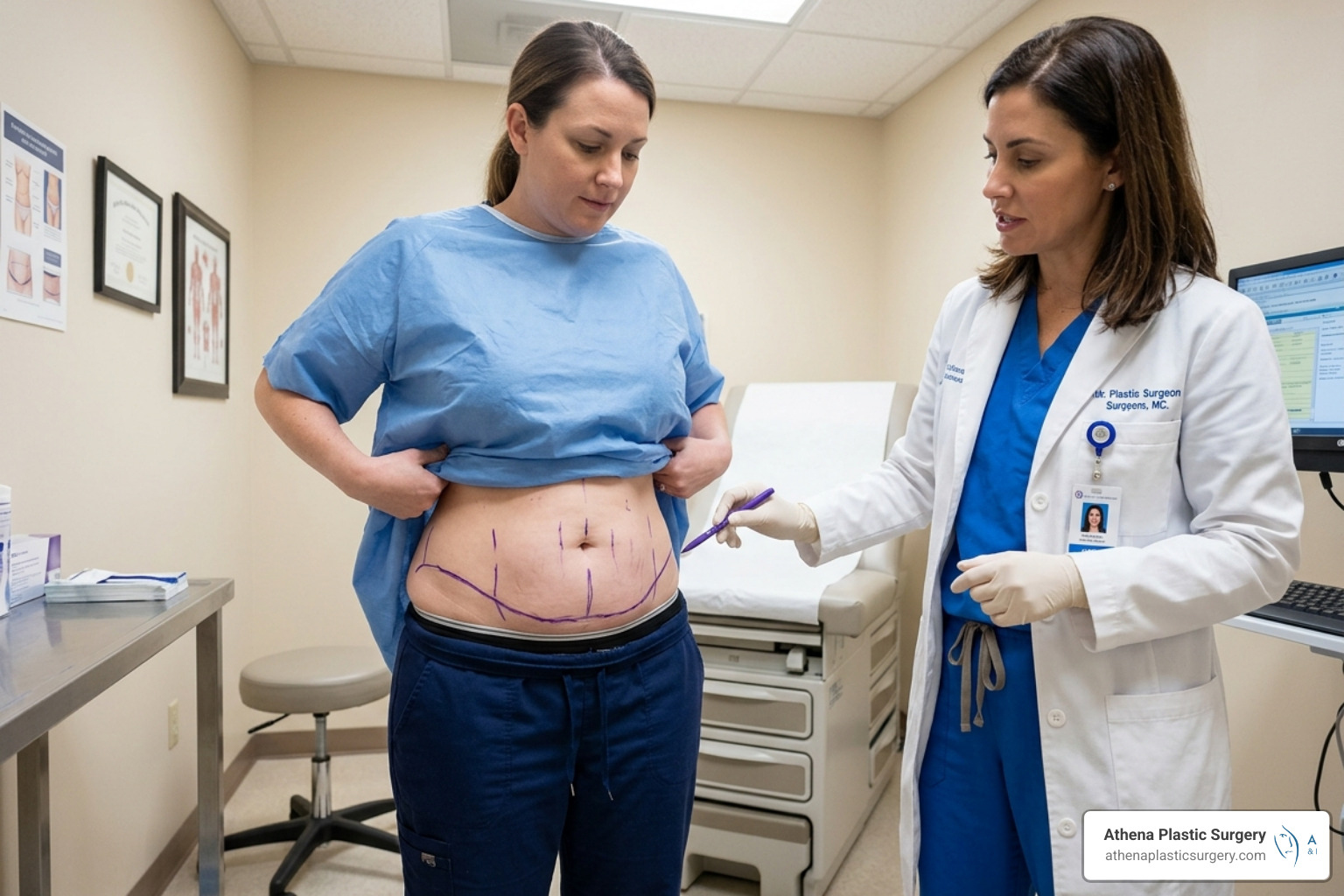
Strategic incision placement is the foundation of a good tummy tuck scar. We typically map the incision line while you are standing, often using your favorite style of swimwear or underwear as a guide. This “underwear mapping” ensures the resulting line sits comfortably below the waistband.

Characteristics of a Good Tummy Tuck Scar
A high-quality scar isn’t just about where it sits; it’s about how it feels and looks up close. A good tummy tuck scar generally exhibits:
- A Thin Line: Ideally, the scar should be no wider than a piece of thread.
- Flat Texture: It should be flush with the surrounding skin, neither raised (hypertrophic) nor sunken (atrophic).
- Symmetrical Placement: The line should follow the natural curves of your hips evenly on both sides.
- Clean Edges: There should be no “railroad track” marks from external sutures, which is why we often use advanced internal, dissolvable stitching.
Incision Locations for Different Procedures
The type of procedure you choose—and which you are a Mini Tummy Tuck Candidate for—dictates the length and location of the scar.
- Full Abdominoplasty: This involves a horizontal incision from hip bone to hip bone. It also includes a secondary incision to create a natural-looking belly button after tummy tuck.
- Mini Tummy Tuck: If you only have a small “pooch” below the navel, a mini tuck offers a shorter scar, often only 3 to 6 inches long. While the Mini Tummy Tuck Cost and recovery may be less, it does not address the upper abdomen.
- 360 Tummy Tuck: For those who have lost massive weight, a 360 Tummy Tuck extends the incision around the entire circumference of the torso to lift the buttocks and thighs as well.
- Fleur-de-lis: In cases of extreme vertical skin laxity, an inverted “T” incision (horizontal and vertical) may be necessary to achieve a flat profile.
The Biological Timeline of Scar Maturation
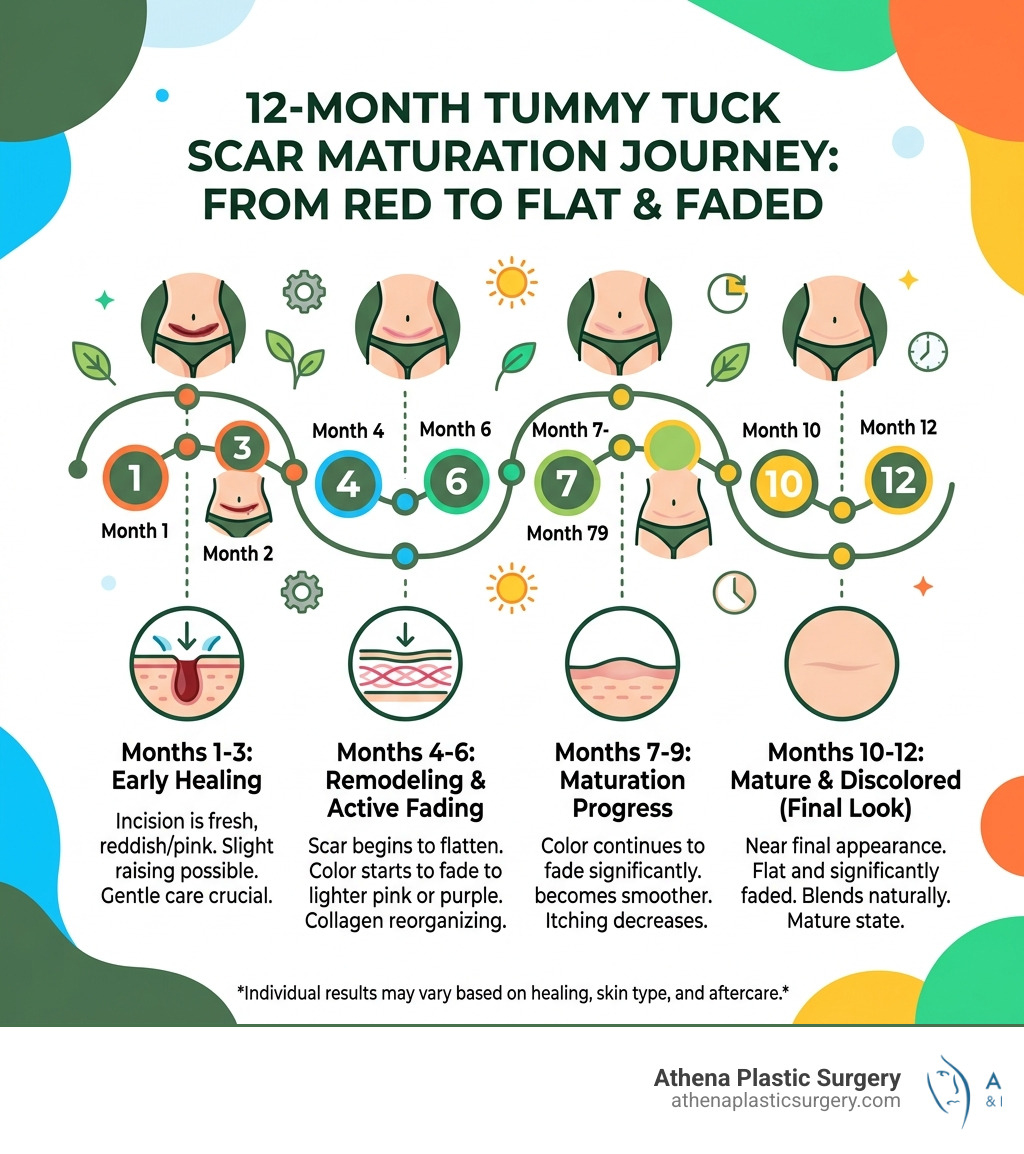
Healing isn’t a race; it’s a biological marathon. Your body uses collagen—the skin’s building blocks—to bridge the gap where the incision was made. Initially, this collagen is laid down haphazardly, like a game of “pick-up sticks,” which can make the scar feel firm or look bumpy.
During this time, it’s common to experience Numbness Tummy Tuck patients often describe, as tiny nerve endings are disrupted and take time to regenerate. Understanding the Patience Is A Virtue And So Is Your Tummy Tuck Recovery Timeline is vital for your mental peace of mind.
The First 12 Months of a Good Tummy Tuck Scar
According to the Tummy Tuck Scar: Healing, Treatment & Revision guide by Cleveland Clinic, scars go through three distinct phases:
- The Closure Phase (Weeks 1-4): The wound seals. It may look dark red or even slightly purple.
- The Establishment Phase (Months 3-6): This is often when patients worry most. The scar may become thicker, itchier, and darker as the body sends extra blood and collagen to the area.
- The Maturation Phase (Months 6-18): The “purple phase” begins to fade. The scar flattens out and the color transitions to a soft pink or a pale white that mimics your natural skin tone.
Factors Influencing Long-Term Scar Quality
Several factors determine if you end up with a good tummy tuck scar. Some are in our hands, and some are in yours:
- Surgeon Technique: Meticulous, multi-layer closure is essential. By suturing the deeper tissues first, we reduce the tension on the surface skin.
- Tension Management: If there is too much tension on the wound, the scar will naturally widen as it heals. This is why we sometimes advise you to walk slightly “hunched over” during the first week.
- Genetics: Some skin types are more prone to keloids or hypertrophic scarring.
- Procedure Choice: Deciding between Liposuction Vs Tummy Tuck West Palm Beach is important; while lipo has smaller scars, it won’t Tighten Sagging Skin With A Tummy Tuck can.
How to Minimize and Improve Your Scar’s Appearance
Once the “baton is passed” from the surgeon to the patient, your aftercare becomes the primary driver of scar quality. Following our Pre And Post Operative Instructions is the best way to ensure a smooth journey.
Essential Post-Op Care and Topical Treatments
To achieve a good tummy tuck scar, we recommend a combination of hydration, protection, and physical therapy:
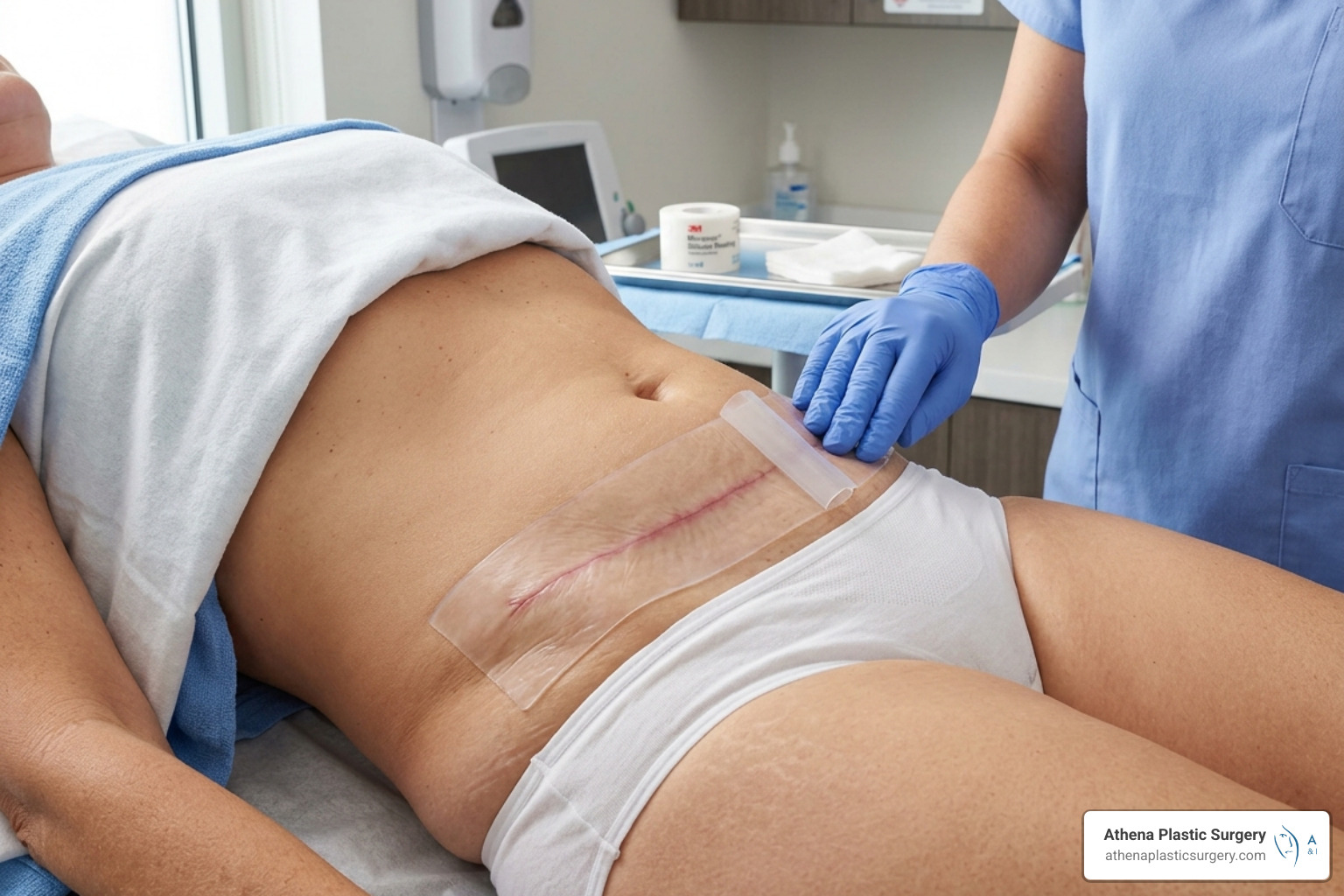
- Silicone Therapy: Medical-grade silicone gels or sheets are the gold standard. They create a protective barrier that keeps the scar hydrated and helps normalize collagen production.
- Scar Massage: Once the incision is fully closed (usually around week 6), gentle massage helps break up tough scar tissue and improves circulation.
- Compression Garments: These manage swelling and support the tissues, preventing fluid buildup that can put pressure on the incision.
- Cover-ups: For those who want to hide the mark entirely after a year of healing, you might look into the Ink Your Incision Best Tummy Tuck Cover Up Tattoos.
We also provide guidance on How To Remove Scars for those with pre-existing marks, helping you understand how professional intervention can assist in the healing process.
Protecting Your Good Tummy Tuck Scar from the Sun
UV rays are the enemy of a healing scar. Sun exposure can cause “hyperpigmentation,” where the scar turns a permanent dark brown that does not fade.
- SPF 30+: Even if you are wearing a swimsuit, UV rays can penetrate thin fabrics. Apply a high-quality sunblock daily.
- Clothing Barriers: If you are in Tummy Tuck Stuart Fl, the Florida sun is intense. Keeping the area covered with opaque clothing for at least 12 to 18 months is the safest bet.
Professional Treatments and Scar Revision Surgery
Sometimes, despite everyone’s best efforts, a scar doesn’t heal as planned. This might be due to a “spitting suture” (a tiny internal stitch that pokes out like a pimple) or simply your body’s unique healing response.
When to Consider Surgical Revision
If a scar remains wide, raised, or distorted after 12 to 18 months, Scar Revision Surgery may be an option. This involves surgically removing the old scar and re-closing the area with even more precision. You can learn more in our Scar Revision Surgery Worth It Guide.
When looking for the best tummy tuck surgery in the Palm Beach area, always ensure your surgeon is board-certified and has experience in revisionary work.
Non-Surgical Refinement Options
Not every scar needs a scalpel to look better. Many patients in our West Palm Beach and Stuart offices benefit from:
- Laser Therapy: This can reduce redness and smooth out the texture.
- Microneedling: This stimulates fresh collagen to help the scar blend with the surrounding skin.
- Steroid Injections: These are highly effective for flattening raised, itchy hypertrophic scars.
- Nonsurgical Alternatives: While some look for a Non Surgical Tummy Tuck or a Tummy Tuck Alternative, these rarely provide the same skin-tightening results as surgery, though they involve less scarring.
For those interested in non-invasive routes, various dermatological approaches can be discussed during your consultation to find the best fit for your aesthetic goals.
Frequently Asked Questions about Tummy Tuck Scars
Can a tummy tuck scar be completely hidden?
While no surgical scar is 100% invisible, a good tummy tuck scar is designed to be “socially invisible.” By placing the incision low in the pubic area and using underwear mapping, the scar remains hidden under almost all clothing, including low-cut jeans and string bikinis. You can see examples of this in our Before And After Tummy Tuck gallery.
Why does my scar look worse at three to six months?
This is the “Establishment Phase.” Your body is working overtime to strengthen the wound, which means increased blood flow (making it redder) and extra collagen (making it thicker). Don’t panic—this is a sign that your body is doing its job. It usually begins to soften and fade shortly after the six-month mark.
Does smoking affect the final scar quality?
Yes, and significantly. Nicotine constricts blood vessels, which deprives the healing tissue of oxygen. This can lead to tissue necrosis (skin death), wound dehiscence (the incision opening up), and much wider, thicker scars. If you’re searching for Tummy Tuck Cost Near Me, the “cost” of smoking during recovery can be a permanent, unsightly scar.
Conclusion
Achieving a good tummy tuck scar is a collaborative effort between your surgeon’s skill and your dedication to recovery. At Athena Plastic Surgery, we are committed to providing the residents of Stuart and West Palm Beach with results that not only look beautiful but feel natural.
Dr. Avron Lipschitz and our team focus on aesthetic excellence, ensuring that your transition to a flatter, more confident you is as seamless as possible. If you are curious about How Much Are Tucks, we encourage you to schedule a personalized consultation.
Whether you are looking to address a C-section “shelf,” repair diastasis recti, or simply feel better in your clothes, we are here to guide you through every stage of the journey. For more information on the procedure itself, visit our main Tummy Tuck page. We look forward to helping you achieve the smooth, contoured abdomen you’ve been working toward.