


What is deep plane facelift? A deep plane facelift is a surgical procedure designed to revive a youthful appearance by lifting the deeper layers of the face. It targets sagging skin, improves facial contours, and offers long-lasting and natural-looking results.
The quest for youthful skin brings many to the deep plane facelift, a procedure praised for its aesthetic excellence. Unlike traditional facelifts, this technique focuses on lifting deeper tissues, providing a more natural change without the “pulled” look. By addressing core facial structures, it effectively reduces the space for complications, delivering a refreshd yet authentic appearance.
I’m Avron Lipschitz MD, with over 15 years of experience in advanced plastic surgery, particularly in the area of deep plane facelifts. My training and practice have been dedicated to helping patients achieve their best version of themselves through innovative and compassion-driven care.
What is a Deep Plane Facelift?
A deep plane facelift is a type of facial surgery that focuses on the SMAS layer, which stands for the superficial muscular aponeurotic system. This layer is the key to achieving a youthful appearance, as it involves the deeper, structural tissues of the face rather than just the skin.
How a Deep Plane Facelift Works
The procedure begins with tissue elevation. This involves lifting the SMAS layer to reposition it, which helps restore the natural contours of the face. Unlike other facelift techniques that might only tighten the skin, the deep plane facelift moves the deeper tissues. This leads to long-lasting results and a more natural appearance.

Ligament release is another critical step. By releasing certain facial ligaments, the surgeon can allow for better movement and repositioning of the tissues. This step helps in smoothing out the face and reducing the appearance of sagging.
The technique also provides facial volume restoration. By addressing the deeper layers, the procedure can help restore lost volume in areas like the cheeks, making the face look fuller and more youthful.
Areas Targeted by a Deep Plane Facelift
The lower face and neck are primary targets for this procedure. These areas often show signs of aging, such as sagging and loss of definition. The deep plane facelift can redefine the jawline and improve the appearance of the cheeks.
Additionally, the procedure can address nasolabial folds, which are the lines that run from the nose to the corners of the mouth. By lifting and repositioning the deeper tissues, these folds become less pronounced, contributing to a smoother and younger-looking face.
In summary, a deep plane facelift is a comprehensive approach to facial rejuvenation. It tackles the deeper structures of the face to provide natural and long-lasting results, targeting critical areas like the lower face, neck, jawline, cheeks, and nasolabial folds.

This innovative technique has transformed the way we approach facial aging, offering patients a path to regain their youthful appearance with confidence.
Benefits of a Deep Plane Facelift
When considering a facelift, you might wonder what sets a deep plane facelift apart from other techniques. Let’s break it down.
Natural Results
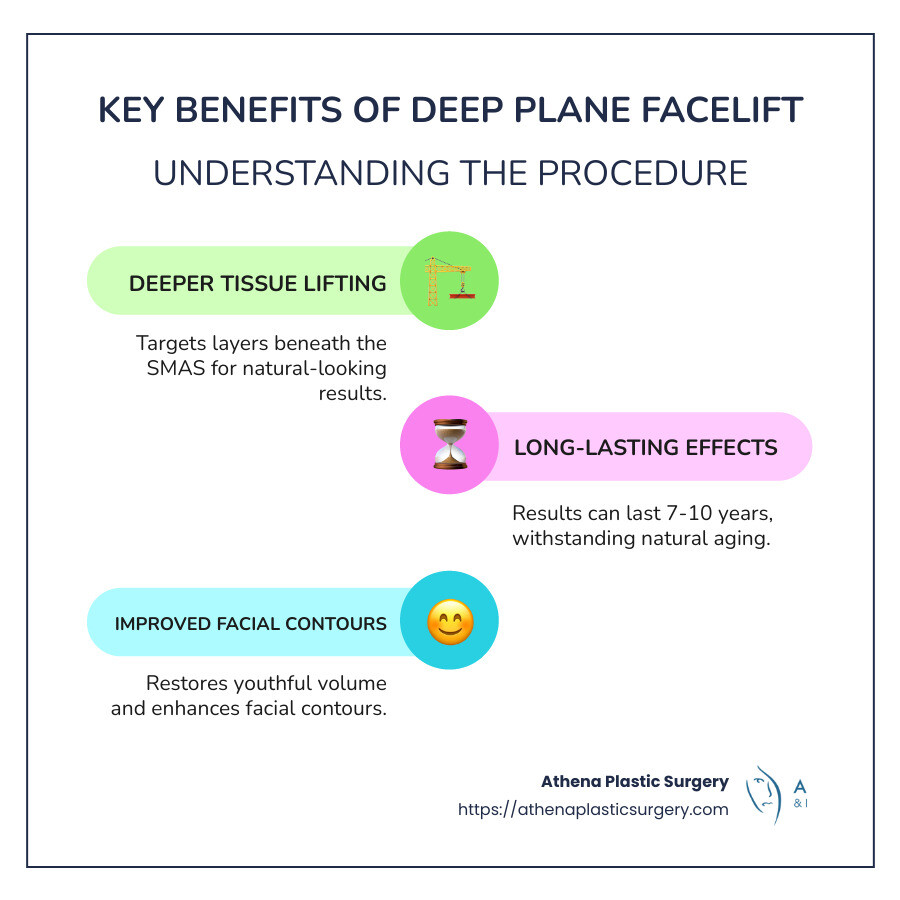
One of the standout benefits of a deep plane facelift is its ability to deliver natural-looking results. Unlike older methods that simply pulled the skin tight, this technique works on a deeper level. By repositioning the SMAS layer and releasing ligaments, the face retains its natural movements and expressions. This means you won’t have that “windblown” look that some facelifts can cause.
Long-Lasting Effects
The deep plane facelift is known for its durability. While the aging process continues, many patients enjoy results that last between 7 to 12 years. This longevity is due to the deep tissue lifting involved in the procedure. By addressing the structural layers of the face, it provides a foundation that holds up over time.
Improved Facial Contours
This technique excels at enhancing facial contours. By elevating the deeper tissues, it sharpens the jawline, lifts the cheeks, and smooths out nasolabial folds. The result is a more defined and youthful appearance. Patients often notice a significant improvement in the overall harmony of their facial features.
Comparison with Other Facelift Techniques
Now, let’s compare the deep plane facelift with other popular techniques:
SMAS Facelift: This method also targets the SMAS layer but doesn’t involve the same level of deep tissue lifting as the deep plane facelift. It can still provide good results, but they might not last as long or look as natural.
Imbrication Technique: This older method involves folding and stitching the SMAS layer. While it can tighten the face, it often fails to address the deeper ligaments and tissues. This can lead to less natural results and a shorter duration of effectiveness.
In summary, the deep plane facelift offers a comprehensive approach to facial rejuvenation. It combines natural results, long-lasting effects, and improved facial contours, making it a preferred choice for those seeking a youthful change.
Risks and Recovery
Undergoing a deep plane facelift is a significant decision, and understanding the risks and recovery process is crucial.
Potential Complications
Like any surgical procedure, a deep plane facelift comes with potential risks. Here’s what you need to know:
Infection: Although rare, infections can occur. It’s important to follow all post-operative care instructions to minimize this risk.
Nerve Injury: The facial nerve is at risk during surgery, particularly around the temporoparietal and mandibular regions. This can lead to temporary or, in rare cases, permanent facial weakness.
Scarring: While surgeons aim for minimal scarring, some patients may develop noticeable scars. Proper wound care and following your surgeon’s advice can help reduce this risk.
Asymmetry: There’s a possibility of uneven results, which might require additional procedures for correction.
Recovery Process
Recovery from a deep plane facelift involves several stages. Here’s a breakdown of what to expect:
Bruising and Swelling: These are common right after surgery. They typically peak within the first few days and gradually subside over the next couple of weeks. Sleeping with your head elevated can help reduce swelling.
Low Energy: It’s normal to feel tired during the initial recovery period. Your body needs time to heal, so rest is essential.
Healing Time: Most patients can return to light activities within two weeks, but full recovery can take several months. You might notice improvements in swelling and scars for up to a year.
Post-Operative Care: Following your surgeon’s instructions is key to a smooth recovery. This includes attending follow-up appointments, taking prescribed medications, and avoiding strenuous activities.
By being aware of these potential complications and understanding the recovery process, you can prepare for a successful facelift experience.
Frequently Asked Questions about Deep Plane Facelifts
What is the difference between a full facelift and a deep plane facelift?
A full facelift often involves various techniques to address sagging skin and wrinkles on the face. In contrast, a deep plane facelift specifically targets the deeper tissue layers, providing a more natural and long-lasting result. It focuses on lifting the SMAS layer, which is the muscle layer beneath the skin, without detaching the skin itself. This technique avoids the “tight” appearance that sometimes results from traditional facelifts.
The deep plane facelift also releases specific ligament groups to allow for smoother repositioning of facial tissues, enhancing the jawline and cheeks. This results in a more youthful appearance without the need for excessive skin removal or tension.
How long do the results of a deep plane facelift last?
One of the significant advantages of a deep plane facelift is its longevity. Patients often enjoy the refreshd effects for 7-10 years or more. This is largely because the procedure addresses the deeper, fibrous layers that are less likely to stretch over time compared to skin-only techniques.
However, keep in mind that natural aging will continue. While the facelift can turn back the clock, it doesn’t stop it. Patients may still experience some degree of natural aging, but the results are generally more durable compared to other facelift methods.
Can additional procedures be combined with a deep plane facelift?
Yes, combining procedures can improve the overall rejuvenation effect. Commonly, a deep plane facelift is paired with:
Eyelid Surgery (Blepharoplasty): This procedure can address drooping eyelids and bags under the eyes, complementing the facelift for a more comprehensive rejuvenation.
Brow Lift: Elevating the brow can further improve the youthful appearance achieved by a facelift, particularly for individuals with heavy or sagging brows.
Facial Fat Grafting: This involves transferring fat to areas of the face that have lost volume, providing a fuller and more youthful look.
By combining these procedures, patients can achieve a more holistic change, addressing multiple areas of concern simultaneously. Always discuss with your surgeon to determine the best combination for your specific needs and goals.
Conclusion
At Athena Plastic Surgery, we believe in the transformative power of advanced cosmetic procedures like the deep plane facelift. Under the expert guidance of Dr. Avron, a Johns Hopkins-trained surgeon renowned for his aesthetic precision and compassionate care, our team is dedicated to helping you achieve your desired youthful appearance.
Dr. Avron’s expertise in deep plane facelifts ensures that our patients receive not only a refreshed look but also a natural and long-lasting result. His approach focuses on lifting and repositioning the deeper layers of the face, such as the SMAS layer, to improve facial contours and restore volume. This technique avoids the overly tight appearance that can sometimes result from traditional facelifts, offering a more subtle and youthful change.
Our commitment to aesthetic excellence extends beyond the operating room. We provide personalized care and attention throughout your journey, from the initial consultation to post-operative follow-up. Our goal is to ensure that every patient feels comfortable, informed, and confident in their decision to improve their appearance.
If you’re considering a deep plane facelift or exploring other options for facial rejuvenation, we invite you to learn more about our services and how Dr. Avron can help you achieve your beauty goals. Visit our Deep Neck Lift page to find more about the procedures we offer and take the first step towards a more youthful you.
At Athena Plastic Surgery, your change is our passion. We are here to support you every step of the way, ensuring your experience is as seamless and rewarding as possible.




