


Understanding Your Facelift Recovery Journey
What to expect after face lift surgery includes immediate swelling and bruising, a structured healing timeline, and gradual return to normal activities over several weeks to months.
Quick Recovery Overview:
• Days 1-3: Peak swelling, bandages, possible drains, prescription pain medication
• Week 1: Suture removal, continued swelling, limited activity
• Weeks 2-3: Return to work, makeup application allowed, significant improvement
• Weeks 4-6: Resume exercise, most swelling resolved
• Months 2-6: Final results emerge, minor numbness may persist
• Long-term: Results typically last 7-10 years
More than 131,000 people in the United States undergo facelift surgery each year, yet many patients feel unprepared for the recovery process. Understanding what lies ahead can transform your healing experience from anxious uncertainty to confident progress.
The journey from surgery to your final results follows a predictable pattern. Most people recover from a facelift in 4 to 6 weeks, though it can take 6 months or more to see the complete outcome. During this time, your body works systematically to heal incisions, reduce swelling, and reveal your refreshed appearance.
Bruising and swelling typically last about 2 to 3 weeks, but some people may take 2 to 3 months before their face feels completely “back to normal.” Temporary numbness and skin tightness are common and may last several months after surgery.
As Dr. Avron Lipschitz MD, a Board-Certified Plastic Surgeon with over 15 years of experience, I’ve guided thousands of patients through their facelift recovery and understand exactly what to expect after face lift surgery. My goal is to prepare you for each stage of healing so you can focus on your change with confidence.

What to expect after face lift surgery vocab explained:
– facelift recovery time
– plastic surgery face lift before and after
– bad plastic surgery face
Facelift Basics: Procedure, Techniques, and Candidates
Think of your facelift as a personalized renovation project for your face. Just like every home renovation is different, the type of facelift technique used affects your recovery timeline and what to expect after face lift surgery. Understanding your specific procedure helps you prepare mentally and physically for the healing journey ahead.
What Is a Facelift?
A facelift, or rhytidectomy in medical terms, is like hitting the reset button on facial aging. This surgical procedure lifts and tightens the facial tissues that have started to sag due to gravity, aging, and volume loss over the years.
During your facelift, we address those telltale signs of aging: sagging skin around the jawline, deep lines from your nose to mouth, jowls that have appeared seemingly overnight, and loose neck tissue that makes you avoid certain camera angles. The surgery works by repositioning the underlying muscles, adjusting fat distribution, and removing excess skin.
The procedure typically takes 2 to 5 hours depending on the complexity. We make careful incisions around your hairline and ears, giving us access to the deeper facial structures. The key is lifting the SMAS layer (superficial musculoaponeurotic system) – think of this as the scaffolding beneath your skin that provides structure and support.
Popular Facelift Variations
Traditional facelifts offer the most comprehensive change, addressing your entire face and neck in one procedure. This approach typically requires 4 to 6 weeks for recovery, with your final results becoming visible after about 6 months. It’s like doing a complete home renovation rather than just updating one room.
The mini-facelift, also called an S-lift, uses shorter incisions and focuses on mild to moderate sagging. Recovery moves faster with this technique – usually 2 to 3 weeks – and you’ll experience less swelling and bruising. It’s perfect for patients who want to address early signs of aging without the longer downtime.
Deep plane facelifts involve lifting tissues at a deeper level, creating more dramatic and longer-lasting results. This technique may require slightly longer recovery due to the more extensive tissue work, but many patients find the improved results worth the extra healing time.
At Athena Plastic Surgery, we most commonly perform SMAS facelifts, which target the muscle layer beneath your skin. This technique creates natural-looking results that typically last 7 to 10 years. The SMAS approach strikes an excellent balance between comprehensive results and reasonable recovery time.
Many patients choose to combine their facelift with a neck lift to address sagging neck skin and muscle bands. While this combination may extend your recovery by 1 to 2 weeks, it provides comprehensive rejuvenation that addresses the entire lower face and neck area.
The longevity of your results varies by technique, with most facelifts maintaining their effects for 7 to 10 years before age-related changes become noticeable again. Scientific research on modern facelift techniques confirms that deep plane and SMAS techniques provide the most durable outcomes.
| Facelift Type | Recovery Time | Longevity | Best For |
|---|---|---|---|
| Traditional | 4-6 weeks | 7-10 years | Comprehensive aging |
| Mini-Facelift | 2-3 weeks | 5-7 years | Early aging signs |
| Deep Plane | 4-8 weeks | 10-15 years | Dramatic results |
| SMAS | 4-6 weeks | 7-10 years | Natural results |
Understanding which technique Dr. Lipschitz used for your procedure helps you set realistic expectations for your recovery timeline and final results.
What to Expect Immediately After Face Lift Surgery
The first few hours after your facelift surgery can feel overwhelming, but knowing what to expect after face lift surgery during this crucial period helps you stay calm and focused on healing. Your body has just undergone a significant procedure, and everything you’re experiencing is part of the normal recovery process.
The immediate post-operative period sets the foundation for your entire recovery. Understanding what’s normal helps distinguish between expected healing and potential complications that might need attention.

When you first wake up in recovery, you’ll feel groggy and disoriented from the anesthesia. This foggy feeling is completely normal and will clear over the next few hours. Your face will be wrapped in compression bandages that feel snug but shouldn’t cause severe pain. Some patients describe it as feeling like their face is in a gentle, protective cocoon.
You may notice small drainage tubes tucked discreetly behind your ears. These tiny tubes help prevent fluid buildup during the first day or two of healing. While they might feel strange, they’re doing important work to keep your recovery on track.
The anesthesia fog gradually lifts over 4-6 hours, and you might experience some nausea during this transition. This is why we always recommend having someone stay with you overnight – you’ll need help with basic tasks like getting water or managing your medications safely.
First 24 Hours: what to expect after face lift surgery
Your first night at home is all about rest and gentle care. You’ll wake up feeling groggy from anesthesia with your head wrapped in bandages and possibly small drainage tubes in place. This is completely normal and part of the healing process.
The most important thing to know is that hematoma (blood collection under the skin) usually develops within the first 24 hours if it’s going to happen at all. That’s why we monitor you so closely during this period and why following your post-operative instructions is crucial.
Grogginess and lightheadedness from anesthesia will be your main companions initially. As the medication wears off, you’ll start feeling facial pressure from the compression dressings and a deep, bruised sensation as swelling begins. The pain is typically manageable with prescribed medications – most patients describe it as pressure rather than sharp pain.
Your caregiver will be essential during these first 24 hours. They’ll help you keep your head liftd on 2-3 pillows, apply cold compresses as directed, and make sure you take your pain medication before discomfort peaks. We always tell patients to limit jaw movement by eating soft foods and minimizing talking – your facial tissues need time to settle into their new position.
Mobility should be gentle during this phase. Light walking around your home helps circulation, but avoid bending over or any activities that increase blood flow to your face. If you have high blood pressure, monitoring it closely becomes even more important during recovery.
Days 2-7: what to expect after face lift surgery
Here’s where what to expect after face lift surgery becomes more challenging emotionally. Swelling and bruising typically peak around days 3-4, which means you might look worse before you look better. This temporary appearance can be discouraging, but it absolutely doesn’t reflect your final results.
During your first follow-up visit within 24-48 hours, we’ll remove your initial dressing and assess how your incisions are healing. This appointment often brings relief because you can finally see that everything is progressing normally, even if you’re still quite swollen.
Bruising may migrate downward to your neck and chest due to gravity – this looks alarming but is completely expected. Think of it as your body’s natural way of clearing away the evidence of surgery. The numbness and tightness you feel are also normal parts of healing as your nerves recover and tissues adjust.
Your drainage tubes will usually come out within 1-2 days, which feels like a major milestone. Some patients notice temporary hair loss along incision sites during this week, but don’t worry – hair typically regrows completely within 3-6 months.
Daily care becomes routine during this phase. You’ll clean your incisions gently with peroxide and apply antibiotic ointment as directed. Sleeping with your head liftd continues for at least one week, and light walking becomes increasingly important for circulation and preventing blood clots.
Staying hydrated and eating soft, nutritious foods helps your body focus energy on healing rather than digestion. Avoid bending, lifting, or any straining that could increase pressure in your face.
For detailed guidance on navigating this critical period successfully, visit our Facelift Post-Op Tips page. According to scientific research on early complications, following these guidelines significantly reduces your risk of complications and promotes optimal healing.
Facelift Recovery Timeline: Day 1 to 1 Year
Your facelift recovery unfolds like chapters in a book, each phase bringing you closer to your final results. While everyone heals at their own pace, understanding these predictable milestones helps you celebrate progress and know exactly what to expect after face lift surgery during each stage.

Think of your recovery as a marathon, not a sprint. The first few weeks require patience as your body does the hard work of healing, but each day brings noticeable improvements that build toward your beautiful final outcome.
Week 1-2 Milestones
Week one can feel like the longest week of your life, but it’s also when the most dramatic healing happens behind the scenes. Your pain will peak during the first few days, then gradually melt away as your body adjusts. This is completely normal and exactly what to expect after face lift surgery.
The swelling and bruising reach their peak around day three or four, making you look like you went a few rounds with a boxer. Don’t panic – this puffy, colorful phase is temporary and doesn’t reflect your final results. We’ll remove your sutures in front of your ears around day seven, which feels like a small victory in your recovery journey.
By week two, you’ll start to see glimpses of your new self emerging. The dramatic swelling begins to settle, and the worst of the bruising starts fading from deep purple to yellow-green (much more flattering, we promise). Most patients feel ready to return to work at this point, especially with a little makeup to conceal any remaining bruises.
This is when many patients experience their first “wow” moment – catching their reflection and realizing they actually look pretty good. You can finally shower normally after your drainage tubes come out, which feels incredibly refreshing after days of careful sponge baths.
Weeks 3-6 & Beyond
Weeks three and four mark the turning point when you stop looking like you had surgery and start looking like you had a really good vacation. The substantial reduction in swelling and bruising means you feel comfortable going to dinner with friends or attending social events again.
You can resume light exercise like walking or gentle yoga, which feels amazing after being sedentary. Your energy returns, and that foggy, uncomfortable feeling finally lifts. Most visible signs of surgery have resolved, though you’ll still notice some tightness and minor swelling that continues improving daily.
Weeks five and six bring the green light to return to your full exercise routine with our approval. This phase feels liberating – you can finally hit the gym, go for that morning run, or take your favorite yoga class. Your scars begin their change from red lines to thin, pale marks that will eventually become nearly invisible.
The journey from months two through six reveals your true results as the final layers of swelling dissolve and your tissues settle into their new position. Any lingering numbness or tightness gradually resolves, and you start forgetting you ever had surgery at all.
Long-term healing from six months to one year completes the change. Your scars mature to thin, barely visible lines, and every trace of swelling disappears. Full sensation returns to areas that felt numb, and your results stabilize into the refreshed, natural appearance that will last for years to come.
For detailed information about timing and expectations, visit our comprehensive Facelift Recovery Time guide.
Post-Operative Care: Incisions, Pain, Activity & Lifestyle
Taking proper care of yourself after surgery isn’t just about following rules—it’s about giving your body the best chance to heal beautifully. The small steps you take each day directly impact how quickly you recover and what to expect after face lift surgery in terms of your final results.
Think of your post-operative care as an investment in your new appearance. When patients follow our protocols carefully, they consistently heal faster and achieve better outcomes than those who take shortcuts.
Incision & Skin Care Essentials
Your incisions are like delicate artwork in progress—they need gentle, consistent care to heal into barely visible lines. The good news is that facelift incisions are strategically placed in natural creases and hairlines, so they become virtually undetectable over time.
Start with a simple daily routine that becomes second nature. Clean your incisions twice daily with hydrogen peroxide using a cotton swab, then apply a thin layer of antibiotic ointment like Bacitracin. Think of this as your morning and evening ritual—consistency matters more than perfection.
Keep your incisions dry between cleanings, and resist the urge to pick at any scabs or crusts that form. I know it’s tempting, but this can lead to wider scars or even infection. When you wash your face, use gentle upward motions and avoid scrubbing near the incision sites.
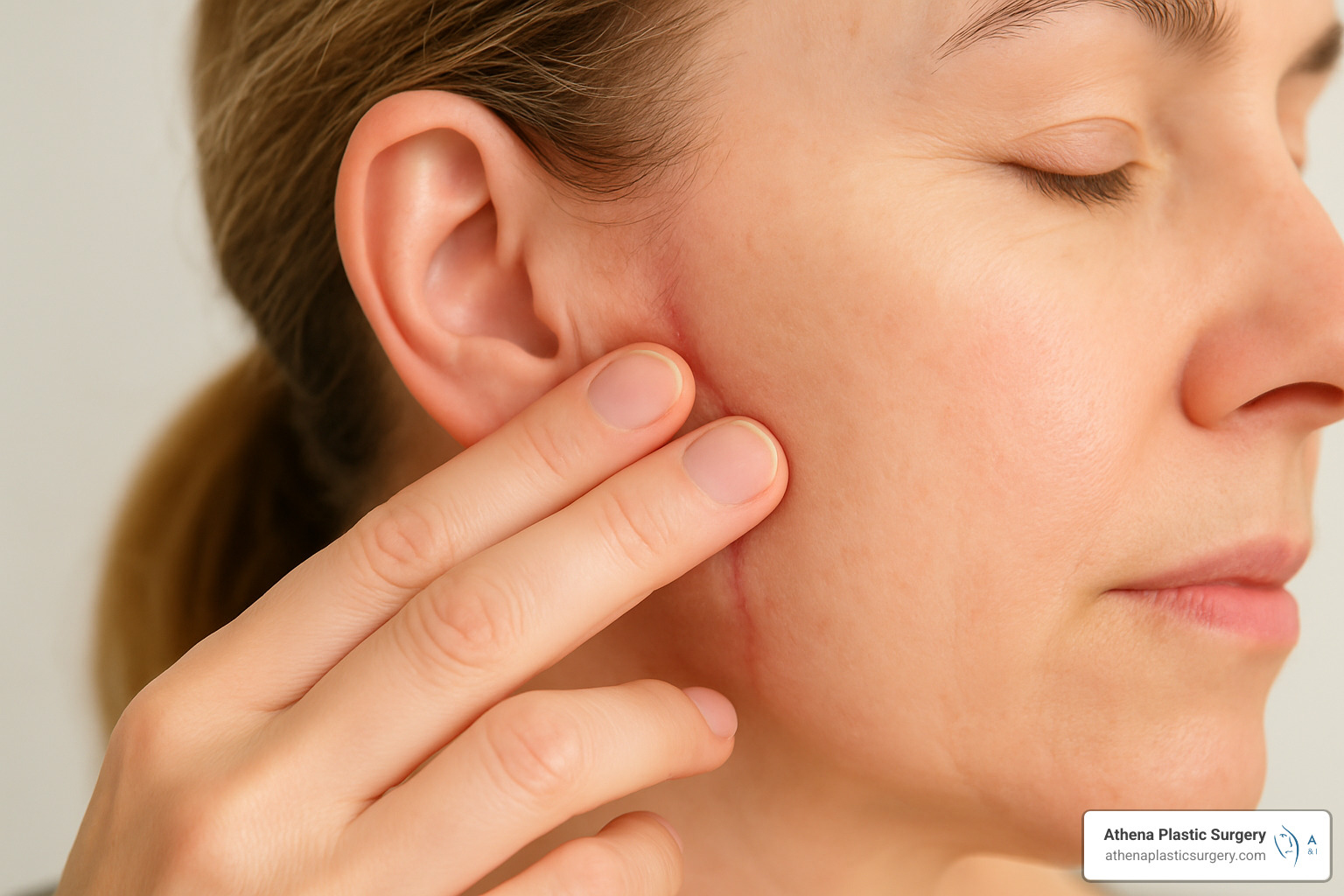
Scar management becomes crucial once your incisions start healing. The most important thing you can do is protect them from direct sunlight for a full year—yes, twelve months. UV exposure can cause permanent darkening of scars, making them more visible long-term.
Once your surgeon gives the green light around 2-3 weeks, begin gentle scar massage with vitamin E oil. Use small circular motions for just a few minutes twice daily. This helps break up scar tissue and improves the final appearance. Some patients benefit from silicone gel sheets, which we’ll recommend if your scars need extra attention.
Hair care requires special attention during your recovery. Wash your hair gently with baby shampoo initially—it’s milder and less likely to irritate healing incisions. Avoid hair coloring for at least 8 weeks, as the chemicals can interfere with healing and cause irritation.
When using a hair dryer, stick to the cool setting to prevent heat injury to sensitive healing skin. Be extra gentle around incision sites when styling, and consider simpler hairstyles for the first few weeks.
Safe Activity & Nutrition Guide
Your body is working overtime to heal, so what to expect after face lift surgery includes feeling more tired than usual. This is completely normal—healing takes energy, and you need to pace yourself accordingly.
Activity should progress gradually rather than jumping back into your normal routine. For the first week, limit yourself to light walking around your home. This gentle movement promotes circulation and prevents blood clots without straining your incisions.
During weeks 2-3, you can gradually increase your daily activities. Most patients feel ready to return to work around this time, especially if they have desk jobs. Avoid driving for at least two weeks or until you’re completely off pain medication—your reaction time needs to be sharp behind the wheel.
Exercise enthusiasts often ask when they can hit the gym again. Generally, we clear patients for full exercise around weeks 4-6, but this depends on your individual healing progress. Start slowly with walking or gentle yoga before progressing to more intense workouts.
Nutrition plays a huge role in how well you heal. Your body needs extra protein to repair tissues, so include lean meats, fish, eggs, or plant-based proteins in every meal. Stay hydrated with at least 2 liters of water daily—dehydration slows healing and can worsen swelling.
Anti-inflammatory foods become your best friends during recovery. Load up on leafy greens, berries, fatty fish, and nuts. These foods help reduce swelling and provide the nutrients your body craves for optimal healing.
Lifestyle adjustments might feel inconvenient, but they’re temporary investments in your long-term results. If you smoke, this is the perfect time to quit permanently—nicotine severely impairs blood flow and can cause serious complications like skin death.
Sleep on your back with your head liftd for at least two weeks. I recommend investing in a wedge pillow or using 2-3 regular pillows to maintain the proper angle. This position reduces swelling and protects your incisions while you sleep.
Limit salt intake during recovery, as excess sodium causes fluid retention and prolonged swelling. Avoid steam baths and saunas for several months—the heat can increase swelling and interfere with healing.
For a complete care checklist that covers every detail of your recovery, visit our Facelift Checklist page. Following these guidelines carefully sets you up for the beautiful, natural-looking results you’re hoping to achieve.
Potential Risks and How to Respond
While facelift surgery is generally safe, understanding potential complications helps you recognize when to seek immediate medical attention. Early intervention can prevent minor issues from becoming serious problems.
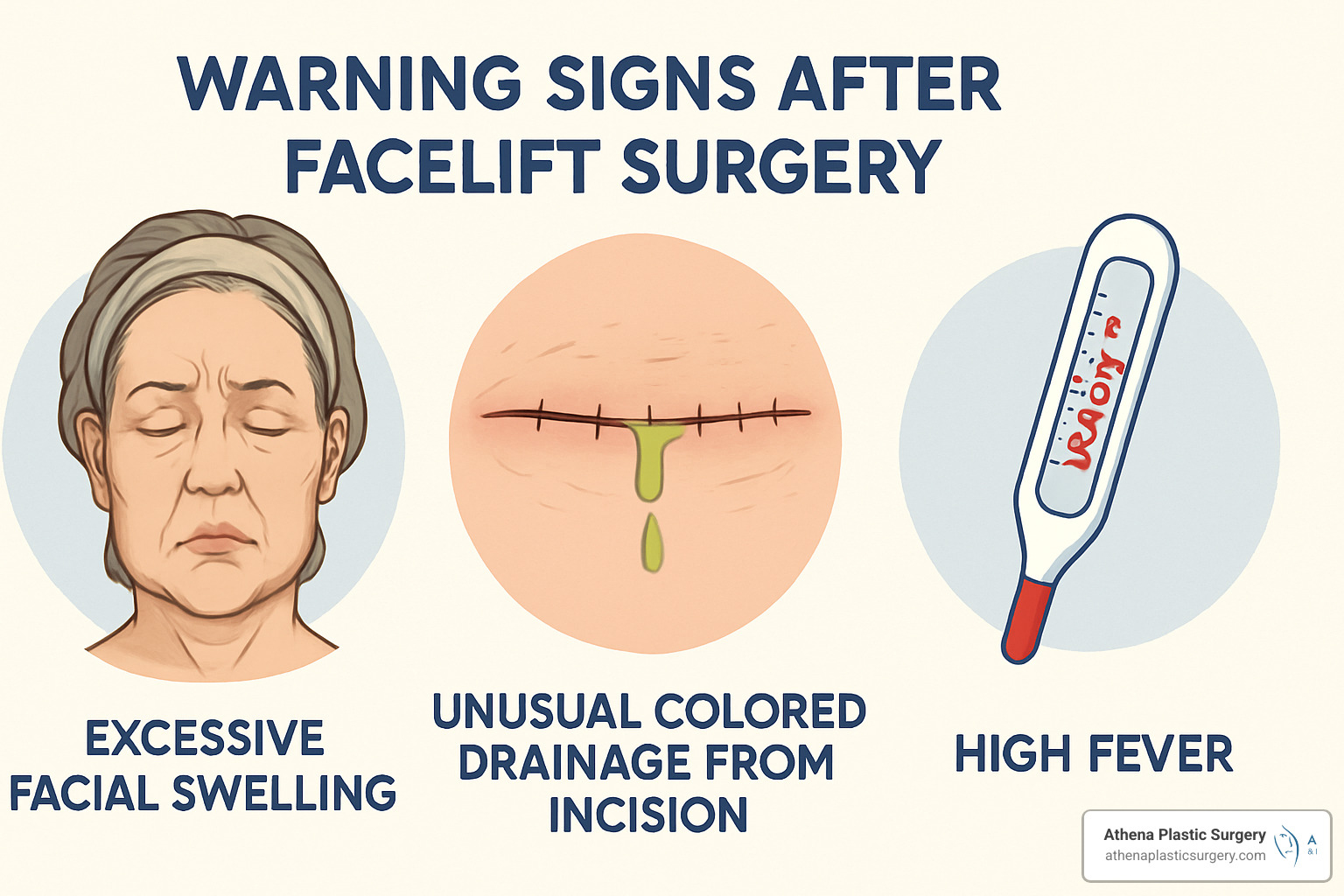
Let me be honest with you – no surgery is completely risk-free, and part of what to expect after face lift surgery includes understanding what could go wrong. The good news? Serious complications are uncommon when you choose an experienced surgeon and follow post-operative instructions carefully.
Hematoma is the most frequent complication, affecting about 1-3% of patients. This occurs when blood collects under the skin, usually within the first 24 hours after surgery. While it sounds scary, we can treat it effectively if caught early. You’ll notice sudden swelling on one side of your face that feels firm and painful.
Infection is actually quite rare, happening in less than 1% of patients. Your body’s natural healing process, combined with proper wound care, usually prevents this issue. When infection does occur, it typically shows up as increasing redness, warmth, or foul-smelling drainage from your incisions.
Nerve injury might sound alarming, but temporary numbness is completely normal and expected. Your facial nerves need time to recover from the surgical trauma. Permanent nerve damage is extremely rare in experienced hands, and most sensation returns gradually over several months.
Skin loss can occur, particularly in patients who smoke or have poor circulation. This is why we’re so adamant about stopping smoking well before your surgery. Your skin needs excellent blood flow to heal properly.
Scarring is inevitable with any surgery, but poor scar formation is uncommon when you follow proper care instructions. Most facelift scars fade to thin, barely visible lines hidden in your natural hairline and ear creases.
Red Flags That Demand Medical Attention
Knowing when to call for help can make the difference between a minor setback and a serious complication. Trust your instincts – if something doesn’t feel right, it’s better to check with us than to worry alone.
Uncontrolled bleeding that doesn’t stop after 20 minutes of gentle, direct pressure needs immediate attention. A little oozing is normal, but active bleeding isn’t.
Sudden, severe swelling on one side of your face could indicate hematoma formation. This typically feels firm and painful, quite different from the soft, general swelling that’s normal after surgery.
Fever over 100.4°F signals that your body is fighting something, possibly an infection. Don’t ignore this warning sign, especially if it’s accompanied by increasing pain or unusual drainage.
Foul-smelling or increasing drainage from your incisions isn’t normal. Healthy healing produces minimal, clear to slightly bloody drainage that decreases over time.
Severe pain that isn’t controlled by your prescribed medication could indicate a complication. While some discomfort is expected, overwhelming pain is not.
More serious symptoms require emergency care rather than a call to our office. Chest pain, difficulty breathing, or signs of blood clots in your legs need immediate emergency room attention. These complications are extremely rare but can be life-threatening.
Scientific research on facelift complications shows that most issues resolve completely with prompt treatment. Our 24/7 on-call service ensures you always have access to expert guidance during your recovery.
The best prevention strategy is following your post-operative instructions precisely. Attend all scheduled follow-up appointments – these visits help us catch potential problems before they become serious. Report any concerns promptly, even if they seem minor. What feels like a small worry to you might be an important early warning sign to us.
Maintain good nutrition and hydration to support your body’s healing process. Avoid activities that increase bleeding risk, like heavy lifting or vigorous exercise, until we clear you for normal activity. Your body is working hard to heal – give it the best possible conditions to succeed.
Seeing the Results & Maintaining Them Long Term

The most exciting part of what to expect after face lift surgery is watching your new appearance gradually emerge. Your change doesn’t happen overnight – it unfolds like a beautiful story over several months.
At 2 weeks, you’ll feel confident enough to venture out in public, though some subtle swelling may still be present. By 6 weeks, most of your healing is complete and your face looks naturally refreshed. The magic really happens around 3 months when your scars begin to fade significantly, and by 6 months, you’ll see your final, stunning results as all swelling completely resolves.
The complete healing journey takes about one full year, during which your scars mature into barely visible lines and your tissues settle into their new position. This gradual process ensures your results look completely natural – nobody will be able to tell you’ve had surgery, they’ll just think you look wonderfully rested and youthful.
Your beautiful results typically last 7-10 years, though several factors influence this timeline. The surgical technique used, your age at the time of surgery, and your skin quality all play important roles. However, the biggest factors you can control are sun protection and skincare consistency. Patients who religiously use sunscreen and maintain good skincare routines often enjoy their results even longer.
Weight fluctuations can affect your results, so maintaining a stable weight helps preserve your investment. Smoking significantly shortens the lifespan of your results, which is another excellent reason to quit permanently.
Emotional Journey & Support
Let me share something that surprises many patients – the emotional side of recovery can feel like a rollercoaster, and that’s completely normal. Around day 7, when swelling peaks and you might look a bit like you’ve been in a boxing match, many patients experience what we call the “post-op blues.” This temporary discouragement passes quickly as healing progresses.
The first few weeks often bring a mix of initial excitement followed by anxiety about your changing appearance. Some patients feel impatient during the waiting period for final results, while others need time to adjust to their refreshed look. These feelings are all part of the normal healing process.
Building a strong support network makes an enormous difference in your recovery experience. Talk openly with family and friends about what you need during this time. Many patients find comfort in connecting with others who’ve had similar procedures through online support groups. Our surgical team is always here to answer questions and provide reassurance throughout your journey.
If you find yourself struggling with the adjustment period, don’t hesitate to seek professional counseling. Sometimes talking with someone trained in post-surgical emotional support can be incredibly helpful.
Long-term maintenance of your beautiful results involves simple but consistent habits. Daily sunscreen use with SPF 30 or higher is absolutely essential – sun damage is the fastest way to age your new look. A quality skincare routine with gentle cleansers and moisturizers keeps your skin healthy and glowing.
Many patients improve their facelift results with periodic non-surgical treatments like Botox or dermal fillers. These aren’t necessary, but they can help maintain your refreshed appearance between surgical procedures. Staying well-hydrated and maintaining a stable weight also helps preserve your investment for years to come.
We recommend annual follow-up appointments so we can monitor your healing and discuss any maintenance options that might benefit you. These visits also give us a chance to celebrate your results together and address any questions that arise.
For detailed information about maximizing your results, visit our guide on How Long Does a Facelift Last? where we share all our best tips for long-term success.
Frequently Asked Questions about Facelift Recovery
Let’s address the most common concerns patients have about what to expect after face lift surgery. These questions come up in nearly every consultation, and having clear answers helps ease anxiety during your healing journey.
How long do swelling, bruising, and numbness last?
Swelling and bruising follow a predictable timeline that helps you gauge your progress. The worst swelling typically peaks around days 3-4, which can be discouraging when you’re eager to see results. Most patients notice dramatic improvement by week 2, though don’t be surprised if subtle puffiness lingers for 2-3 months.
Bruising usually fades within 2-3 weeks, often starting as deep purple marks that gradually turn yellow-green before disappearing. The bruising may actually migrate downward due to gravity, so seeing discoloration on your neck or chest is completely normal.
Numbness is perhaps the most misunderstood aspect of facelift recovery. Your face may feel tight, tingly, or completely numb in certain areas – this is expected and temporary. Most sensation returns gradually over 1-3 months, though some patients experience minor numbness for up to a year. This doesn’t indicate nerve damage; it’s simply your body’s way of protecting healing tissues.
When can I wear makeup, wash, or color my hair?
Makeup becomes your best friend around week 2 when you’re ready to venture back into public. Use gentle, non-irritating products and avoid applying anything directly on incision lines until they’re fully healed. A good concealer can work wonders on residual bruising and help boost your confidence during the final healing stages.
Hair washing is typically allowed 48 hours after drain removal, but approach it gently. Use mild baby shampoo initially and avoid vigorous scrubbing near your incision sites. Many patients find it easier to have someone else wash their hair for the first week to avoid awkward positioning.
Hair coloring requires patience – wait a full 8 weeks before using any chemical treatments. Your scalp and incision areas need time to heal completely before exposure to potentially irritating dyes or bleaches. This waiting period protects against chemical burns and ensures proper healing of hairline incisions.
What activities must I avoid and when can I resume normal life?
The return to normal activities happens gradually, and pushing too hard too early can set back your recovery. Understanding these restrictions helps you plan your time off work and arrange help when needed.
During the first week, think of yourself as being on modified bed rest. No driving while taking pain medication – the combination of grogginess and delayed reflexes makes this dangerous. Avoid any bending, lifting, or straining that could increase blood pressure and potentially cause bleeding. Even talking should be limited initially to reduce jaw movement and facial stress.
Light office work typically resumes at 1-2 weeks, depending on your healing progress and job requirements. If your work involves physical labor or high-stress situations, you may need 3-4 weeks off. Driving can resume around 2 weeks once you’re completely off pain medication and can turn your head comfortably.
Exercise requires the most patience. Light walking is encouraged from day one to promote circulation, but avoid anything that raises your heart rate significantly. Most patients can return to their full exercise routine at 4-6 weeks with surgical approval. Swimming must wait at least 6 weeks to ensure incisions are completely sealed, and contact sports should be avoided for 3 months.
Most patients feel back to their normal routine by 4-6 weeks, though everyone heals at their own pace. Listen to your body and don’t hesitate to take extra time if needed – rushing back too quickly can actually prolong your overall recovery time.
Conclusion
Your facelift recovery journey is a marathon, not a sprint – and understanding what to expect after face lift surgery helps you cross the finish line with confidence and beautiful results.
The path from surgery to your final appearance unfolds predictably over several months. While those first few weeks might feel challenging, temporary swelling and bruising are just pit stops on your way to 7-10 years of renewed confidence. Most patients find the 4-6 week recovery period passes more quickly than expected when they know what’s coming.
Success comes down to three simple things: following your surgeon’s instructions religiously, staying patient when your reflection doesn’t match your expectations, and trusting the healing process. Your body knows how to heal – we just need to give it the right conditions and time to work its magic.
At Athena Plastic Surgery, we’ve walked thousands of patients through this exact journey. Dr. Avron Lipschitz’s Johns Hopkins training combined with our team’s genuine care means you’re never alone during recovery. We answer your 2 AM worried texts, celebrate your weekly progress photos, and remind you that healing isn’t always linear.
Your individual timeline might look slightly different from what we’ve outlined here – and that’s perfectly normal. Some people heal faster, others need extra time. What matters is having expert guidance every step of the way, from your first consultation through that exciting moment months later when you catch your reflection and think, “Wow, I look amazing.”
Ready to start your change? Our comprehensive face & neck lift services page has everything you need to take the next step toward the confident, refreshed you that’s waiting.
Your journey to renewed confidence begins with understanding what lies ahead. With realistic expectations, proper preparation, and our team supporting you, your facelift recovery becomes less about enduring the process and more about embracing the incredible results that follow.